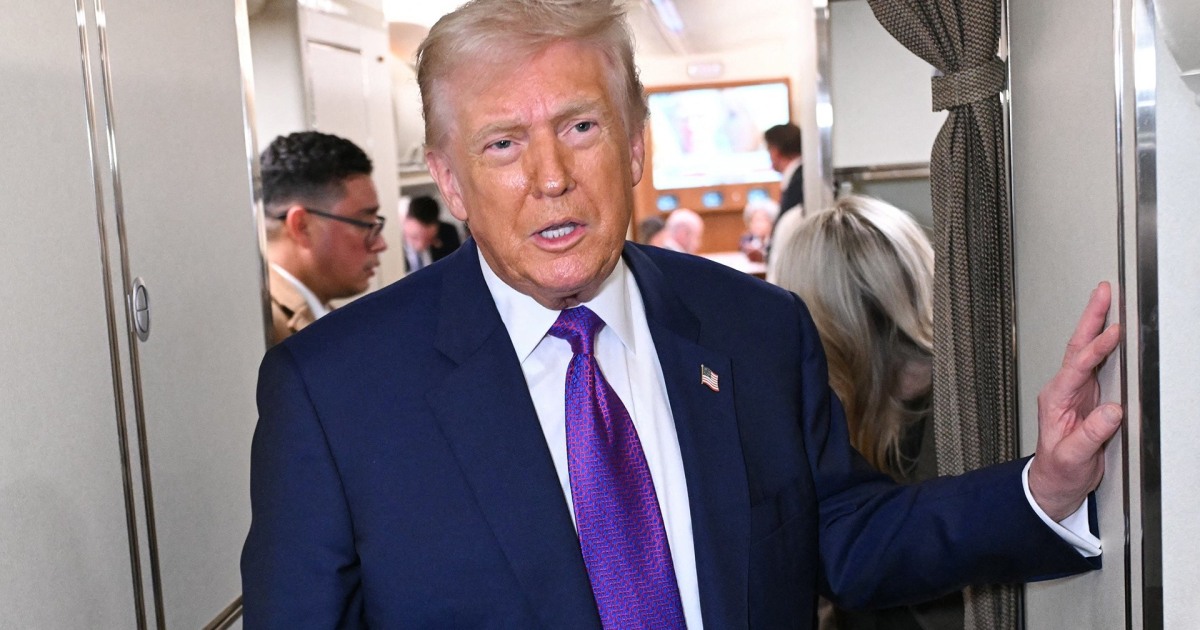
WASHINGTON — President Donald Trump issued a stark warning to Iran on Thursday, urging the Islamic Republic to reach a new agreement on its nuclear program or face severe consequences. Speaking from the White House, Trump declared that 'bad things' would happen if no deal is struck, amid reports of a massive U.S. military buildup in the Middle East.
The president's comments come at a tense moment in U.S.-Iran relations, which have been fraught since Trump withdrew from the 2015 Joint Comprehensive Plan of Action (JCPOA) during his first term. That accord, negotiated under President Barack Obama, aimed to curb Iran's nuclear ambitions in exchange for sanctions relief. Trump's 2018 exit, which he called the 'worst deal ever,' led to Iran gradually rolling back its compliance, enriching uranium to levels approaching weapons-grade and prompting international concerns over proliferation risks.
According to NBC News correspondent Garrett Haake, reporting from the White House, Trump's latest remarks underscore the administration's strategy of maximum pressure. 'President Donald Trump is warning Iran to make a deal over its nuclear program and threatening “bad things” if that doesn’t happen,' Haake said in a segment for TODAY. The warning aligns with escalating U.S. military deployments, described as one of the largest in the region in decades.
U.S. officials have confirmed the movement of significant naval and air assets toward the Persian Gulf and surrounding waters. This includes multiple aircraft carrier strike groups, such as the USS Abraham Lincoln and USS Dwight D. Eisenhower, along with guided-missile submarines and squadrons of F-35 stealth fighter jets. Pentagon sources, speaking on condition of anonymity, told reporters that these forces are positioned for deterrence and readiness, not immediate offensive action.
The buildup, which began ramping up in early February 2026, follows a series of incidents involving Iranian-backed militias in Iraq and Syria targeting U.S. interests. Last month, a drone attack on a U.S. base near Baghdad injured three American service members, an event the State Department attributed to Iran without providing direct evidence. Iranian officials, in response, have denied involvement and accused the U.S. of provocation through its support for Israel.
Trump's rhetoric echoes his approach during his previous presidency, when he ordered the assassination of Iranian General Qasem Soleimani in January 2020, nearly sparking a wider conflict. At that time, Trump similarly warned of 'very big' repercussions if Iran retaliated. Analysts note that the current posturing may be aimed at bolstering negotiations, as European allies have pushed for reviving talks in Vienna.
From Tehran, Iranian Foreign Minister Hossein Amir-Abdollahian dismissed Trump's threats as 'empty bluster' in a statement to state media on Friday. 'The United States cannot intimidate the Iranian nation with outdated tactics,' he said, adding that Iran remains open to diplomacy but only on equal terms. This marks a shift from earlier hardline stances under Supreme Leader Ayatollah Ali Khamenei, who has veto power over any nuclear concessions.
International Atomic Energy Agency (IAEA) reports from late 2025 indicated that Iran had amassed over 5,000 kilograms of enriched uranium, enough for several nuclear bombs if further processed. Director General Rafael Grossi warned in a December address to the UN Security Council that 'time is running out' to prevent a nuclear-armed Iran, urging all parties to return to the negotiating table.
In Washington, Democratic lawmakers expressed concern over the escalation. Senate Foreign Relations Committee Ranking Member Ben Cardin, D-Md., said in a floor speech, 'While we must hold Iran accountable, threats without a clear diplomatic path risk unnecessary war.' Republicans, including Senate Majority Leader Mitch McConnell, R-Ky., praised Trump's firmness, stating, 'Strength is the only language Tehran understands.'
The military deployments are costing taxpayers an estimated $500 million per month, according to a Congressional Budget Office analysis released this week. This includes fuel, maintenance, and personnel rotations for the carrier groups, each carrying up to 5,000 sailors and dozens of aircraft. Critics argue the expense diverts resources from domestic priorities, while supporters say it's essential for national security.
Broader context reveals ongoing proxy conflicts fueling the standoff. In Yemen, Houthi rebels, supported by Iran, have launched missile strikes on Saudi oil facilities, disrupting global energy markets. The U.S. has provided logistical support to the Saudi-led coalition, drawing ire from human rights groups over civilian casualties.
Experts from think tanks like the Brookings Institution suggest that Trump's deadline for a deal—implicitly tied to the end of the year—could pressure Iran economically, as sanctions have halved its oil exports since 2018. However, with China's growing ties to Tehran, including a 25-year cooperation pact signed in 2021, some question the efficacy of isolation tactics.
As the U.S. forces assemble off Iran's coast, satellite imagery from Maxar Technologies shows increased activity at Bandar Abbas naval base, where Iran has tested new ballistic missiles capable of reaching Israel. U.S. Central Command reported no immediate threats but emphasized vigilance.
Looking ahead, the White House has scheduled talks with Israeli Prime Minister Benjamin Netanyahu next week, where nuclear issues are expected to top the agenda. European Union foreign policy chief Josep Borrell indicated willingness to mediate, stating, 'We cannot allow the region to slide into chaos.'
The situation remains fluid, with diplomats on both sides signaling cautious optimism for de-escalation. Yet, as Trump reiterated in a tweet late Thursday, 'Iran must come to the table now, or face the consequences.' Whether this leads to a breakthrough or further brinkmanship will define the coming months in one of the world's most volatile regions.