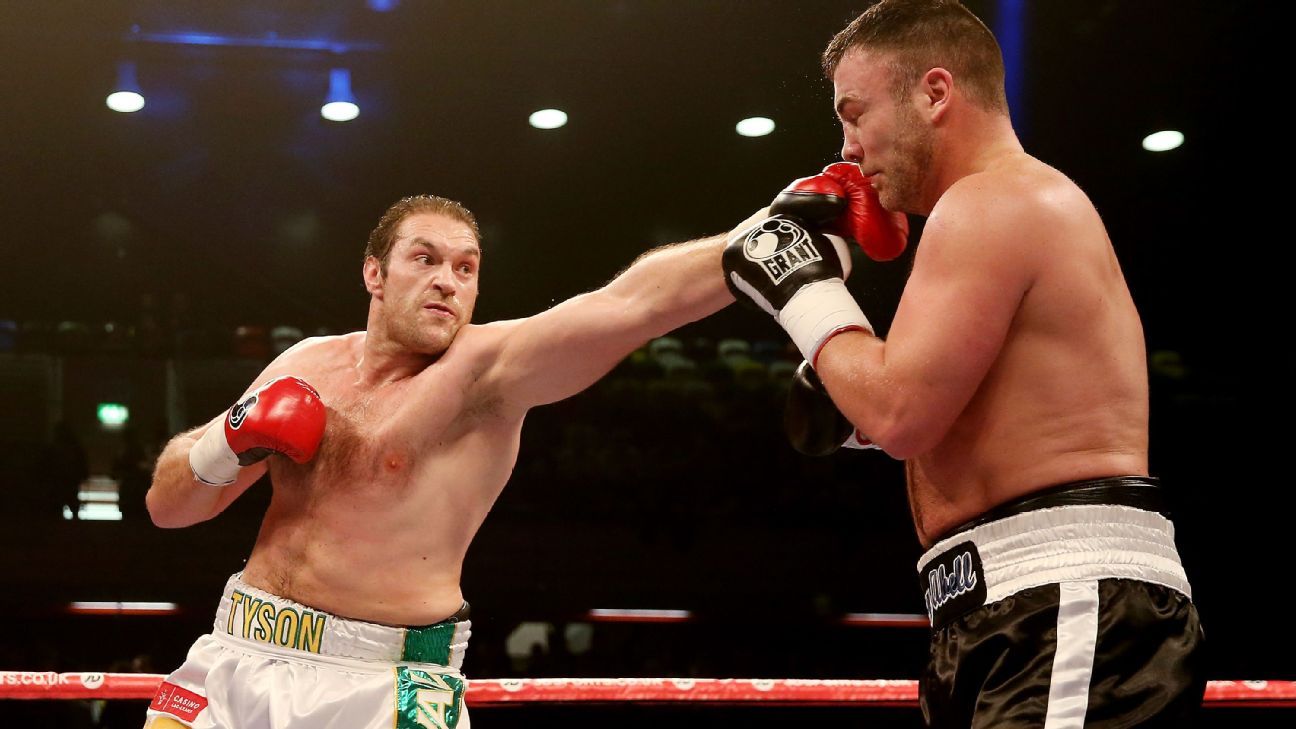
LONDON -- Tyson Fury, the British heavyweight boxing sensation known as the Gypsy King, has once again pulled off one of the most predictable plot twists in sports: announcing his return to the ring after a self-proclaimed retirement. On Sunday, following a year away from the sport after his second loss to Oleksandr Usyk, Fury declared via social media that 2026 would mark his comeback. "2026 is that year. Return of the mac," he posted, adding, "Been away for a while but I'm back now, 37 years old and still punching. Nothing better to do than punch men in the face and get paid for it." This marks the latest chapter in Fury's serial saga of retirements and reversals, a pattern that has frustrated fans, promoters, and opponents alike since his early career.
Fury's history with retirement dates back over a decade, beginning when he was just 25 years old. On November 20, 2013, after a highly anticipated fight with former two-weight world champion David Haye fell through for the second time—first scheduled for September 2013 and then February 2014 due to Haye's injuries—Fury vented his frustration online. "Hi everyone, I have officially retired from boxing," he wrote on social media. "There's too many b--- people in the sport. They will have to f--- someone else. Goodbye boxing." The next day, he reinforced his stance: "Just to confirm I'm not in a bad mood or anything. I've retired 1000000% no matter what ill never fight again!" At the time, Fury was an up-and-coming fighter, having already notched several professional wins but yet to claim a world title.
True to form, Fury's resolve lasted only three months. He returned to the ring on February 15, 2014, defeating American Joey Abell in what he later described as a product of his "different moods." This early episode set the tone for Fury's unpredictable career trajectory, blending raw talent with emotional volatility. Boxers and insiders have long noted Fury's mental health struggles, which would play a more prominent role in later retirements, but even then, his passion for the sport seemed unbreakable.
The next retirement came three years later, on October 3, 2016, when Fury was 28. By this point, he had achieved the pinnacle of heavyweight boxing, dethroning long-reigning champion Wladimir Klitschko in a stunning upset on November 28, 2015, in Dusseldorf, Germany, to claim the WBA, WBO, and IBF titles. However, personal demons caught up with him. Fury withdrew from a scheduled rematch with Klitschko twice, citing mental health issues, and in the midst of a UK Anti-Doping investigation over his admitted cocaine use, he announced his exit. "Boxing is the saddest thing I ever took part in," he posted on social media. "I'm the greatest, and I'm also retired."
Hours later, Fury walked back his words on Twitter: "You think you will get rid of the Gypsy King that easy!!! I'm here to stay." Despite the bravado, the retirement stuck in a practical sense. Nine days after the tweet, he vacated his titles pending the doping probe. The British Boxing Board of Control (BBBofC) soon suspended his license, sidelining him for nearly three years. During this period, Fury's weight ballooned, and he openly discussed his battles with depression and substance abuse, which added layers of context to his decisions. Promoters and fans watched warily as he teased comebacks throughout 2017.
Another announcement followed on August 1, 2017, still at age 28 and out of the ring since his Klitschko victory. Amid waiting for his anti-doping hearing, Fury reflected on his achievements in a social media post: "Been very blessed in my life & career achieve the upmost in boxing, was an epic journey along the way. Thanks to all the fans that supported & believed in me along the way. Hope you enjoy it as much as I did. THE END." This retirement came during a turbulent time, as Fury navigated legal and regulatory hurdles that threatened to end his career prematurely.
Resolution came swiftly. In December 2017, UK Anti-Doping announced an agreement with Fury and the BBBofC to resolve the charges. By January 2018, his boxing license was reinstated. Fury made his return on June 9, 2018, in Manchester, England, stopping Sefer Seferi in the fourth round. This fight, though against a modest opponent, signaled his rehabilitation—both literal and figurative—and launched a remarkable resurgence. Over the next few years, Fury rebuilt his physique and his record, culminating in a trilogy of blockbuster fights against American Deontay Wilder.
The pattern repeated in 2022, when Fury, now 33, retired after defending his WBC heavyweight title against Dillian Whyte on April 23 at Wembley Stadium in London. The victory, a technical knockout in the sixth round, capped a grueling stretch that included two wins over Wilder in 2020 and 2021. Post-fight, Fury proclaimed fulfillment: "I have fulfilled everything I've ever wanted to fulfil." He doubled down on August 12, his 34th birthday, tweeting, "I've finally decided to walk away & on my 34th birthday I say Bon voyage." That same day, he relinquished his Ring magazine title, fueling speculation that this retirement might stick.
It did not. By October 2022, a trilogy bout with Derek Chisora was announced, pitting Fury against the fellow Briton for a third time. On December 3, 2022, at Tottenham Hotspur Stadium in London, Fury won by technical knockout in the 10th round, extending his streak and silencing doubters temporarily. Chisora, a durable veteran, absorbed punishment in what many called a brutal affair, highlighting the physical toll of Fury's comebacks. Promoter Frank Warren, who has guided Fury's career, has often praised his client's resilience, though he has also expressed concern over the repeated retirements.
Fury's most recent retirement, announced on January 13, 2025, at age 36, followed two defeats to Usyk that shattered his undefeated record. The first loss came on May 18, 2024, in Riyadh, Saudi Arabia, where Usyk won by split decision to become the undisputed heavyweight champion. The rematch on December 21, 2024, in the same city ended in a unanimous decision for Usyk, prompting Fury's exit. In his social media post, Fury invoked the infamous highwayman Dick Turpin: "Even Dick Turpin wore a mask," a nod to feeling "robbed" by the judges' decision, as the phrase implies deception.
Despite links to a potential superfight with Anthony Joshua, another British heavyweight icon, Fury maintained the retirement facade for months. However, hints emerged in December 2025 when he posted: "The king must return to his throne." This buildup led to Sunday's official announcement, catching few by surprise given his track record. Boxing officials, including those from the WBC, have welcomed the news cautiously, emphasizing the need for Fury to complete mandatory testing and licensing procedures before any bouts.
Fury's retirements have not only shaped his personal narrative but also influenced the heavyweight division's landscape. Each hiatus has allowed rivals like Usyk, Joshua, and emerging talents such as Daniel Dubois to vie for supremacy. Usyk, the current undisputed champion, holds all four major belts—WBA, WBC, IBF, and WBO—after Fury's defeats. Joshua, who lost to Dubois in September 2024 but rebounded with a win over Otto Wallin earlier, remains a potential opponent. Promoters like Eddie Hearn of Matchroom Boxing have speculated on dream matchups, though Fury has not named a specific target for 2026.
The broader implications of Fury's yo-yo career extend beyond the ring. His openness about mental health has destigmatized discussions in combat sports, where pressure and isolation can exacerbate issues. According to sports psychologists cited in past ESPN reports, Fury's pattern may reflect a deeper struggle with identity post-achievement, a common theme among elite athletes. Yet, his returns have grossed millions— the Wilder trilogy alone generated over $100 million—and kept boxing in the spotlight amid competition from MMA and other entertainments.
Looking ahead, Fury's 2026 return raises questions about his longevity at 37. Heavyweight boxing demands peak physicality, and Fury's history of weight fluctuations—ballooning to over 300 pounds during absences—poses risks. The BBBofC and international bodies will monitor his conditioning closely. Fans and analysts alike wonder if this will be the final act or just another intermission. As Fury himself put it in his latest post, the allure of "punching men in the face and get[ting] paid for it" remains irresistible.
In a sport defined by knockouts and comebacks, Tyson Fury embodies both. His journey from 2013's impulsive exit to today's triumphant return underscores a career of highs, lows, and unrelenting drama. Whether 2026 brings redemption against Usyk or a clash with Joshua, one thing is certain: the Gypsy King is far from done.