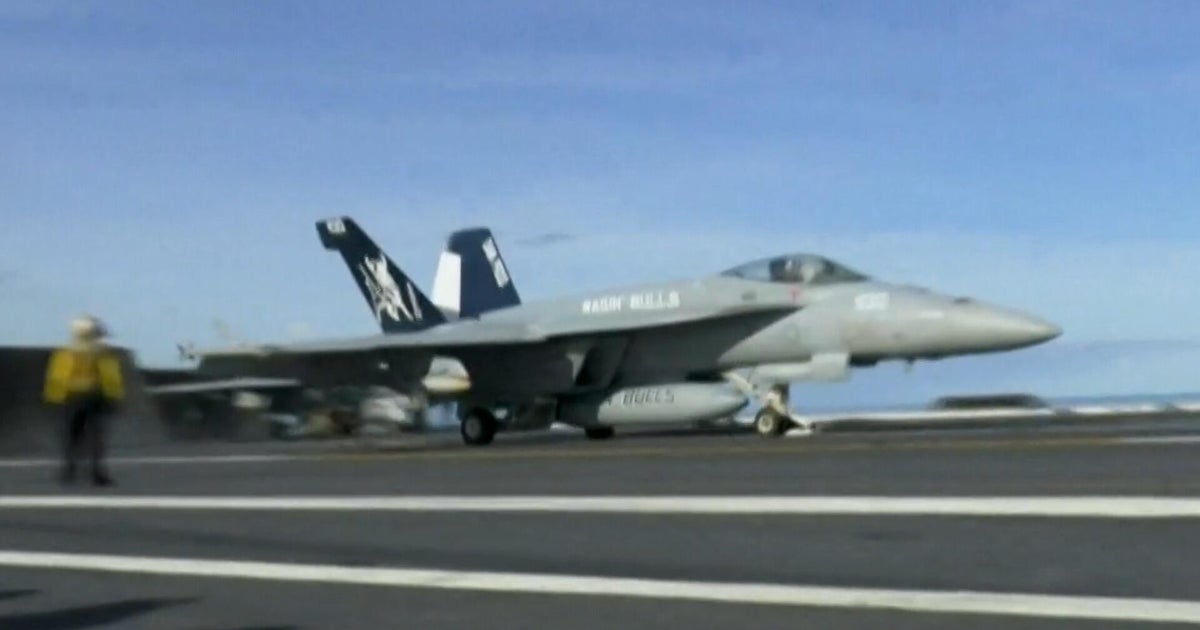
WASHINGTON — The United States is significantly increasing its military presence in the Middle East amid escalating tensions with Iran, as President Donald Trump expresses growing impatience with the Iranian regime's actions. According to defense officials, the Pentagon has authorized the deployment of additional fighter jets, warships, and ground forces to key bases in the region, signaling a readiness to respond to any provocations from Tehran.
The moves come at a time when Iran is facing internal unrest, with widespread protests over economic hardships and government policies. Reports from CBS News indicate that the U.S. is positioning itself on the brink of a major conflict, with Trump administration sources describing the buildup as a necessary deterrent against Iranian aggression. 'We're not looking for a fight, but we're prepared for one,' a senior defense official told reporters on condition of anonymity.
Specific details of the deployment include the movement of B-52 bombers to Diego Garcia in the Indian Ocean and the deployment of the aircraft carrier USS Abraham Lincoln to the Arabian Sea. These assets, according to Pentagon statements, are intended to protect American interests and allies, particularly in the wake of recent attacks on oil tankers in the Gulf of Oman, which the U.S. has attributed to Iran.
Trump's impatience stems from Iran's continued uranium enrichment activities and its support for proxy militias in Iraq, Syria, and Yemen. In a recent tweet, the president warned, 'Iran is playing with fire, and they know it.' This rhetoric has been echoed by Secretary of State Mike Pompeo, who during a briefing last week said, 'The Iranian regime must understand that the United States will not tolerate threats to our personnel or our partners.'
From Tehran's perspective, Iranian Foreign Minister Javad Zarif has dismissed the U.S. buildup as 'psychological warfare' aimed at derailing nuclear talks. In an interview with state media, Zarif stated, 'The American escalation is a sign of their weakness, not strength. We remain committed to diplomacy if the U.S. returns to the nuclear deal.' This highlights a stark divide, with U.S. officials insisting that Iran must first cease its destabilizing activities.
Background to the current standoff traces back to 2018, when Trump withdrew from the Joint Comprehensive Plan of Action, the 2015 nuclear agreement with Iran. Since then, sanctions have crippled Iran's economy, leading to inflation rates exceeding 40% and a devalued rial. Domestic discontent has boiled over into protests, with security forces cracking down on demonstrators in cities like Tehran and Isfahan.
Military analysts provide varied assessments of the situation. Michael O'Hanlon, a senior fellow at the Brookings Institution, noted in a recent op-ed, 'The U.S. deployments are a clear message, but they risk miscalculation on both sides.' Conversely, retired General Jack Keane, a Fox News contributor, argued that 'a strong posture is exactly what's needed to prevent Iranian adventurism.'
In the region, allies like Israel and Saudi Arabia have welcomed the U.S. reinforcements. Israeli Prime Minister Benjamin Netanyahu praised the moves during a call with Trump, according to White House readouts, saying they would 'enhance security against the Iranian threat.' Saudi officials, meanwhile, have reportedly requested additional Patriot missile defenses in light of Houthi drone attacks on their oil facilities, which Riyadh blames on Iranian backing.
Critics within the U.S., including some Democratic lawmakers, have raised concerns about the escalation. Senator Bernie Sanders of Vermont tweeted, 'We must avoid another endless war in the Middle East. Diplomacy, not more troops, is the answer.' House Speaker Nancy Pelosi echoed this, stating in a floor speech, 'The administration's approach is reckless and lacks congressional oversight.'
The human cost of potential conflict looms large. In Iran, ordinary citizens are caught between economic woes and fears of war. A Tehran resident, speaking to international media under a pseudonym, said, 'We just want stability; no one benefits from bombs falling.' U.S. military families, too, express anxiety, with service members' spouses organizing vigils at bases like Joint Base Lewis-McChord in Washington state.
Economically, the buildup could strain U.S. resources. The Congressional Budget Office estimates that sustaining the additional deployments might cost upwards of $10 billion annually, at a time when the federal deficit is already ballooning. Oil markets have reacted nervously, with Brent crude prices rising 5% in the past week to over $65 per barrel, amid fears of disruptions in the Strait of Hormuz.
Looking ahead, diplomatic channels remain open but fraught. European allies, including France and Germany, are pushing for renewed talks, with French President Emmanuel Macron proposing a summit in Paris. However, Trump has shown little interest, telling reporters aboard Air Force One, 'Talks are fine, but only if Iran behaves.' Iranian leaders, for their part, have conditioned any negotiations on the lifting of sanctions.
The situation evokes memories of past U.S.-Iran flashpoints, such as the 1988 downing of Iran Air Flight 655 by the USS Vincennes and the 2019 drone shootdown that nearly sparked retaliation. Historians note that miscommunications have often escalated tensions, underscoring the need for clear signaling.
As the U.S. continues to bolster its firepower, the international community watches closely. United Nations Secretary-General António Guterres called for restraint, saying in a statement, 'De-escalation is in everyone's interest; war would be catastrophic.' With Trump set to meet with national security advisors this week, the path forward remains uncertain.
In the end, the beefed-up U.S. presence in the Middle East represents a high-stakes gamble: deterring Iran without igniting a broader conflict. For now, the world holds its breath, hoping cooler heads prevail over the president's growing impatience.