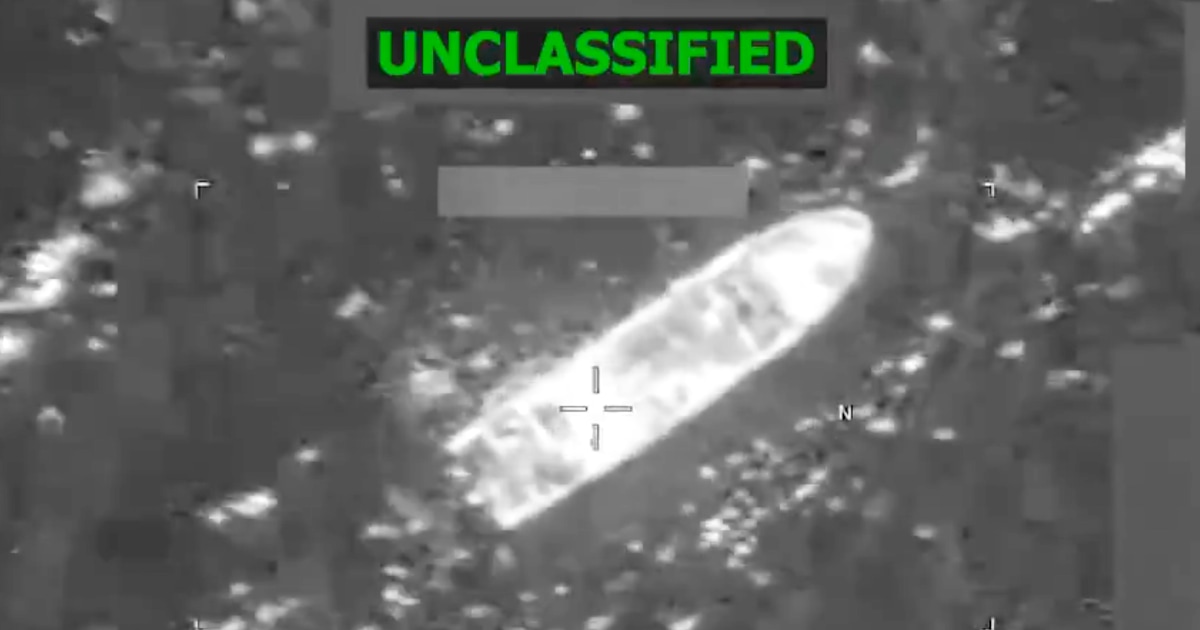
In a continued effort to disrupt drug trafficking in international waters, the U.S. military announced on Friday that it had struck an alleged drug smuggling vessel in the eastern Pacific Ocean, resulting in the deaths of three individuals. The operation, carried out by U.S. Southern Command, targeted a boat that officials described as traveling along established narco-trafficking routes. According to a statement from the command, "Intelligence confirmed the vessel was transiting along known narco-trafficking routes in the Eastern Pacific and was engaged in narco-trafficking operations."
The strike marks the latest in a series of aggressive interdictions by the U.S. armed forces against suspected drug runners in the region. Just earlier this week, on Monday, U.S. Southern Command reported hitting three boats in the Pacific and Caribbean seas, an action that killed 11 people. These operations are part of a broader campaign that began in September, focusing on vessels in both the Caribbean and Pacific that the military alleges are involved in smuggling narcotics into the United States and beyond.
Details about Friday's incident remain sparse, with the military providing limited information on the exact location, the type of vessel, or the identities of those killed. The eastern Pacific, a vast expanse stretching from the coasts of Central and South America westward, has long been a primary corridor for drug cartels transporting cocaine and other substances toward North America. U.S. officials have not released images, cargo manifests, or other evidence to substantiate the claims of drug trafficking in this specific case, a pattern observed in previous strikes.
Since the initiative kicked off in September, the U.S. military has conducted at least 41 such boat strikes, according to statements from the Department of Defense tracked by NBC News. These actions have resulted in at least 134 deaths, highlighting the high-stakes nature of the operations. The Trump administration has defended the strikes, asserting that they target "designated terrorist organizations" engaged in drug smuggling. However, critics, including some members of Congress, have raised concerns about the legal basis for these unilateral actions in international waters, questioning whether they comply with international law and due process.
The lack of transparency surrounding the evidence has fueled ongoing debates. The military has consistently refrained from providing proof regarding the boats' involvement in trafficking, the backgrounds of the individuals on board, the nature of any cargo, or even precise casualty figures beyond initial reports. This opacity has drawn scrutiny from human rights advocates and lawmakers who argue that the operations risk civilian lives and could amount to extrajudicial killings.
One prominent example of this backlash came in January, when family members of two Trinidadian men killed in an October strike filed a wrongful death lawsuit against the U.S. government. The suit, the first of its kind related to these military actions, alleges that the victims were fishermen returning home from a routine trip when their boat was targeted. According to the lawsuit, the men were engaged in legitimate fishing activities, not drug smuggling, and the strike constituted an unlawful extrajudicial killing. A Pentagon spokesperson responded at the time by stating that the department does not comment on ongoing litigation.
The Trinidadian case underscores the human cost of these operations and the challenges in verifying targets at sea. The two men, whose names have not been publicly detailed in recent reports, were among dozens of victims whose families have questioned the accuracy of U.S. intelligence. In the broader context, the eastern Pacific and Caribbean routes are notorious for their role in the global drug trade, with Colombian and Mexican cartels reportedly moving billions of dollars worth of cocaine annually through these waters. U.S. authorities estimate that up to 90 percent of cocaine entering the U.S. travels via maritime routes in the region.
Despite the criticisms, U.S. Southern Command maintains that the strikes are essential to national security and public health efforts against the opioid and cocaine epidemics ravaging American communities. The command's statement on Friday emphasized the vessel's position on known trafficking paths, but stopped short of elaborating on the intelligence sources or methods used to confirm the threat. Military officials have previously described the operations as precise and intelligence-driven, aimed at minimizing collateral damage while maximizing disruption to cartel networks.
"The U.S. military said that it struck an alleged drug trafficking boat in the eastern Pacific on Friday, killing three people," U.S. Southern Command reported in its official release.
Looking back, the escalation in boat strikes since September coincides with heightened U.S. policy focus on counter-narcotics under the Trump administration. Proponents argue that traditional interdiction methods, such as boarding parties and aerial surveillance, are insufficient against fast-moving go-fast boats used by smugglers. These vessels, often low-profile and equipped with multiple outboard motors, can evade detection and outrun pursuers, making lethal force a controversial but reportedly effective deterrent in some instances.
However, the congressional criticism points to potential overreach. Lawmakers from both parties have called for greater oversight, including mandatory congressional notifications before strikes and independent reviews of intelligence assessments. One unnamed member of Congress, speaking to reporters earlier this month, described the operations as "legally questionable," warning that they could strain relations with Latin American allies who view the actions as violations of sovereignty in shared maritime zones.
The January lawsuit in the Trinidadian case is ongoing, with plaintiffs seeking damages and an injunction against future strikes without verifiable evidence. Legal experts following the matter say it could set a precedent for accountability in U.S. counter-drug efforts abroad. The Pentagon's refusal to comment leaves many questions unanswered, including whether the two fishermen had any prior encounters with authorities or if their boat matched descriptions of smuggling vessels.
In the wake of Friday's strike, advocacy groups like Amnesty International have renewed calls for an independent investigation into the pattern of casualties. They point to the cumulative death toll of 134 as evidence of a need for reform, arguing that the absence of post-strike verifications—such as recovering wreckage or interviewing survivors—undermines the credibility of the program. U.S. officials counter that operational security prevents the release of sensitive details, but acknowledge that the strikes are conducted under rules of engagement approved by the White House.
As the U.S. continues these maritime operations, the international community watches closely. Neighboring countries like Colombia and Ecuador have expressed mixed views: supportive of curbing drug flows but wary of unilateral U.S. actions that might inadvertently harm their nationals. Diplomatic channels remain open, with joint task forces like the Joint Interagency Task Force South coordinating multinational efforts, though the lethal strikes appear to be exclusively U.S.-led.
Looking ahead, the sustainability of this approach may hinge on addressing the evidentiary gaps and legal challenges. With at least 41 strikes already under the belt and more likely in the pipeline, the balance between security imperatives and human rights protections will be a focal point for policymakers. For now, the eastern Pacific remains a battleground in the war on drugs, where each reported interception carries the weight of lives lost and questions unanswered.