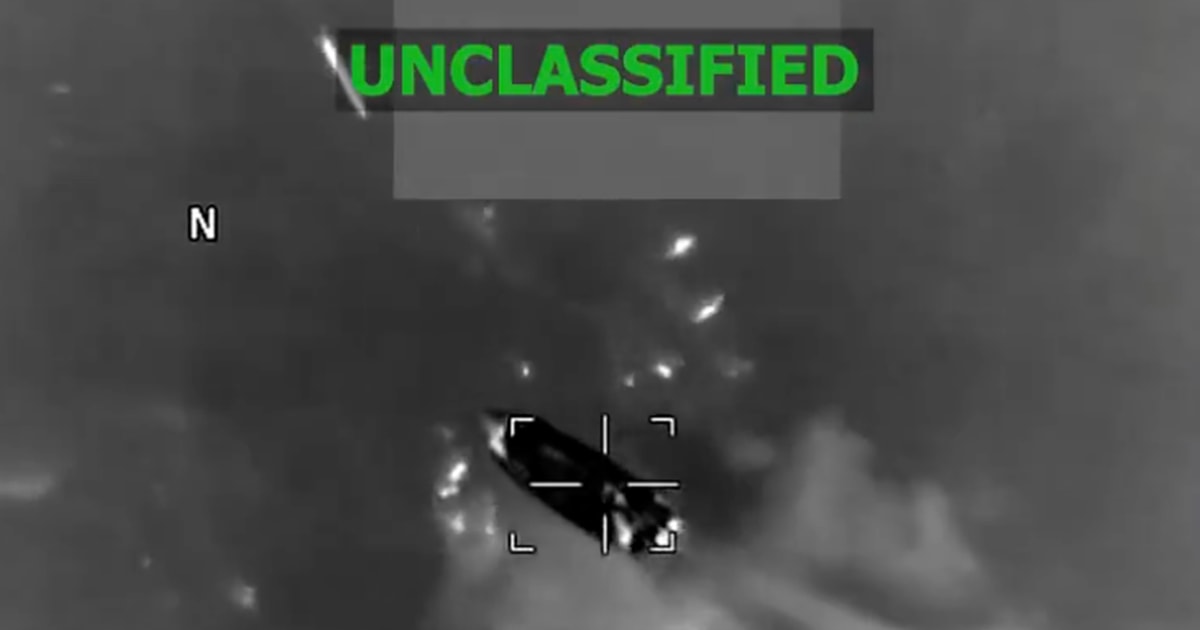
In a bold operation against drug trafficking in the Caribbean, the U.S. military conducted a lethal strike on Friday against a vessel suspected of transporting narcotics, resulting in the deaths of three individuals, according to the U.S. Southern Command.
The command announced the action in a post on X, formerly known as Twitter, stating that the Joint Task Force Southern Spear had "conducted a lethal kinetic strike on a vessel operated by Designated Terrorist Organizations." Officials emphasized that intelligence had confirmed the boat was traveling along established narco-trafficking routes in the region and was actively involved in such operations. "Three narco-terrorists were killed during this action. No U.S. military forces were harmed," the post added.
The incident marks the latest in a series of aggressive U.S. interventions aimed at disrupting drug flows into the United States. However, the military has not released any evidence to substantiate its claims regarding the boat's cargo, the identities of those on board, or the precise number of casualties. The strike occurred in international waters of the Caribbean Sea, though exact coordinates were not disclosed in the official statement.
This operation follows closely on the heels of another U.S. strike on Monday in the eastern Pacific Ocean, where forces targeted a similar vessel allegedly carrying drugs. That earlier action resulted in the deaths of two people and left one survivor, according to Southern Command reports. The survivor was reportedly taken into custody for questioning, but further details about their identity or statements have not been made public.
The resumption of these boat strikes in late January came after a period of relative restraint. U.S. forces had largely paused such operations following the January 3 arrest and subsequent removal of Venezuelan President Nicolás Maduro. Maduro, a key figure in regional politics, is currently detained in a New York jail facing federal charges including narco-terrorism conspiracy and cocaine importation conspiracy. He has pleaded not guilty to all counts and remains in custody awaiting trial.
The Trump administration has staunchly defended the strikes as essential measures to curb the influx of illegal drugs into the U.S. Since the program began in September, the Department of Defense reports at least 37 such operations, which have resulted in the deaths of 120 individuals, not including Friday's incident. Administration officials argue that these actions target transnational criminal networks that pose a direct threat to American communities, particularly amid the ongoing opioid crisis.
Yet, the strikes have drawn sharp international criticism. Colombian President Gustavo Petro, who has repeatedly condemned the U.S. operations, met with President Donald Trump last week in Washington. During the meeting, Petro likened the strikes to war crimes, according to statements from his office. "These actions violate international law and escalate tensions in a region already suffering from violence," Petro said in a post-meeting press conference, as reported by Colombian media outlets.
Petro's remarks echo broader concerns from Latin American leaders about the extraterritorial nature of U.S. military actions. Human rights organizations, including Amnesty International, have called for greater transparency and accountability, pointing out that the lack of evidence in these cases raises questions about potential civilian casualties. In a statement released Saturday, Amnesty noted, "While combating drug trafficking is important, lethal force must be a last resort, and independent verification is crucial to prevent abuses."
The context of these strikes is deeply intertwined with the political upheaval in Venezuela. Maduro's arrest was a significant blow to what the U.S. describes as a narco-terrorist regime, with allegations that his government facilitated cocaine shipments to the United States. U.S. prosecutors claim Maduro and his associates led the Cartel of the Suns, a network embedded within Venezuela's military and intelligence services. Maduro's legal team has dismissed the charges as politically motivated, asserting they are part of a broader U.S. effort to destabilize leftist governments in the region.
Since Maduro's removal, the U.S. has intensified its counter-narcotics efforts, partnering with allies like Colombia to monitor maritime routes. However, Petro's government has pushed back, advocating for diplomatic solutions over military ones. In their recent meeting, Trump and Petro reportedly discussed joint initiatives to address drug production in Colombia, the world's largest coca grower, but tensions over the strikes overshadowed the talks.
Experts on Latin American security suggest that while the strikes may disrupt short-term trafficking, they could have long-term repercussions. Dr. Maria Gonzalez, a professor of international relations at Georgetown University, observed in an interview, "These operations send a strong message, but without addressing root causes like poverty and corruption, the drug trade will simply adapt." Gonzalez pointed to data from the United Nations Office on Drugs and Crime, which estimates that maritime routes account for up to 80% of cocaine shipments from South America to the U.S. and Europe.
The U.S. Southern Command, headquartered in Miami, oversees military activities in Central and South America and the Caribbean. Its Joint Task Force Southern Spear is specifically tasked with countering illicit trafficking. In fiscal year 2023, the command reported seizing over 200 metric tons of cocaine through various interdictions, though the boat strikes represent a more controversial tactic.
As the death toll from these operations mounts, calls for congressional oversight have grown. Democratic lawmakers, including Sen. Bernie Sanders of Vermont, have urged the administration to brief Congress on the legal basis for the strikes under international law. "We need to ensure these actions comply with the rules of engagement and don't provoke unnecessary conflict," Sanders said in a floor speech last month.
Looking ahead, the implications of Friday's strike could ripple through regional diplomacy. With Maduro's trial set to begin in the coming months, his case may shed more light on the networks targeted by U.S. forces. Meanwhile, as the dry season approaches— a peak time for trafficking—analysts expect more such operations. The U.S. State Department has indicated that it will continue collaborating with international partners, but the balance between security and sovereignty remains a flashpoint.
In Appleton, where opioid overdoses have claimed numerous lives in recent years, local officials expressed mixed views. Mayor Lisa Thompson stated, "We support efforts to stop drugs at the source, but we also worry about the human cost." Community advocates, however, emphasize the need for domestic prevention programs alongside international actions.
Ultimately, the strike underscores the persistent challenge of the drug war, where U.S. policy intersects with complex geopolitical dynamics. As investigations into Friday's incident proceed, the world watches to see if more evidence emerges to clarify the events at sea.