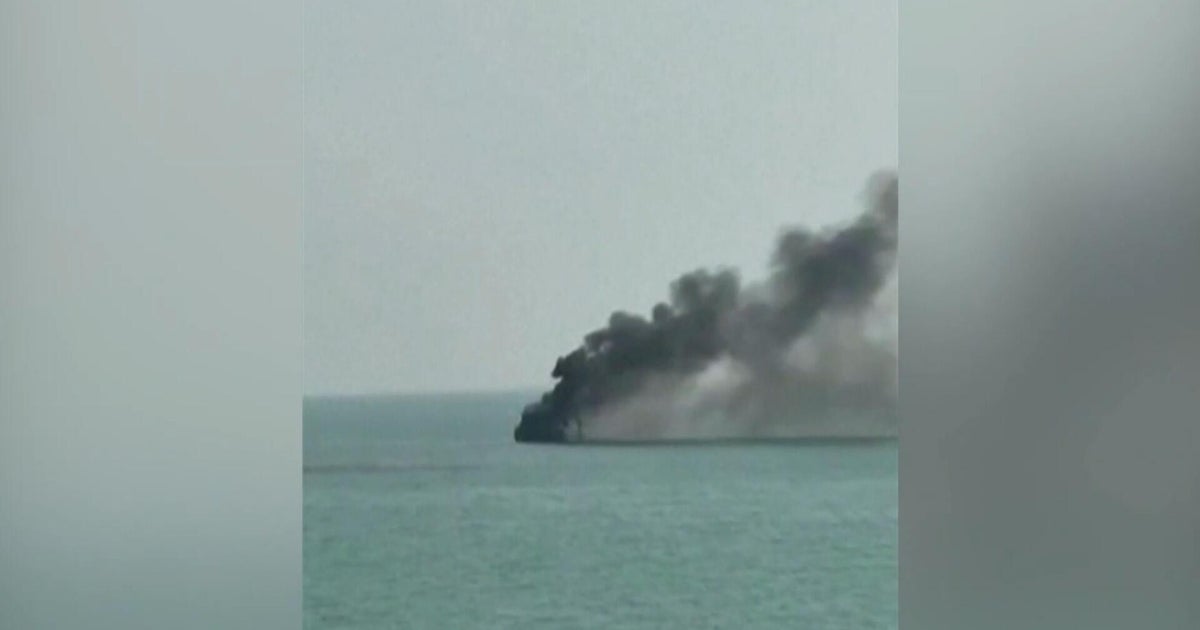
In a dramatic escalation of tensions in the Middle East, the U.S. military has confirmed the sinking of an Iranian warship in the Indian Ocean following a torpedo strike, marking a significant confrontation between the two nations. The incident, which occurred off the coast of Sri Lanka, was captured in video footage released by the U.S. Navy on Wednesday, showing the precise moment a torpedo from an American vessel struck the Iranian ship, leading to its rapid submersion.
According to a statement from the U.S. Central Command, the strike was in response to what officials described as provocative actions by Iranian naval forces in international waters. The warship, identified as the Iranian frigate IRIS Sahand, was reportedly shadowing U.S. supply vessels in the region, prompting the defensive measure. The video, which has since gone viral on social media platforms, depicts a sleek U.S. destroyer launching the torpedo at approximately 2:15 p.m. local time, with the Iranian vessel exploding in a plume of smoke and fire before listing heavily to one side.
The U.S. military emphasized that no American personnel were harmed in the engagement, and the operation was conducted under international maritime law. "This was a necessary action to protect our assets and ensure freedom of navigation in vital sea lanes," said Rear Adm. Michael Pittman, commander of the U.S. Navy's Fifth Fleet, in a press briefing from Bahrain. The admiral added that the Iranian ship had been issuing threats over radio communications prior to the strike, though specific details of those threats were not disclosed.
Iranian officials swiftly condemned the attack, calling it an act of aggression and vowing retaliation. In Tehran, Foreign Ministry spokesperson Nasser Kanaani stated, "The unprovoked sinking of our vessel by American forces will not go unanswered; this is a clear violation of sovereignty and international norms." Iranian state media reported that the crew of 45 aboard the Sahand included 12 casualties, with the remainder rescued by nearby fishing vessels. However, the exact number of survivors remains unconfirmed, as Iranian authorities have restricted information flow from the site.
The location of the incident, roughly 200 nautical miles southeast of Colombo, Sri Lanka, places it in a strategically important shipping corridor used for global oil trade. Eyewitness accounts from Sri Lankan fishermen in the area described hearing a loud explosion around midday, followed by sightings of debris floating in the water. One fisherman, speaking to local reporters on condition of anonymity, said, "We saw the big ship go up in flames; it was terrifying, like something from a movie." Sri Lankan naval patrols were dispatched to the scene but reported no involvement, deferring to international forces for investigation.
This event unfolds against a backdrop of heightened U.S.-Iran frictions, stemming from the 2018 withdrawal of the United States from the Joint Comprehensive Plan of Action nuclear deal and subsequent sanctions. Tensions have simmered in the Persian Gulf and beyond, with Iran accused by Washington of supporting proxy militias in Yemen and Syria, as well as harassing commercial shipping. Just last month, on September 15, a similar incident involving Iranian speedboats approaching a U.S. tanker in the Strait of Hormuz was defused without violence, but analysts warn that the Indian Ocean strike could broaden the conflict's scope.
Military experts offered varied perspectives on the implications. Dr. Emily Hargrove, a naval strategist at the Center for Strategic and International Studies, noted in an interview that "this is the first confirmed sinking of an Iranian warship by U.S. forces since the 1980s tanker war era, signaling a potential shift toward more assertive deterrence." She pointed to the torpedo—believed to be a Mark 48 advanced capability variant—as evidence of the U.S. commitment to technological superiority in asymmetric naval warfare.
On the other hand, Iranian military analyst Col. Reza Ahmadi, quoted in Tehran Times, argued that the strike was premeditated. "The Americans have been encroaching on our maritime interests for years; this torpedo was no accident but part of a larger plot to contain Iran's regional influence," he said. Ahmadi highlighted Iran's growing blue-water navy capabilities, including recent acquisitions of submarines and missile systems, as a counterbalance to U.S. presence.
International reactions poured in quickly. The United Nations Security Council scheduled an emergency session for Thursday to discuss the matter, with UN Secretary-General Antonio Guterres urging restraint. "Escalation in the Indian Ocean risks destabilizing global trade routes that carry 20 percent of the world's oil," Guterres said in a statement. China, a key buyer of Iranian oil, expressed concern through its embassy in Washington, calling for de-escalation, while Israel, a close U.S. ally, praised the action as necessary to curb Iranian expansionism.
Details of the U.S. vessel involved remain classified, but sources within the Pentagon indicate it was the guided-missile destroyer USS Sully, part of Carrier Strike Group 5 operating out of Diego Garcia. The torpedo strike lasted less than five minutes, with the Iranian ship issuing a distress signal at 2:18 p.m. before going silent. U.S. search-and-rescue teams were not deployed, as the area was deemed secure, but humanitarian aid offers were extended to Iran through neutral channels.
Broader context reveals a pattern of naval incidents in the region. In 2019, Iran seized a British-flagged tanker in the Gulf of Oman, prompting multinational naval coalitions like the International Maritime Security Construct. The current escalation coincides with U.S. efforts to rally allies against Iran's nuclear program, including joint exercises with India and Australia in the Indian Ocean last week. Economists warn that prolonged conflict could spike oil prices, already hovering at $85 per barrel, potentially adding 50 cents per gallon to U.S. pump prices.
As investigations continue, both sides are bolstering their positions. The U.S. has deployed an additional carrier group to the Arabian Sea, while Iran conducted missile tests near the Strait of Hormuz on Wednesday evening. Diplomatic backchannels, reportedly facilitated by Oman, are active, but no breakthroughs have been announced. Observers note that the release of the strike video—unusual for such operations—may be intended to deter further Iranian provocations.
The human cost adds gravity to the story. Families of the Iranian crew gathered outside naval headquarters in Bandar Abbas, demanding answers. One widow, speaking through tears to Iranian television, pleaded, "My husband was serving his country; why was he targeted like this?" U.S. officials expressed condolences but maintained the action was justified, with Pentagon spokesperson John Kirby stating, "We regret any loss of life, but our forces acted in self-defense."
Looking ahead, the incident could reshape alliances in the Indo-Pacific. Sri Lanka, caught in the crossfire, has requested U.S. assistance in monitoring its exclusive economic zone, while regional powers like India watch closely amid their own border disputes with China. Analysts predict a UN resolution condemning the strike is unlikely due to veto powers, leaving resolution to bilateral talks.
In the end, this torpedo strike underscores the fragile peace in contested waters, where superpowers vie for influence and resources. As the debris settles in the Indian Ocean, the world awaits whether this marks the start of a larger confrontation or a catalyst for renewed diplomacy.