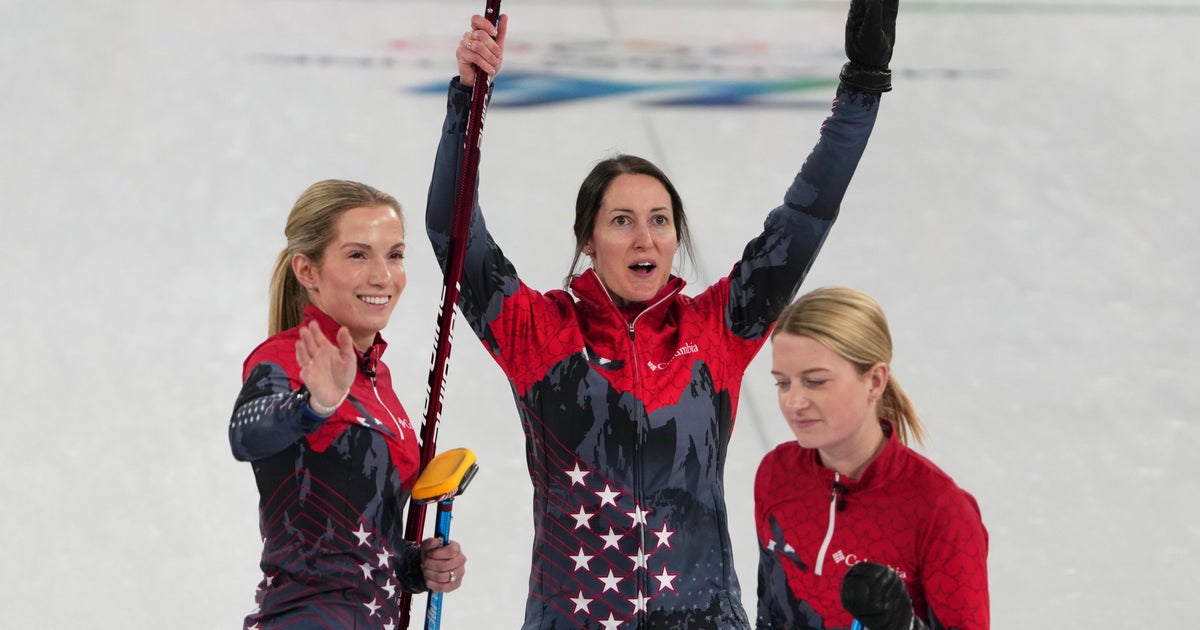
In a historic upset at the Winter Olympics in Milan-Cortina, the U.S. women's curling team defeated Canada 9-8 in a thrilling match on Friday, marking the first time American women have ever beaten their northern neighbors in Olympic competition. The victory came as a surprise even to the players themselves, who learned of its significance only after the final stone had been thrown. Led by skip Tabitha Peterson, the team from Minnesota capitalized on several errant shots by Canada's world No. 1 squad, securing the win in the eighth end after a tense back-and-forth battle on the ice at the Curling Arena in Cortina d'Ampezzo.
The match, part of the round-robin stage, saw the U.S. team improve to 2-1 in the tournament, following an earlier win against Korea and a loss to Sweden. Canada's Team Homan, skipped by the formidable Rachel Homan, entered the game as heavy favorites, having medaled in every Winter Olympics since curling debuted as an official sport in 1998. Until this point, the U.S. women had never managed to topple Canada in Olympic play, a streak that underscores the Canadians' dominance in the sport.
"If that's true," said Taylor Anderson-Heide, a Minneapolis native and third on the U.S. team, in a post-match interview with The Associated Press, "I think we just played a really good game. They're No. 1 in the world." Her teammate, second Tara Peterson of Shoreview, Minnesota, added to the excitement: "It just always feels really good to beat (Canada skip) Rachel Homan. So any team to beat them, that's pretty impressive."
The game was a nailbiter from the start, with both teams trading ends and points. Canada took an early lead, but the Americans clawed back, forcing Homan's crew into difficult positions with precise sweeping and strategic throws. In the decisive moments, a few weak shots from the Canadians allowed the U.S. to steal points, culminating in a fist-pumping celebration as the team walked arm-in-arm down the ice toward their coaches.
Tara Peterson, reflecting on the milestone, told reporters, "Apparently, we've never beat them in the Olympics before. That makes it just extra special." This win contrasts with the U.S. men's team's breakthrough in 2018, when they first defeated Canada in the round-robin and semifinals en route to claiming gold in Pyeongchang, South Korea. For the women, however, Friday's result shattered a long-standing barrier in the sport.
The current U.S. women's team embodies a blend of everyday resilience and elite athleticism, much like their younger male counterparts who captured attention in recent Games. Alongside sisters Tabitha and Tara Peterson, the roster features lead Cory Thiesse, known for her composure under pressure after earning a silver medal in mixed doubles earlier this week, and alternate Aileen Geving, also from Minnesota. Anderson-Heide rounds out the core four, bringing a mix of experience and fresh energy to the sheet.
What sets this team apart is their grounded approach to life off the ice. Three members hold full-time jobs outside of curling: Tara as a dentist, Tabitha as a pharmacist, and Thiesse as a lab technician. Additionally, three are mothers to young children, balancing Olympic dreams with family responsibilities. Tara welcomed her son, Eddie, in September 2024, just months before Tabitha's daughter, Noelle, arrived. Geving's daughter, Sienna, was born after the 2018 Pyeongchang Games.
"That's the cool thing about the sport of curling," Tara Peterson explained to CBS News Minnesota in the lead-up to the Olympics. "Your average Joe is playing against Olympians and we're friends. And after the game we'll sit down, we have dinner. We have a beer. It's just a normal life." This camaraderie extends across borders, even in high-stakes matches like Friday's, where post-game interactions remain cordial despite the rivalry.
Tabitha Peterson, the team's skip and tactician, approaches the Olympics with a pragmatic mindset. "It's another competition," she told CBS News Minnesota. "And try not to focus like, oh my God, we're at the Olympics." Her leadership has been key in fostering a team dynamic that thrives on mutual support, allowing players to perform without the weight of external expectations overwhelming them.
Curling's inclusion in the Olympics since Nagano in 1998 has seen Canada assert unparalleled supremacy among women's teams, with multiple golds and consistent podium finishes. The sport, often called 'chess on ice,' requires not just physical skill but mental acuity, as players must read the ice, anticipate opponents' moves, and execute under immense pressure. The U.S. team's victory highlights a growing parity in the women's game, where nations like Sweden and Japan are also challenging the traditional powers.
Friday's match wasn't without its drama. In the early ends, Canada built a 4-2 lead, leveraging Homan's pinpoint accuracy. But the Americans responded in the fifth end, scoring three to tie it up. The back half saw missed opportunities on both sides, with the U.S. stealing a crucial point in the seventh to take the lead for good. Spectators at the arena, bundled against the Italian Alps' chill, erupted as the final stone settled, confirming the 9-8 scoreline.
Team Homan, despite the loss, remains a force in the tournament, sitting at 2-1 themselves according to preliminary standings. Homan, a veteran of multiple Olympics, has spoken in past interviews about the pressures of representing Canada in curling, a national pastime. While no direct quotes from the Canadian side were available immediately after the match, sources close to the team noted their disappointment but resolve to rebound in upcoming games.
For the U.S. women, this win injects momentum into their campaign. With several round-robin matches remaining before the semifinals on Friday, February 23, they face a gauntlet including Japan, Britain, and a rematch potential with top contenders. Their current 2-1 record positions them well, but consistency will be key in a field where every end can shift fortunes.
Beyond the ice, the team's story resonates as a narrative of perseverance. As working professionals and parents, they exemplify curling's accessibility, a sport where equipment costs are low and venues are community rinks worldwide. This Olympic debut for many underscores the growth of women's curling in the U.S., bolstered by programs in Minnesota, the epicenter of American curling.
Looking ahead, the U.S. team aims to build on this historic moment, potentially eyeing a medal run. As Tabitha Peterson put it, treating the Games as "just another tournament" might be the secret to their success. With the world watching, these Minnesota curlers have not only made history but inspired a new generation to take up brooms and stones.