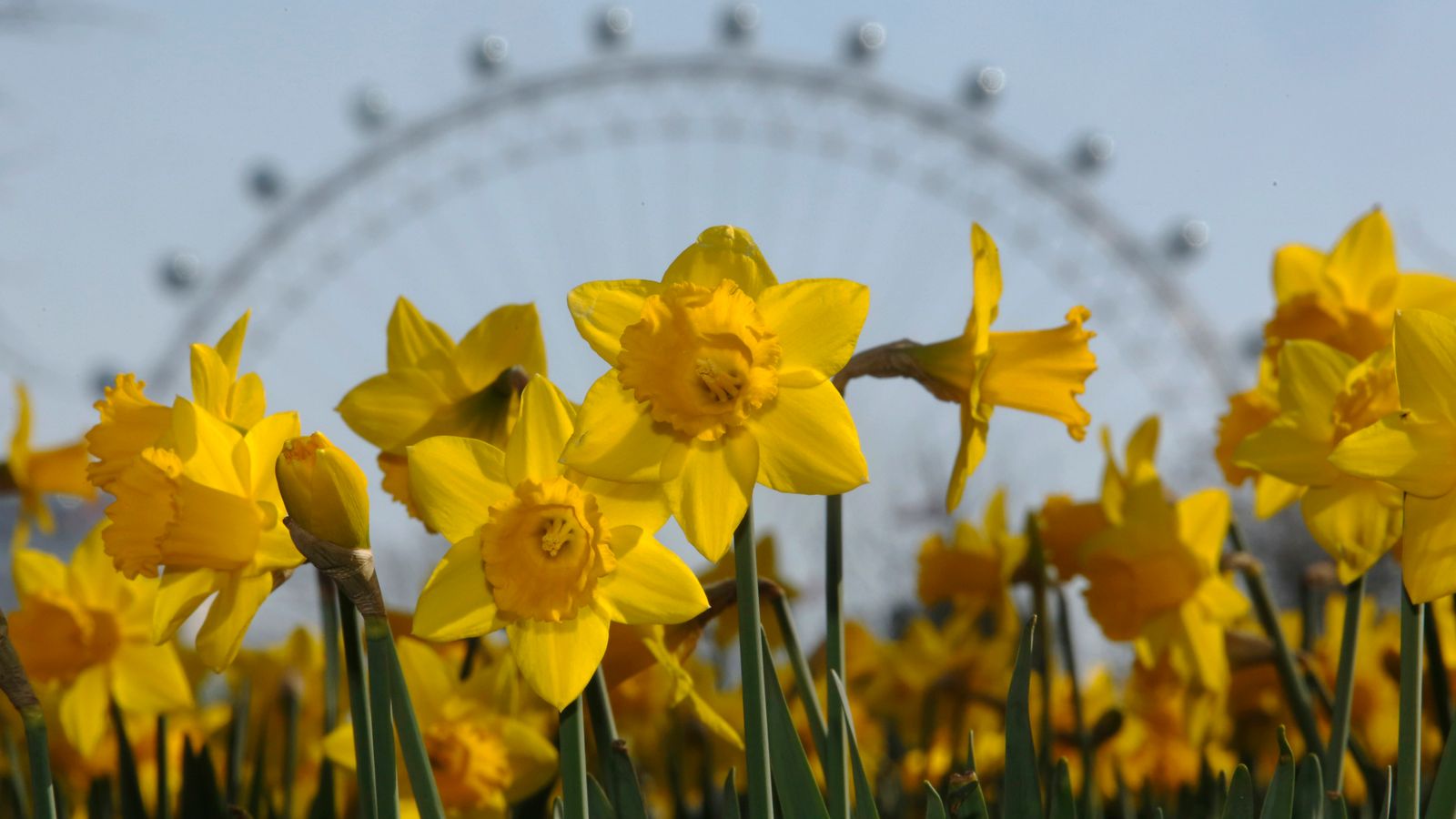
LONDON — The United Kingdom experienced a surprising burst of warmth this week, with temperatures soaring to levels not seen in February since 2019, only for forecasters to predict a swift cooldown as spring's floral displays prepare to unfold.
On Wednesday afternoon, thermometers at Kew Gardens in London hit 18.6 degrees Celsius, marking the hottest February day in the country since records began tracking such anomalies five years ago. Parts of Kent and Suffolk also topped 18 degrees Celsius, outpacing the mercury in some Mediterranean spots like Spain and Malta. This unseasonal heat provided a welcome respite for many after a sodden start to 2024, but meteorologists warn that cooler conditions are on the horizon.
Sky News meteorologist Dr. Christopher England explained the shift, attributing it to a strengthening westerly wind that will usher in cloud cover and rain across most of the nation starting Thursday. "It will turn cooler from Thursday," Dr. England said, adding that the change could bring precipitation to wide swaths of the UK. Despite the dip, he noted that temperatures are expected to remain above average for the time of year, offering some continuity to the mild spell.
The warm interlude has already sparked early signs of spring across gardens and parks. According to the Royal Horticultural Society (RHS), plants like daffodils, camellias, cyclamen, and hyacinths are blooming at the charity's sites, accelerated by the recent balmy weather. Tim Upson, RHS director of gardens and horticulture, described the phenomenon as a "welcome explosion of colour and new life over the next two weeks," predicting vibrant displays as forecasts hold steady with mild conditions, occasional sunshine, and daytime highs in the double digits through the coming fortnight.
This floral awakening comes against a backdrop of meteorological extremes that have defined the early months of the year. Data from the UK Centre for Ecology and Hydrology revealed that Northern Ireland and portions of southwest England endured their wettest January on record, with relentless downpours saturating soils and swelling rivers. The deluge contributed to widespread disruptions, from flooded roads to overwhelmed drainage systems, leaving communities grappling with the aftermath well into February.
The Environment Agency (EA) has issued stark warnings about lingering risks from this precipitation overload. Officials highlighted the threat of groundwater flooding, an insidious hazard where water seeps upward through the earth after prolonged heavy rain, potentially persisting for months. "It's an invisible threat," EA representatives have described it, emphasizing how saturated underground aquifers can lead to sudden inundations in low-lying areas without the dramatic onset of surface floods.
While the recent heatwave offered a brief thaw in the gloom, it underscores the erratic patterns increasingly common in the British climate. Historical comparisons show that February 2019's record was set amid similar mild conditions, but today's warmth arrives after an even wetter prelude. Gardeners and botanists at RHS sites report that the accelerated blooming could extend the season's vibrancy, though experts caution that any return of frost might nip early buds in the bud—quite literally.
Dr. England's forecast aligns with broader models from the Met Office, which predict a mix of showery intervals and brighter spells over the weekend, with temperatures settling around 10 to 13 degrees Celsius in southern England. Further north, Scotland and Northern Ireland may see slightly cooler readings, but nothing to derail the overall above-average trend. This balance could prove ideal for the anticipated "explosion of colour," as Upson put it, drawing visitors to public gardens eager for signs of renewal.
Contextually, the UK's weather this winter has mirrored global trends of variability, influenced by shifting Atlantic currents and a weakening polar vortex. The wet January not only broke records but also exacerbated challenges for agriculture, with farmers in the southwest reporting crop losses and delayed plantings. In Northern Ireland, where rainfall totals exceeded 200 millimeters in some spots—over twice the monthly average—local authorities have been on high alert for secondary flooding effects.
The EA's groundwater concerns are particularly acute in regions like the Thames Valley and parts of East Anglia, where porous chalk bedrock allows water to percolate deeply before resurfacing unpredictably. Agency spokespeople have advised residents in vulnerable areas to monitor for sinkholes or rising damp, recommending elevated storage for valuables and sandbag preparations. These measures, while precautionary, highlight how the January rains' legacy could intersect with the budding spring.
Optimism from horticultural circles tempers these warnings. Upson's enthusiasm reflects a broader sentiment among green spaces managers, who see the mild forecast as a boon for pollinators and biodiversity. At Kew Gardens, where the record temperature was logged, curators noted heightened visitor interest, with families flocking to see the first crocuses pushing through. "It's a reminder of nature's resilience," one gardener remarked anonymously, though officials stress that climate variability demands adaptive strategies for long-term garden planning.
Looking ahead, the next two weeks could solidify this as a memorable transition into spring. If the mild weather persists as predicted, urban parks from London to Manchester might transform into kaleidoscopes of yellow daffodils and pink camellias, providing a natural antidote to the winter's woes. However, Dr. England cautioned that the westerly winds might intensify, potentially delivering heavier rain to western coasts and hills, where already waterlogged ground poses slip risks for hikers.
Beyond immediate forecasts, this episode invites reflection on the UK's evolving climate narrative. The hottest February day in five years, juxtaposed with record wetness, illustrates the push-pull of warming trends. Scientists at the UK Centre for Ecology and Hydrology, whose January data painted a dire picture, continue to track hydrological recovery, estimating that full soil drying could take until summer in hardest-hit areas.
In the meantime, the promise of blooming landscapes offers a silver lining. As Upson forecasted, the "explosion of colour" may not only beautify the countryside but also boost mental well-being after months of gray skies. Environmental groups, while applauding the spectacle, urge sustained action on emissions to stabilize such swings, though that's a story for policymakers rather than gardeners.
For now, Britons are advised to layer up for the cooldown while keeping an eye on those early flowers. With temperatures dropping but spirits lifting, the UK steps tentatively into what could be a spectacular spring—weather permitting.