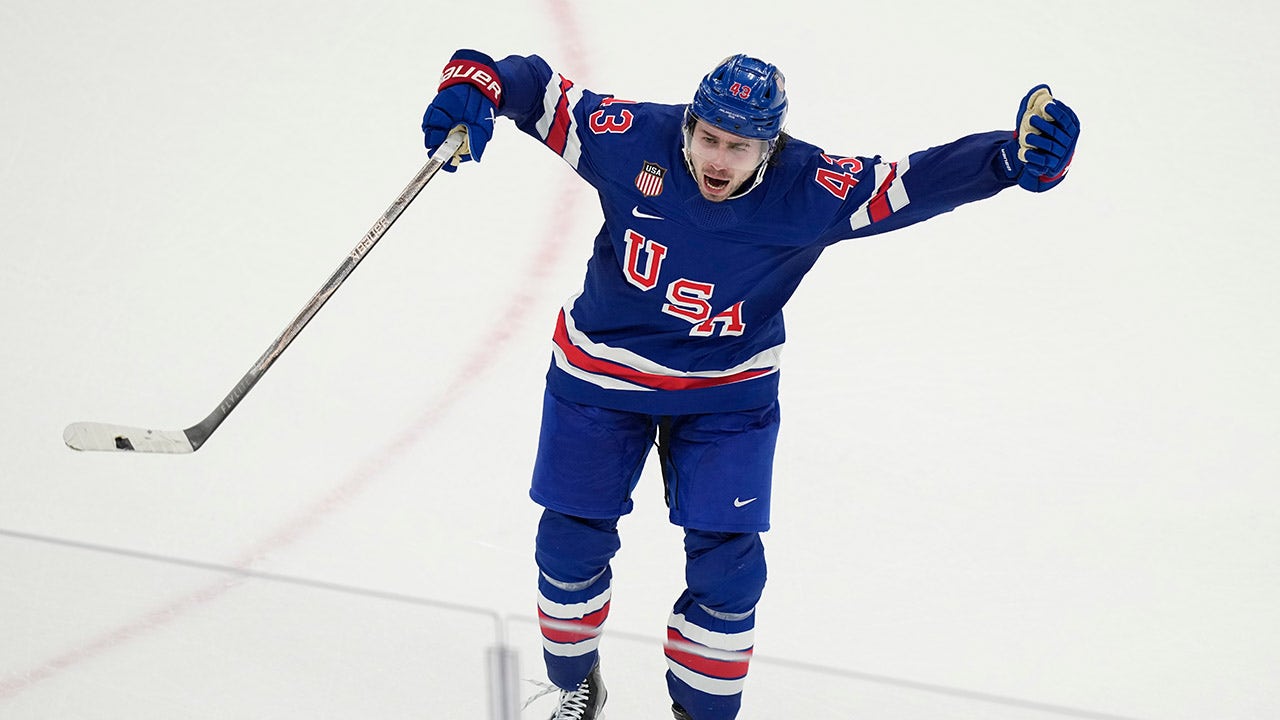
MILAN, Italy — In a thrilling overtime finish at the Milano Cortina 2026 Winter Olympics, U.S. hockey star Quinn Hughes delivered a game-winning goal against Sweden, propelling Team USA into the men's hockey semifinals and sparking waves of national pride back home.
The dramatic 2-1 victory came on February 18, 2026, at the Milano Santagiulia Ice Hockey Arena, where Hughes' shot rang off the inside of the post on the Americans' sixth attempt in overtime, securing their advancement after a tense quarterfinal matchup. The 25-year-old captain of the Vancouver Canucks, playing for Team USA, became an instant hero as the crowd erupted in chants of "U-S-A."
"It's special," Hughes told reporters immediately after the game, reflecting on the sight of American flags waving and the familiar chants echoing through the Italian venue. He added with evident emotion, "I love the U.S., and it's the greatest country in the world. So, I'm happy to represent here with these guys, and it was very special."
Hughes' comments, broadcast widely across sports networks, resonated deeply amid a backdrop of divided sentiments from other U.S. Olympians. While some American athletes competing in Milan have voiced criticisms of the United States during the games, Hughes' unreserved patriotism stood out, drawing praise from fans and aligning him with teammate Brady Tkachuk, who has similarly expressed honor in representing the country.
The game itself was a nail-biter from the start. Team USA struggled early in overtime, missing their first five shots before Hughes found the net, ending Sweden's hopes in the quarterfinals. The win marked a significant step for the Americans in their pursuit of Olympic gold, a medal that has eluded the U.S. men's hockey team since their legendary "Miracle on Ice" victory in 1980.
According to reports from the scene, the atmosphere in the arena was electric, with supporters from both nations filling the stands. Photographers captured Hughes celebrating with his teammates, arms raised in triumph, as the U.S. flag was hoisted in recognition of the hard-fought victory. The match highlighted the intensity of international hockey at the Olympics, where NHL players like Hughes take a break from their club seasons to compete for national glory.
This semifinal berth sets up an intriguing matchup for Team USA against Slovakia in the next round. Meanwhile, in other quarterfinal action on the same day, Canada edged out the Czech Republic in overtime after rallying from a deficit, while Finland staged a similar comeback to defeat their opponent and advance to face the Canadians. These results underscore the parity in men's Olympic hockey, with underdogs often pushing powerhouses to the brink.
Hughes' postgame remarks come at a time when the U.S. role in global sports events has sparked debate. Earlier in the week, CNN host Audie Cornish and New York Magazine contributor Will Leitch discussed on a podcast the possibility of the United States emerging as the "global villain" during the 2026 Winter Olympics, citing geopolitical tensions and domestic issues that could color international perceptions.
In contrast to such commentary, Hughes' words offered a counterpoint of straightforward national affection. Social media platforms lit up with supportive reactions from American fans. One user on X, formerly known as Twitter, posted, "American Hero Quinn Hughes," directly quoting the player's declaration of love for his country.
Another commenter remarked, "This is how every member of Team USA should talk to the cynical media," highlighting a perceived divide between athletes' public statements and media narratives. A third response noted, "Folks mad in the comments cause he loves his country," pointing to polarized online discussions where Hughes' patriotism drew both acclaim and criticism.
Not all U.S. athletes have shared Hughes' enthusiasm. Reports indicate that figure skater Amber Glenn, biathlete Hunter Hess, and alpine skier Mikaela Shiffrin have each made statements during the Milan games criticizing aspects of life in the United States, from social policies to political divisions. Shiffrin, a multiple Olympic medalist, has been particularly vocal in past interviews about broader societal challenges, though specifics from this event were not detailed in immediate coverage.
These differing viewpoints among Team USA members reflect the diverse experiences of athletes who hail from across the country and navigate complex personal and national identities on the world stage. Hughes, hailing from Michigan and a product of U.S. hockey development programs, emphasized the unifying power of competition. His goal not only advanced the team but also reignited conversations about patriotism in sports.
The Milano Cortina Olympics, marking Italy's third time hosting the Winter Games after 1956 in Cortina d'Ampezzo and 2006 in Turin, have featured a blend of familiar winter sports and innovative elements. Hockey remains a cornerstone, drawing massive viewership from North America where the NHL's participation adds star power. Team USA entered the tournament with high expectations, bolstered by a roster including Hughes, Tkachuk, and other NHL standouts.
As the semifinals approach, the stakes escalate for the Americans. A win over Slovakia could propel them toward a medal-round clash with traditional rivals like Canada or Finland. Hughes' performance—logging key minutes on defense while delivering offensively—has been pivotal, with coaches praising his leadership under pressure.
Beyond the ice, Hughes' comments have implications for how U.S. athletes engage with global audiences. In an era of heightened international scrutiny, expressions of national pride can serve as bridges or flashpoints. For now, though, the focus remains on the puck, with Team USA one step closer to potential glory in Milan.
The broader Olympic narrative continues to unfold, with events spanning February 6 to 22, 2026, across venues in Lombardy and Veneto regions. As Americans tune in from afar, Hughes' overtime heroics and heartfelt words offer a moment of unadulterated celebration amid the games' competitive fervor.