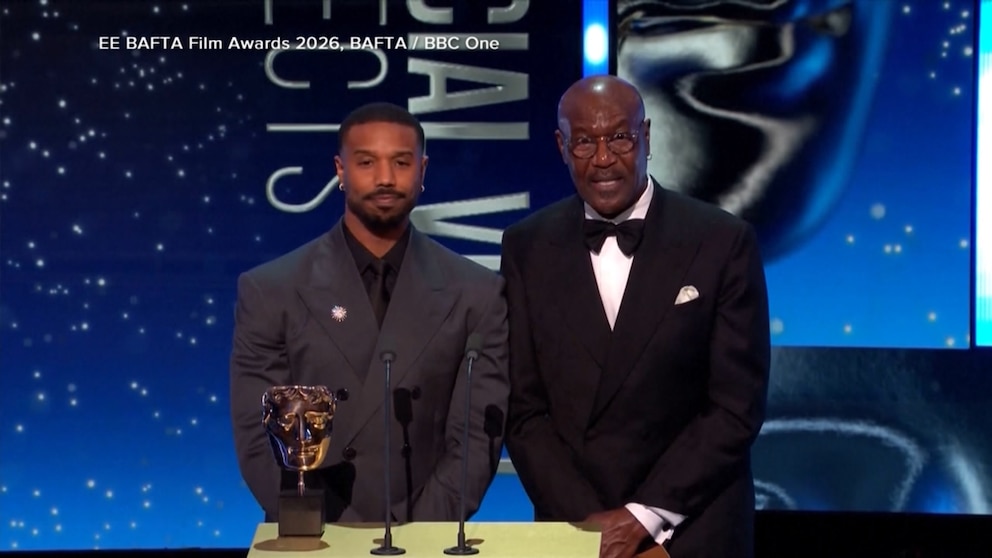
LONDON — A night meant to celebrate the pinnacle of British and international film achievement turned awkward and contentious at the 77th British Academy Film Awards, held Sunday evening at the Royal Festival Hall along London's South Bank. What began as a glamorous affair honoring the likes of Emma Stone for her role in 'Poor Things' and Cillian Murphy for 'Oppenheimer' was overshadowed by unintended audio intrusions during the live BBC broadcast, prompting an immediate apology from the broadcaster to viewers worldwide.
The disruption came in the form of several obscene outbursts attributed to John Davidson, a prominent activist living with Tourette’s syndrome. According to a statement from the BBC, Davidson's vocal tics, which can include involuntary swearing—a common symptom of the neurological disorder—were inadvertently picked up by microphones near the audience seating. 'We are deeply sorry to all viewers for the unintended language heard during the live transmission of the BAFTA Film Awards,' the BBC said in an official apology released shortly after the ceremony concluded around 10 p.m. local time. The network emphasized that the incident was unforeseen and that steps would be taken to prevent similar occurrences in future broadcasts.
Davidson, 42, from Manchester, England, has been a vocal advocate for Tourette’s awareness for over a decade. He founded the Tourette’s Action Support Group in 2015 and has spoken at numerous events, including parliamentary hearings in Westminster, to destigmatize the condition affecting an estimated 1% of the UK population, or about 700,000 people. Witnesses at the event described hearing sudden, sharp expletives during quiet moments, such as when presenter David Tennant was introducing the Best Director category. One attendee, who spoke on condition of anonymity, told reporters outside the venue, 'It was jarring at first—everyone froze for a second—but then you realize it's not intentional. The awards went on without much fuss inside.'
The BAFTA ceremony, organized by the British Academy of Film and Television Arts, drew a star-studded crowd including Margot Robbie, Ryan Gosling, and Emily Blunt. Highlights included 'Oppenheimer' securing seven awards, including Best Film, while 'Killers of the Flower Moon' took home honors for Best Supporting Actress for Lily Gladstone. Organizers confirmed that the audio issue did not affect the onstage proceedings, and no formal complaints were lodged by presenters or winners during the event. BAFTA chief executive Jane Millichip addressed the media post-ceremony, stating, 'The focus remains on celebrating cinematic excellence, and we're grateful to our partners at the BBC for their swift response.'
Tourette’s syndrome, first described by French neurologist Georges Gilles de la Tourette in 1885, is characterized by repetitive, involuntary movements and vocalizations known as tics. While most people with the condition experience mild symptoms, a subset, including those with coprolalia—the compulsion to utter obscene words—face significant social challenges. Davidson himself has shared in past interviews that his activism stems from personal experiences of bullying and misunderstanding. In a 2022 TEDx talk, he said, 'Tourette’s doesn't define me, but ignorance does. We need more visibility to build empathy.' His presence at the BAFTAs was reportedly as a guest invited through a disability inclusion initiative, though details on how his audio was captured remain unclear.
The BBC's apology echoed similar incidents in the past, such as during live sports broadcasts where crowd noise has occasionally included profanity. Broadcasting experts noted that live events pose inherent risks, especially in large venues like the Royal Festival Hall, which seats over 2,500. Tim Davie, BBC director-general, was not immediately available for comment, but a spokesperson reiterated the network's commitment to inclusive programming. 'We support diversity and inclusion, including for those with disabilities, and this was an unfortunate technical oversight,' the spokesperson added.
Social media erupted shortly after the broadcast, with #BAFTABroadcast trending on X (formerly Twitter) in the UK. Some users praised the BBC's quick apology, with one post reading, 'Kudos to BBC for owning up—shows class in a tricky situation.' Others expressed sympathy for Davidson, sharing resources on Tourette’s. However, a minority criticized the decision to allow someone with vocal tics in a live audience, with comments like, 'Family viewing interrupted—BAFTA needs better planning.' Advocacy groups, including the Tourette Association of America, which has UK ties, defended Davidson's right to attend public events. 'Excluding people based on disability is discrimination,' said a representative in a statement emailed to media outlets.
This isn't the first time awards season has intersected with disability awareness. At the 2023 Oscars, Jamie Lee Curtis dedicated her win to the deaf community, highlighting inclusivity efforts in Hollywood. In the UK, BAFTA has ramped up accessibility measures since 2020, including sensory rooms and quiet zones at events. The controversy comes amid broader discussions on neurodiversity in the entertainment industry, with campaigns like #NeurodiverseHollywood pushing for better representation. Davidson's outbursts, while brief—lasting no more than 10-15 seconds total according to viewer reports—sparked conversations about the balance between live authenticity and broadcast standards.
Behind the scenes, production teams for major awards shows employ audio engineers to monitor feeds in real-time, using tools like noise gates to filter unwanted sounds. Sources familiar with the BAFTA setup, speaking anonymously, indicated that the microphones in question were likely lavalier units on nearby seats or ambient room mics. The Royal Festival Hall, a Grade I listed building opened in 1951, has hosted countless events, but this marked a rare glitch for the BAFTAs, which have aired on BBC One since 1952.
As the dust settles, the incident underscores ongoing challenges in accommodating invisible disabilities during high-profile events. Tourette’s UK, a leading charity, reported a 20% uptick in inquiries following similar media exposures, suggesting potential for positive awareness. Davidson has not publicly commented as of Monday morning, but friends close to him described him as 'embarrassed but resilient,' per a report from The Guardian. The activist's work includes authoring the book 'Tics and Tales: Living with Tourette’s' in 2019, which details coping strategies and societal barriers.
Looking ahead, BAFTA officials plan to review audio protocols for next year's ceremony, scheduled for February 2025. The BBC, which reaches over 20 million viewers for the awards in the UK alone, faces no regulatory action from Ofcom at this stage, as the language was not deemed excessively offensive. International audiences, tuning in via streaming platforms, shared similar reactions, with U.S. viewers on ABC News affiliates noting the apology during rebroadcasts.
The episode also highlights the global reach of British awards, contrasting with domestic U.S. events like the Golden Globes, which faced their own controversies earlier this year over diversity reforms. As Hollywood grapples with inclusivity post-#MeToo and amid strikes, incidents like this remind industry leaders of the need for thoughtful accommodations. For now, the BAFTAs' winners, including Greta Gerwig for Barbie's Adapted Screenplay, continue to dominate headlines, but the broadcast mishap has added an unexpected layer to the night's legacy.
In the broader context of disability rights, advocates hope the publicity will amplify voices like Davidson's. With an estimated 300,000 children in the UK living with Tourette’s or similar tic disorders, according to NHS data, events like the BAFTAs offer platforms for visibility. Whether this leads to policy changes in broadcasting remains to be seen, but the swift apology from the BBC sets a precedent for accountability.
As London recovers from the weekend's festivities, the film community turns its attention to the Oscars on March 10 in Los Angeles. For Davidson and his supporters, the focus is on turning an awkward moment into momentum for change. 'One voice, even if involuntary, can start a conversation,' a Tourette’s advocate remarked, encapsulating the potential silver lining amid the controversy.