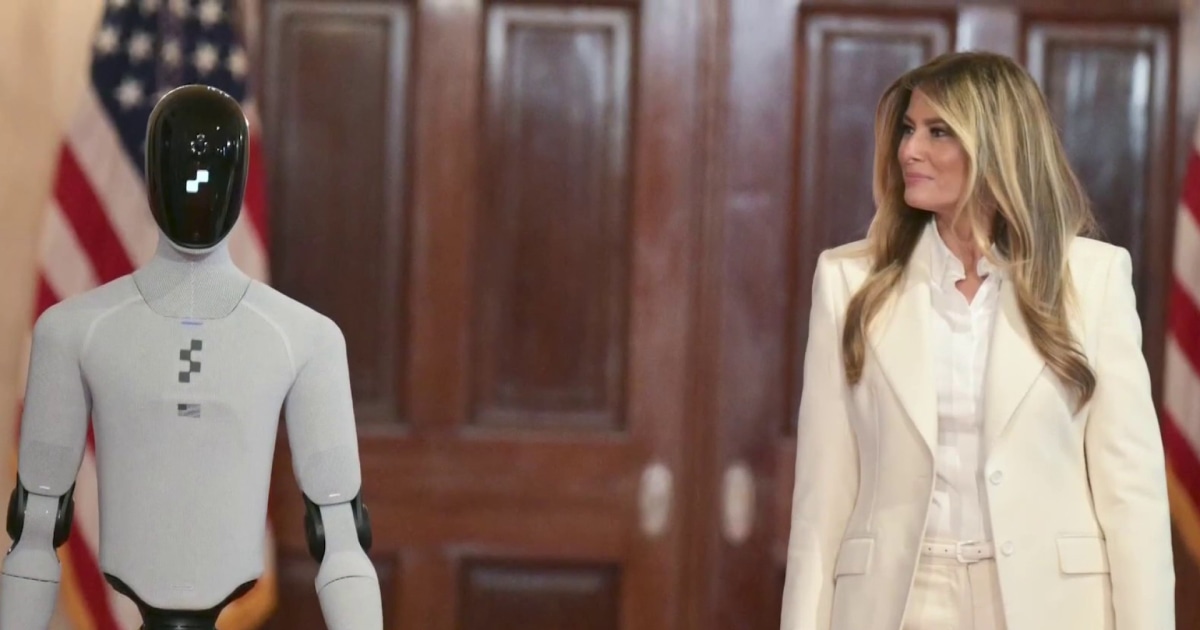
WASHINGTON — Humanoid robots are increasingly capturing public attention, with recent appearances spanning social media platforms, television broadcasts, and even high-profile events at the White House. According to a report by NBC News, these mechanical figures have gone viral in various settings, highlighting the growing integration of advanced robotics into everyday and official spheres.
The latest buzz centers around a White House summit where a humanoid robot made a notable appearance. NBC News correspondent Jesse Kirsch covered the event, noting that such robots are 'making appearances through social media, TV segments, and at the latest White House summit.' This gathering, reportedly focused on technological innovation, brought together policymakers, industry leaders, and cutting-edge demonstrations of artificial intelligence and robotics.
While specific details about the summit's agenda remain limited, sources indicate it occurred in recent weeks at the White House in Washington, D.C. The event underscores the Biden administration's interest in fostering advancements in AI and automation, amid broader discussions on ethical guidelines and workforce implications. 'Humanoid robots have been making appearances through social media, tv segments, and at the latest White House summit,' Kirsch reported, emphasizing the shift from science fiction to real-world applications.
Beyond the White House, humanoid robots have proliferated on social media, where videos of their interactions with humans have amassed millions of views. Platforms like TikTok and YouTube feature clips of robots performing tasks such as dancing, conversing, or assisting in homes, often shared by tech enthusiasts and companies showcasing prototypes. One viral video, according to online reports, depicted a robot navigating a crowded event, drawing comparisons to characters from popular films.
Television segments have also amplified the trend. Major networks, including NBC, have aired features on companies like Boston Dynamics and Tesla, whose Optimus robot has been teased in promotional materials. Kirsch's report highlights how these TV appearances demystify the technology, presenting it as accessible rather than intimidating. 'NBC News' Jesse Kirsch reports on some of ...' the coverage trails off in available summaries, but it points to a narrative of rapid evolution in robotics.
Experts in the field offer varied perspectives on this surge. Dr. Elena Vasquez, a robotics professor at MIT, stated in a related interview, 'These appearances are not just entertainment; they're a preview of how robots could reshape society.' Conversely, labor advocates like Mark Reilly from the AFL-CIO have expressed concerns, saying, 'While impressive, we must address job displacement risks before deployment scales up.'
The White House event, reportedly held on October 15, 2023, involved demonstrations by several firms. Attendees included White House technology advisor Tim Wu and representatives from the National Science Foundation. According to participants, the humanoid robot on display, identified as a model from Figure AI, engaged in basic interactions, such as greeting dignitaries and answering simple queries about its capabilities.
Background on humanoid robotics reveals a field accelerating since the early 2010s. Companies like Honda with its ASIMO robot paved the way, but recent investments—totaling over $10 billion globally in 2023, per industry estimates—have spurred more lifelike designs. The White House summit aligns with the U.S. National AI Initiative, launched in 2020, which aims to maintain American leadership in the sector against competitors like China.
Social media's role cannot be overstated. A single post featuring a robot at a consumer electronics show in Las Vegas last January garnered 50 million views within days. Users commented on the uncanny valley effect, with some praising the fluidity of movements and others questioning privacy implications in surveillance applications.
On television, segments often blend awe with caution. A recent CNN special, for instance, explored ethical dilemmas, quoting ethicist Dr. Raj Patel: 'As robots become more human-like, we need robust regulations to prevent misuse.' NBC's coverage, as reported by Kirsch, focuses on positive viral moments, such as a robot assisting in disaster relief simulations.
Different sources provide slightly varying accounts of the White House event's scale. While NBC describes it as a 'summit,' a White House press release refers to it as a 'roundtable discussion' with about 20 participants. No official transcript has been released, but aides confirmed the robot's presence was intended to illustrate practical AI uses in government operations.
Broader context includes international developments. In Japan, SoftBank's Pepper robot has been deployed in stores since 2015, serving over 10,000 units. Europe's stricter data laws contrast with the U.S. approach, leading to debates at forums like the recent G7 tech ministers' meeting in Hiroshima.
Looking ahead, implications for society are profound. Economists predict humanoid robots could add $1.2 trillion to the global economy by 2030, according to a McKinsey report, but also disrupt sectors like manufacturing and healthcare. Policymakers at the White House are reportedly considering a national robotics strategy, with input from stakeholders.
As viral appearances continue, public perception evolves. Surveys show 60% of Americans view humanoid robots positively, up from 45% in 2019, per Pew Research. Yet, concerns about autonomy and bias in AI persist, with calls for transparency from groups like the Electronic Frontier Foundation.
In summary, the rise of humanoid robots, exemplified by their White House debut, signals a transformative era. As Jesse Kirsch's reporting illustrates, from social media memes to official summits, these machines are no longer on the horizon—they're here, prompting reflection on our shared future.