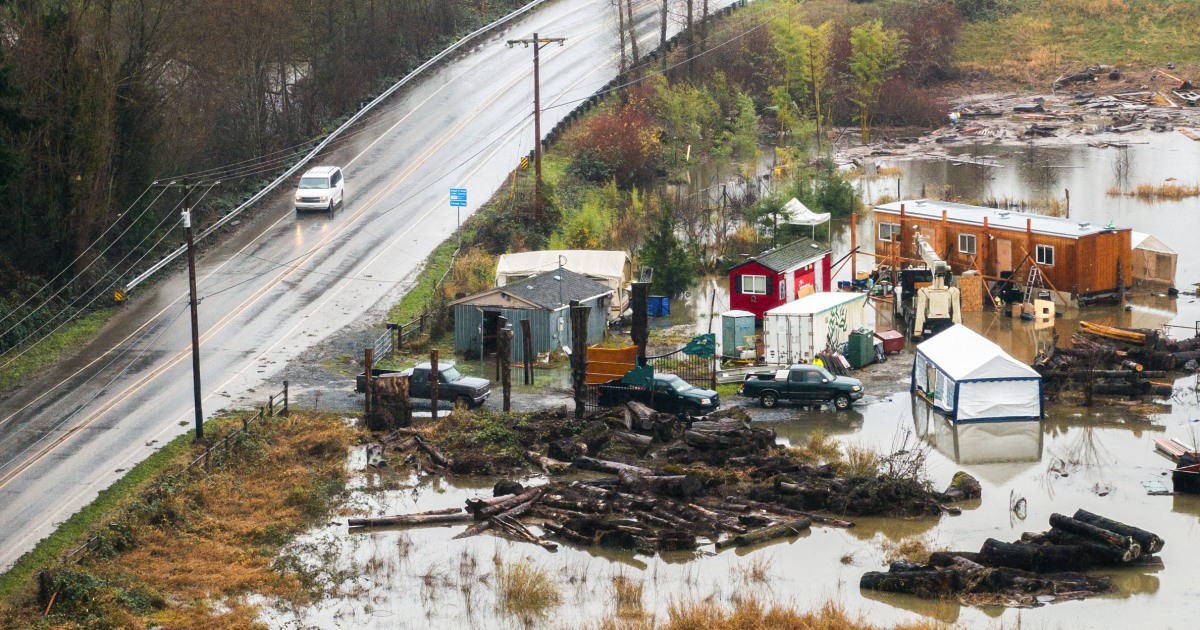
SEATTLE — As relentless atmospheric rivers continue to batter Washington state, the region's aging infrastructure is showing signs of severe strain, with several levees failing, major highways closed, and at least one fatality reported. The storms, which began intensifying around December 8, have led to over 1,200 rescues across 10 counties and prompted widespread evacuations in low-lying areas near Seattle. Gov. Bob Ferguson described the situation as a critical test for the state's flood defenses during a news conference on Tuesday.
The first wave of storms last week largely spared Washington's dams and levees from major damage, but the persistent rainfall has since overwhelmed several key barriers. In the town of Pacific, near the White River in King County, a semipermanent levee breached early Tuesday morning. "About 12:30 last night, there was a leak discovered about the size of a fire hose," said Sheri Badger, a public information officer for the King County Office of Emergency Management. The breach expanded to about 120 feet long, with water seeping through gaps in the HESCO barriers—wire mesh structures filled with sand, soil, or gravel—that had been stacked to reinforce the levee.
In response, King County issued an evacuation alert to approximately 1,300 residents in the affected area. Emergency crews quickly mobilized, adding sandbags and large nylon "super sacks" to shore up the damaged sections and prevent further flooding. This incident follows a similar breach on Monday in Tukwila, south of Seattle, along the Green River, where a 6-foot section of levee washed out. That levee, which had not been fully repaired since sustaining damage in floods about four years ago, prompted evacuation alerts for around 1,100 people. Workers managed to fill the gap swiftly, limiting the extent of the damage.
Highways across western Washington have also been severely impacted, with 13 state routes still shuttered due to flooding and landslides. One of the most critical closures affects Highway 2, a main artery crossing the Cascade Mountains, which officials say could remain impassable for months. Interstate 90, the state's largest east-west corridor, has faced repeated shutdowns from major mudslides. "Our infrastructure has been compromised," Ferguson said at the news conference. "There’s tremendous stress on that infrastructure."
The human toll has been tragically marked by the death of a 33-year-old man in Snohomish County, north of Seattle, early Tuesday. According to the Snohomish County Sheriff's Office, the victim drove his Chevy Tahoe past roadblocks on a flooded farm road in a rural area and into a ditch concealed by rising waters. Courtney O’Keefe, director of communications for the sheriff's office, explained that the man had called a friend when his vehicle became submerged, and that friend promptly dialed 911. "There’s a ditch that drops down the side of the roadway. With floodwaters, it would be hard to tell where the ditch ends and road begins," O’Keefe said. The death remains under investigation, but Ferguson called it "the first fatality as a result of these storms," noting it was a "minor miracle" there hadn't been more.
Rescue operations have been extensive, with more than 1,200 people saved since the storms began on December 8. Floodwaters continue to linger in a patchwork of low-lying areas across western Washington, slowly receding but leaving behind saturated ground and heightened risks. At least two dams are under close scrutiny for potential cracks and breaches, according to the state Department of Ecology. One of these, the Lake Sylvia Dam built in 1918, was rated in "poor condition" with a "significant" hazard potential following its last inspection in November 2024, per the National Inventory of Dams. Andrew Wineke, a spokesman for the department, noted that a failure there could endanger several roads but would not directly threaten houses or people.
The storms' ferocity stems from a series of atmospheric rivers—narrow corridors of water vapor in the atmosphere that can deliver torrential rain, often dubbed "Pineapple Expresses" for their tropical origins near Hawaii. Weather radar often depicts them as fire-hose-like streams of moisture. While the Pacific Northwest is accustomed to one or two such events, this season has brought three major pulses of intense precipitation since December 8. Parts of the North and Central Cascades, the steepest mountains in the continental U.S., recorded up to 16 inches of rain over three days.
"The atmospheric river events were big but not historic," said State Climatologist Guillaume Mauger. "What’s notable is that they were back-to-back." Mauger highlighted how climate change is exacerbating these events: rising temperatures are shifting more precipitation from snow to rain, and a warmer atmosphere holds more moisture, leading to heavier downpours. He referenced a study projecting that by the 2080s, a once-in-100-years flood on the Skagit River could increase in volume by nearly 50 percent. Given existing dams on the river, the research concluded that current flood control measures would be "largely ineffective."
To mitigate risks, Mauger advocated for giving rivers more space to flood naturally, rather than relying solely on fortifications. Western Washington's rivers, which descend sharply from the Cascades into Puget Sound, were once meandering braids across wide floodplains. Over the past century, however, humans have dammed, straightened, and channelized them for water supply, flood control, and hydropower, turning them into confined conduits. In response, communities have built dikes and developed housing and industry right up to the edges of these floodplains, as permitted by planners.
Many of the hardest-hit areas have a history of flooding and are likely to see repeats. With additional storms forecast, dam operators are spilling water from upstream reservoirs to avoid overflows. John Taylor, director of natural resources and parks for King County, said teams are monitoring vulnerable levees and reinforcing known weak points. "You’re seeing levees that typically perform pretty well in floods begin to fail because the levees are getting saturated and there’s a lot of pressure on them," Taylor explained.
Both the Skagit and Snoqualmie rivers are projected to reach or exceed major flood stage by Thursday morning, raising concerns for further breaches and disruptions. King County officials continue to bolster defenses along these waterways, but the back-to-back nature of the storms has left little time for recovery. Ferguson emphasized the need for vigilance, as the region braces for whatever comes next in this unusually active weather pattern.
The ongoing crisis underscores broader vulnerabilities in Washington's infrastructure, much of which dates back decades and was not designed for the intensified storms linked to climate change. While immediate responses have contained some of the worst potential damage, experts like Mauger warn that without adaptive measures—such as restoring natural floodplains—the state could face increasingly severe challenges in the years ahead. As cleanup efforts begin in some areas, the focus remains on protecting lives and property amid the uncertainty of more rain on the horizon.