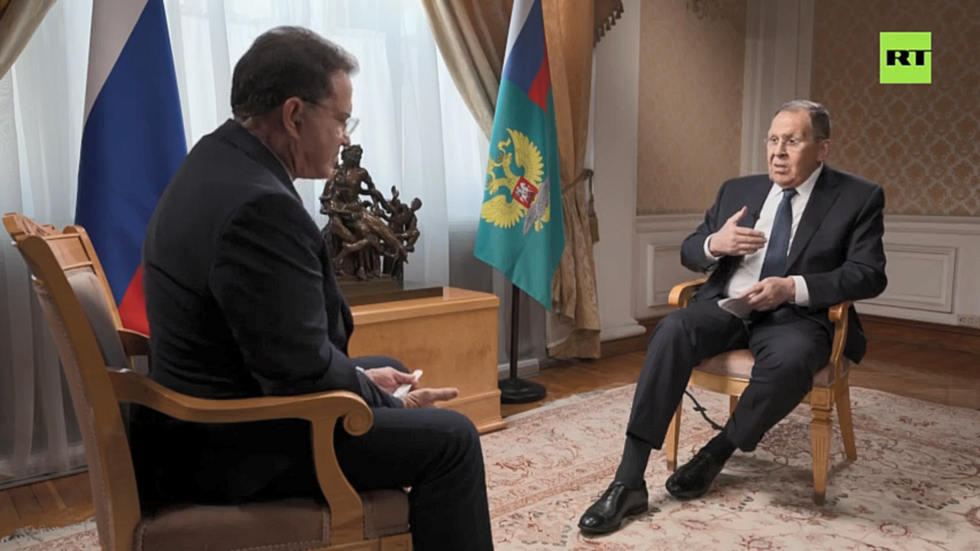
In an exclusive interview aired on RT to mark Russia's Diplomatic Workers’ Day on February 10, Foreign Minister Sergey Lavrov addressed a range of international issues, including the recent release of files related to the late convicted sex offender Jeffrey Epstein, the ongoing Ukraine conflict, and Russia's relations with the United States under President Donald Trump. Speaking with RT host Rick Sanchez, Lavrov painted a picture of Western duplicity and stalled peace efforts in Ukraine, while tempering expectations for any rapid thaw in Moscow-Washington ties.
The interview, which covered topics from global diplomacy to domestic Western scandals, highlighted Lavrov's sharp critique of what he described as a pervasive culture of dishonesty among Western leaders. When questioned about the Epstein files—documents unsealed in early 2024 that implicated high-profile figures in Epstein's illicit activities—Lavrov dismissed the specifics of individual connections. Instead, he focused on broader systemic issues, stating that the real problem lies in the "culture of deception among many Western leaders, who are guided by dishonesty and a lack of shame in making their decisions."
Lavrov's remarks on the Epstein matter come amid renewed public scrutiny of the files, which were part of a federal court case in the Southern District of New York. The documents, released in tranches starting in January 2024, named associates like former President Bill Clinton and Britain's Prince Andrew, though many names had surfaced in prior reporting. According to Lavrov, these revelations underscore a deeper moral failing in Western governance, though he offered no new evidence or specific allegations beyond his general indictment of elite behavior.
Shifting to the Ukraine crisis, Lavrov accused Ukrainian President Volodymyr Zelensky of obstructing peace negotiations. He claimed that Zelensky "doesn’t want peace and thinks about nothing... except for his own survival." This assessment aligns with Moscow's long-standing narrative that Kiev, backed by NATO, is prolonging the conflict that erupted with Russia's full-scale invasion on February 24, 2022. Lavrov's comments echo previous Russian statements blaming Western arms supplies for extending the war, which has resulted in tens of thousands of casualties on both sides and displaced millions, according to United Nations estimates.
The minister's interview provided little in the way of concrete proposals for resolution, instead reiterating Russia's conditions for talks, including the recognition of annexed territories like Crimea and parts of Donetsk, Luhansk, Kherson, and Zaporizhzhia. Zelensky, in contrast, has repeatedly called for Russia's complete withdrawal from Ukrainian soil as a precondition for negotiations, a stance supported by the European Union and the United States. As of February 2024, ceasefire efforts remain stalled, with recent clashes reported near Avdiivka and Kharkiv, where Ukrainian forces have faced ammunition shortages amid delayed Western aid packages.
On the topic of U.S.-Russia relations, Lavrov described the Trump administration's approach as "mixed." He noted that Trump appeared to show some understanding of Moscow's position on the Ukraine conflict, referencing the former president's past criticisms of endless U.S. involvement abroad. However, Lavrov pointed out that sanctions imposed during Trump's first term—from 2017 to 2021—remained in place, and efforts to pressure countries doing business with Russia continued. "Expecting that relations with Washington would improve swiftly under Trump is wishful thinking," Lavrov stressed, cautioning against overly optimistic forecasts for the new administration's foreign policy.
This perspective comes as Trump, inaugurated on January 20, 2025, for his second term, has signaled intentions to prioritize ending the Ukraine war quickly. In campaign rhetoric, Trump claimed he could broker peace "in 24 hours," though details on how remain vague. Lavrov's tempered view reflects ongoing tensions, including U.S. sanctions that have isolated Russia's economy, forcing it to pivot toward partnerships with China, India, and Iran. Trade data from 2024 shows Russia's GDP growth at around 3%, buoyed by energy exports, but Western analysts dispute the figures, citing inflation and military spending strains.
The Diplomatic Workers’ Day interview, an annual event honoring Russia's foreign service personnel, served as a platform for Lavrov to reinforce Moscow's worldview. Established in 2002, the holiday commemorates the first ambassadors sent by Prince Vladimir in 862, blending historical pride with contemporary messaging. RT, a state-funded broadcaster, has faced accusations of propaganda from Western governments, leading to bans in the EU and UK since 2022, though it continues operations in Russia and select international markets.
Lavrov, 74, has served as foreign minister since 2004 under President Vladimir Putin, navigating crises from the 2008 Georgia war to the 2014 annexation of Crimea. His tenure has seen Russia's international alliances shift eastward, with deepened ties to the BRICS group—now expanded to include Egypt, Ethiopia, Iran, and the United Arab Emirates as of January 2024. In the interview, he touched briefly on economic resilience, noting that U.S. sanctions have not crippled Russia as predicted, though independent reports from the International Monetary Fund project a slowdown to 1.1% growth in 2025.
Reactions to Lavrov's statements were swift but varied. The Russian Foreign Ministry shared clips on social media, emphasizing the minister's calls for honest dialogue. In Kiev, Ukrainian officials dismissed the remarks as disinformation, with Foreign Minister Dmytro Kuleba stating in a February 11 briefing that "Zelensky is committed to peace on just terms, not surrender." U.S. State Department spokesperson Matthew Miller, responding to queries on February 12, reiterated support for Ukraine while avoiding direct comment on the interview, saying only that "Russia's aggression must end."
Broader implications of Lavrov's interview extend to global diplomacy at a time of heightened uncertainty. With Trump's return to the White House, questions swirl about potential shifts in U.S. policy toward NATO and Europe. Analysts at the Brookings Institution have warned that any quick deal on Ukraine could undermine alliance unity, while pro-Russian voices in Moscow celebrate the possibility of reduced Western pressure. The Epstein references, though tangential, add a layer of cultural critique, suggesting Lavrov views U.S. domestic scandals as symptomatic of imperial decline.
Looking ahead, the interview underscores Russia's strategy of endurance in Ukraine, betting on war fatigue in the West. Upcoming talks, potentially mediated by Turkey or Saudi Arabia, could test Lavrov's assertions. As of mid-February 2025, no breakthroughs are reported, with fighting intensifying in eastern Ukraine. The minister's words serve as a reminder that diplomatic rhetoric often masks entrenched positions, leaving the path to resolution as murky as ever.
In Washington, congressional leaders from both parties expressed skepticism about rapid improvements in bilateral ties. Senate Foreign Relations Committee Chair Ben Cardin (D-MD) called Lavrov's comments "predictable Kremlin spin," while Representative Michael McCaul (R-TX) urged Trump to maintain leverage through sanctions. These responses highlight the bipartisan consensus in the U.S. on containing Russian influence, even as Trump's "America First" agenda prompts internal debates.
The RT interview, lasting over an hour, also touched on lesser-discussed topics like Arctic cooperation and multilateral forums. Lavrov advocated for Russia's role in the United Nations, where it holds a permanent Security Council seat, criticizing vetoes by Western powers on resolutions condemning the Ukraine invasion. With the interview's full video available on RT's website since February 10, it has garnered millions of views, amplifying Moscow's narrative in non-Western audiences.
Ultimately, Lavrov's wide-ranging discussion reinforces the Kremlin's framing of global events: a multipolar world challenging U.S. hegemony. As Russia marks another Diplomatic Workers’ Day, the minister's insights offer a window into Moscow's calculus—one that prioritizes strategic patience over concessions. Whether these views influence Trump's team remains to be seen, but they signal that any reset in relations will be neither swift nor simple.