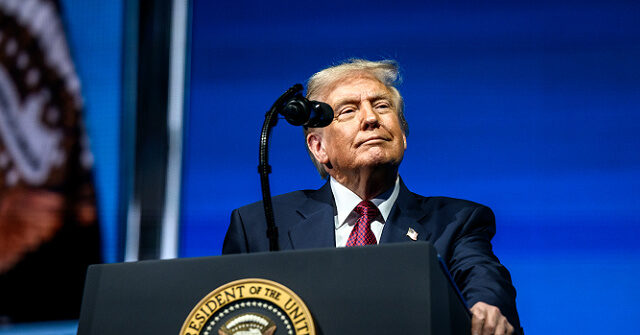
WASHINGTON — President Donald Trump addressed a gathering of governors from across the United States at the White House on Saturday, February 21, 2026, in what appeared to be a pivotal moment for his administration's trade policies. The event, held in the East Room following a formal governors' dinner, came just hours after the Supreme Court issued a ruling striking down the president's use of the International Emergency Economic Powers Act (IEEPA) to impose tariffs on imports. According to reports from the scene, Trump used the platform to rally support for his economic agenda amid ongoing legal and international challenges.
The Supreme Court's decision, handed down earlier that day in a 5-4 ruling, declared that Trump's invocation of IEEPA to justify broad tariffs exceeded the statute's intended scope. The IEEPA, enacted in 1977, grants the president emergency powers over economic transactions during national emergencies, but the majority opinion, written by Justice Elena Kagan, argued that trade imbalances did not constitute the kind of acute crisis the law was designed to address. "The president's authority under IEEPA is not a blank check for reshaping global trade," Kagan wrote in the opinion, as reported by court documents released to the press.
In response to the ruling, Trump swiftly pivoted to alternative legal authorities to maintain his tariff regime. Administration officials announced that the president had enacted worldwide tariffs under Section 232 of the Trade Expansion Act of 1962 and Section 301 of the Trade Act of 1974, which allow for protective measures against national security threats and unfair trade practices, respectively. Initially set at 10 percent on all imports, these tariffs were raised to 15 percent later on Saturday afternoon, according to a White House statement. The move was described by Commerce Secretary Wilbur Ross in a briefing as "a necessary step to protect American workers and industries from foreign exploitation."
The governors' dinner itself was a bipartisan affair, with attendees including Republican stalwarts like Florida's Ron DeSantis and Texas's Greg Abbott, as well as Democrats such as New York's Kathy Hochul and California's Gavin Newsom. Organized annually by the National Governors Association, the event typically focuses on federal-state relations, but this year's gathering was overshadowed by the tariff controversy. Sources close to the administration said Trump sought to shore up support from state leaders, many of whom represent industries directly affected by trade policies.
During his remarks, which lasted approximately 45 minutes, Trump defended his approach to international trade, emphasizing the need for reciprocity in global markets. "We've been taken advantage of for decades by countries that don't play fair," Trump said, according to transcripts provided by the White House press office. He highlighted the tariffs' role in bringing manufacturing jobs back to the U.S., citing figures from the Bureau of Labor Statistics that showed a 2.5 percent increase in manufacturing employment since his inauguration in January 2025.
Not all governors present were on board with the president's strategy. Democratic governors, in particular, expressed concerns about the potential for retaliatory measures from trading partners. New York Governor Kathy Hochul, speaking to reporters after the dinner, noted the impact on her state's economy. "Tariffs like these could raise costs for consumers and disrupt supply chains that our businesses rely on," Hochul said. "We need a balanced approach that considers the views of states on the front lines." Her comments echoed those from business groups, including the U.S. Chamber of Commerce, which warned in a statement that the 15 percent hike could add billions to household expenses.
The legal battle over the tariffs traces back to Trump's first term, when similar measures targeting steel, aluminum, and Chinese goods sparked lawsuits and trade wars. In 2018, the administration used Section 232 to impose duties on metals, citing national security, a move upheld by lower courts but now under renewed scrutiny. The recent IEEPA challenge was brought by a coalition of importers and consumer advocacy groups, who argued that declaring a "trade emergency" stretched the law beyond its limits. The Supreme Court's intervention marks the second major setback for Trump's trade agenda in as many months, following a federal appeals court ruling in December 2025 that limited executive authority on export controls.
International reactions were swift. The European Union, through spokesperson Margaritis Schinas, condemned the tariff escalation as "unilateral and destabilizing." China’s Ministry of Commerce issued a statement vowing countermeasures, potentially targeting U.S. agricultural exports, a sector vital to Midwestern states. Canadian Prime Minister Justin Trudeau, in a televised address, urged dialogue over escalation, recalling the renegotiated USMCA trade deal from 2020 that had eased previous tensions.
Back at the White House, the atmosphere during the dinner was described by attendees as cordial but tense. Governors dined on a menu featuring American classics like grilled steak and apple pie, served in the State Dining Room before moving to the East Room for Trump's speech. White House Chief of Staff Susie Wiles, who helped coordinate the event, told reporters it was an opportunity for the president to "listen to governors' input on how federal policies affect their states."
Trump's address also touched on broader themes of his second term, including infrastructure investments and energy independence. He praised Republican governors for their support in implementing federal grants under the Bipartisan Infrastructure Law, despite his past criticisms of the measure. "Together, we're building the strongest economy in the world," Trump declared, drawing applause from about two-thirds of the room, according to observers.
Critics, however, see the tariff maneuvers as a risky gamble. Economists from the Peterson Institute for International Economics estimated that the 15 percent tariffs could reduce U.S. GDP growth by 0.5 percentage points in 2026, with higher prices for electronics, automobiles, and clothing. "This is not the path to prosperity; it's a recipe for inflation and isolation," said project director Adam Posen in an interview with Bloomberg News.
As the night drew to a close, governors departed the White House under a clear winter sky, their motorcade stretching down Pennsylvania Avenue. The event underscored the delicate balance between federal authority and state interests in an era of aggressive economic nationalism. With Congress set to reconvene next week, lawmakers from both parties have signaled plans to introduce legislation either curbing or expanding presidential trade powers.
Looking ahead, the administration faces multiple fronts: ongoing WTO disputes, potential midterm election fallout, and the need to negotiate with allies strained by the tariffs. Trump has scheduled follow-up meetings with key governors, including a bilateral with Texas's Abbott on Monday. Whether these efforts can unify support remains to be seen, but the governors' dinner has clearly set the stage for heated debates on America's place in the global economy.
For now, the White House maintains that the tariffs are temporary measures until fairer trade deals are secured. "We're winning on trade like never before," Press Secretary Karoline Leavitt said in a post-event briefing. As details of the speech circulate and economic data rolls in, the full impact of Saturday's developments will become clearer in the weeks to come.