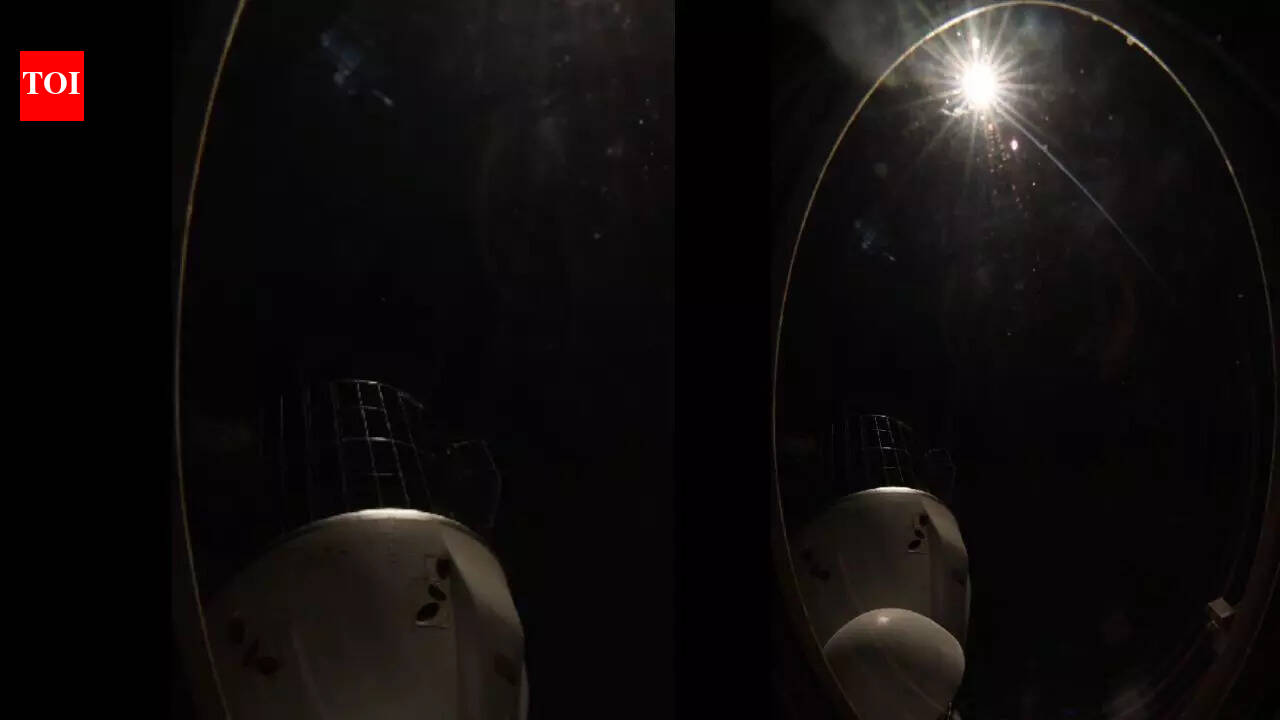
APPLETON, Wis. — A mesmerizing time-lapse video captured from the International Space Station has taken the internet by storm, offering viewers a rare glimpse of Earth's dynamic beauty as seen from orbit. NASA astronaut Zena Cardman, currently aboard the ISS as part of Expedition 70, shared the 60x speed footage on social media this week, showcasing vivid displays of lightning storms, swirling oceans, dramatic sunsets, and the moon's ethereal glow against the planet's curvature. The video, which has garnered millions of views across platforms like X and Instagram, highlights the awe-inspiring vistas that astronauts experience daily in low Earth orbit.
Cardman, a geobiologist by training who joined NASA in 2017, is on her first spaceflight, launched aboard a SpaceX Crew-7 mission in August 2023. According to NASA's mission logs, she has been conducting a variety of experiments during her approximately six-month stay, including studies on microbial behavior in microgravity and Earth observation tasks. The time-lapse, compiled from hours of raw footage recorded over several days, accelerates the passage of time to reveal patterns invisible to the naked eye from space, such as the rapid flicker of thunderstorms across continents and the rhythmic ebb of ocean currents.
"Seeing the Earth from space never gets old," Cardman wrote in her post accompanying the video, a sentiment echoed by many who have viewed it. The footage begins with a serene view of the Pacific Ocean at dusk, where the sun dips below the horizon in a blaze of orange and purple hues, casting long shadows over cloud formations. As the sequence progresses, bright flashes of lightning illuminate the night side of the planet, particularly over regions like the Congo Basin and the southeastern United States, where seasonal storms are frequent.
Experts in atmospheric science have praised the video for its educational value. Dr. Emily Thompson, a researcher at the National Oceanic and Atmospheric Administration (NOAA), noted in a recent interview that such visuals underscore the interconnectedness of Earth's systems. "Lightning isn't just a spectacle; it's a key driver of weather patterns and even influences climate models," Thompson said. "Videos like this from the ISS help demystify these processes for the public."
The oceans, too, steal the show in the time-lapse, with swirling eddies of phytoplankton blooms visible off the coasts of South America and Australia. These colorful vortices, often tinged in greens and blues, represent nutrient-rich upwellings that support marine life. According to a report from the European Space Agency (ESA), which collaborates with NASA on ISS operations, similar imagery has been used in ongoing research to track ocean health amid climate change. Cardman's video, shot using the station's external high-definition cameras, aligns with these efforts, providing unfiltered data for scientists back on Earth.
Sunsets from space occur every 90 minutes as the ISS orbits at about 17,500 miles per hour, completing 16 laps around the planet each day. In the footage, these events unfold in mere seconds at 60x speed, creating a symphony of light that transitions seamlessly into starry nights. The moon makes a cameo appearance toward the end, rising over the terminator line—the boundary between day and night—its craters faintly visible against the void. Astronomers say such captures remind us of the moon's role in stabilizing Earth's tilt and tides.
This isn't the first time Cardman has shared stunning visuals from her mission. Earlier this month, she posted images of auroras dancing over the poles, attributing the display to heightened solar activity from the current solar maximum cycle, which peaks around 2025. NASA's public affairs office confirmed that all such shares are reviewed to ensure they align with mission protocols, emphasizing the role of astronauts in public outreach. "Zena's posts humanize the experience of spaceflight," said NASA spokesperson Kelly Humphries. "They inspire the next generation of explorers."
The viral nature of the video reflects a broader trend in space communication. Since the turn of the millennium, astronauts have increasingly used social media to bridge the gap between orbit and everyday life. Predecessors like Chris Hadfield, who famously covered David Bowie's "Space Oddity" in 2013, set the stage for this engagement. Cardman's time-lapse has sparked discussions on platforms, with users from around the world commenting on how it evokes a sense of planetary unity amid global challenges like wildfires and hurricanes.
From a technical standpoint, the video was created using time-lapse software developed by NASA's imagery team, compressing roughly 24 hours of observation into a two-minute clip. Filming took place during Cardman's off-duty hours, as the ISS crew follows a rigorous schedule of 16-hour workdays. The station itself, a collaborative project involving the United States, Russia, Europe, Japan, and Canada, has been continuously occupied since 2000, serving as a laboratory for over 3,000 experiments to date.
While the video celebrates Earth's splendor, it also subtly highlights vulnerabilities. Lightning storms captured in the footage often correlate with extreme weather events, a topic of concern as climate data from the ISS contributes to forecasts. The World Meteorological Organization reported last year that global thunderstorm activity has increased by 12% over the past two decades, potentially linked to warming oceans. Cardman's imagery, though artistic, provides raw material for these analyses.
Oceanographers, in particular, have seized on the visuals. The swirling patterns visible in the Atlantic and Indian Oceans mirror data from satellites like NASA's Aqua, which monitor sea surface temperatures. "These time-lapses are like nature's own infographics," said marine biologist Dr. Raj Patel of the Scripps Institution of Oceanography. "They show how currents transport heat and life across the globe, affecting everything from fisheries to weather."
As Cardman's mission nears its end—she is slated to return in March 2024—the video serves as a poignant reminder of the ISS's impending transition. NASA plans to deorbit the station by 2031, paving the way for commercial space stations. In the meantime, such shares keep the public invested in human spaceflight, which faces budgetary scrutiny. Congress approved $25.4 billion for NASA in fiscal year 2024, with a portion earmarked for ISS operations and Artemis program lunar missions.
Looking ahead, Cardman has hinted at more content from space, including live Q&A sessions with students. Her background in geology, with a doctorate from the University of Oklahoma, positions her uniquely to interpret these planetary phenomena. As the video continues to circulate, it not only entertains but educates, fostering appreciation for the fragile blue marble that sustains us all.
In Appleton and beyond, local astronomy clubs have already incorporated the footage into virtual viewings, drawing crowds eager for a taste of the cosmos. "It's a window to wonder," said club president Maria Gonzalez. Whether sparking careers in STEM or simply providing a moment of respite, Cardman's time-lapse endures as a testament to humanity's reach—and the timeless allure of home from afar.