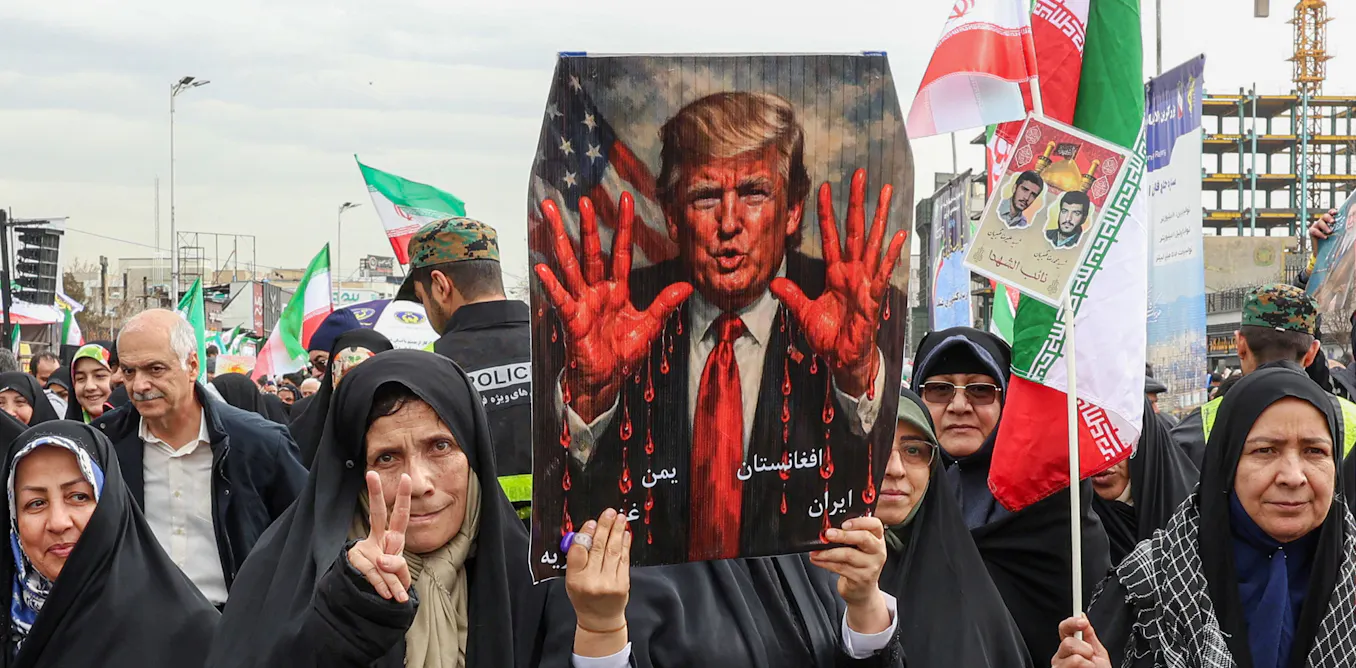
In a provocative social media post that has drawn widespread condemnation, former President Donald Trump warned of dire consequences for Iran amid escalating tensions in the Middle East. On April 7, Trump shared on his Truth Social platform that unless Iran complied with his demands, 'a whole civilization will die tonight.' This statement followed his earlier assertion that he would bomb the country back to 'the stone age,' remarks that have reignited debates over rhetoric, history, and international relations.
The post came during a period of heightened conflict, as Trump, campaigning for a potential return to the White House, has frequently invoked aggressive stances on foreign policy. According to reports, the comments were part of a broader pattern of Trump's online activity, where he has used the platform to amplify his views on global adversaries. Critics, including international relations experts, have labeled the language as inflammatory and potentially inciting, even by the standards of his past presidency.
Trump's use of the term 'civilization' in his threat has prompted scholars to revisit the word's origins and the loaded implications it carries. The concept of civilization, as explored in a recent analysis by historian and academic writer from The Conversation, emerged during the 18th-century Enlightenment era, a time marked by European conquest and intellectual shifts. Coined amid an age of enslavement and expansion, the term was first notably employed by French political economist Victor de Riqueti, Marquis de Mirabeau, in his 1756 work L'ami des Hommes, ou, Traité de la Population, or The Friend of Man, or Treatise on Population.
Mirabeau, born in 1715 and passing in 1789, described civilization as implying three key elements, according to the analysis. He viewed Christianity as the 'primary driving force of civilisation,' arguing that it had gradually curbed human violence and fostered amity among Europeans. In his words, the civilized were those who 'knew God and acted with divine purpose – or at the very least, were less violent and cruel than the “uncivilised,”' the piece recounts.
Furthermore, Mirabeau framed history as a 'natural cycle of barbarism and […] civilisation,' positioning all peoples along a linear pathway from barbarism to enlightenment. Those at the higher end, he suggested, possessed 'more' – more knowledge, more insight, more possessions – as evidence of their advanced state, while barbarians simply lacked these attributes. This perspective, the analysis notes, embedded a hierarchy that has persisted in Western thought.
The third usage in Mirabeau's treatise served as a cautionary tale, warning of a potential 'return of barbarism and oppression' that could destroy 'civilisation and liberty,' endangering 'humanity in general.' Here, civilization required vigilant defense, not just from external 'barbarians' but from those who might lurk within society itself. This foundational view, as detailed in the scholarly piece, laid a 'deep-laid curse' upon the term: a presumption of separation and privilege that justified disdain or fear toward the so-called uncivilized.
These early connotations continue to echo in modern discourse, particularly when 'civilization' is invoked in plural forms to describe ancient societies like the Romans, Babylonians, Inca, or Mexica. Such references often highlight tangible achievements – running water, sanitation, roads, and bridges in flourishing cities – reducing the idea to a 'bricks and mortar' checklist useful for educational purposes. However, the analysis points out that this approach simplifies the complexities of diverse cultures.
In contemporary geopolitics, the term takes on even greater weight through frameworks like that proposed by American political scientist Samuel P. Huntington in his 1996 book The Clash of Civilisations and the Remaking of World Order. Huntington argued that post-Cold War global conflicts would stem not primarily from ideology but from clashes between distinct civilizations. Though his thesis has faced significant criticism and been widely discredited, the notion of competing civilizations endures in discussions of international order.
Perhaps most potently today, 'civilization' appears in capitalized forms, such as Western Civilisation, which links histories from Britain and Western Europe to their colonial extensions, including nations like Australia. Beyond mere chronology, this usage implies a shared identity, defining 'who we are as a nation,' the analysis states. Yet, it is rarely mentioned without alarms of peril, suggesting an imminent collapse that demands protection.
This recurrent anxiety traces back to literary works like Joseph Conrad's 1899 novel Heart of Darkness, where civilization is portrayed as a 'kind of madness – a derangement of humanity expressed in a nightmarish will to “exterminate all the brutes.”' Trump's recent rhetoric, the piece argues, places the world on the edge of this nightmare, evoking the arrogance critiqued by early thinkers. Scots philosopher Adam Ferguson, born in 1723 and dying in 1816, one of the word's earliest adopters, traced humanity's path 'from rudeness to civilisation' in his 1767 writings but questioned the 'obtuse presumption' that positioned Europeans as the 'supposed standards of politeness and civilisation.'
Ferguson warned against the assumption that 'where our own features do not appear […] that there is nothing which deserves to be known,' highlighting how such views foster ignorance and superiority. In the context of Trump's threat to Iran's 'civilization,' these historical threads resurface, framing the statement as an echo of imperial presumptions that have justified violence under the guise of progress.
Reactions to Trump's post have varied across political lines. Supporters have defended it as tough talk necessary for national security, while opponents, including Democratic leaders and foreign policy analysts, have called it reckless and a violation of international norms. The Iranian government, through state media, condemned the remarks as 'warmongering,' vowing resilience against any aggression. No immediate military action followed the post, but it has complicated ongoing diplomatic efforts in the region.
Broader implications extend to how language shapes policy and public perception. Historians note that terms like civilization have historically rationalized colonialism and conflict, from 18th-century European expansions to 20th-century interventions. In today's polarized environment, Trump's words risk escalating tensions at a time when nuclear talks with Iran remain stalled since the U.S. withdrawal from the 2015 agreement under his administration in 2018.
Looking ahead, experts suggest that such rhetoric could influence voter sentiment in the upcoming election cycle, with Trump's foreign policy stance a key campaign pillar. International observers, including those from the United Nations, have urged de-escalation, emphasizing dialogue over threats. As the dust settles from the April 7 post, the incident underscores the enduring power of words rooted in centuries-old ideas, challenging leaders to wield them responsibly.
In Appleton and beyond, local commentators have weighed in, drawing parallels to historical U.S. involvements abroad. Community discussions at forums like the Appleton Public Library have explored how global threats resonate locally, with residents expressing concern over potential economic ripples from Middle East instability. For now, the world watches as the implications of one social media outburst unfold against a backdrop of historical precedent.