In the ever-evolving world of skin care, a new ingredient is capturing attention from beauty enthusiasts and dermatologists alike: spicules. Marketed as a gentler alternative to invasive procedures like microneedling, spicules are tiny, needle-like structures derived from marine sponges that promise to enhance skin texture and boost the absorption of active ingredients without the need for professional treatments. According to experts interviewed by NBC News, this trend has surged in popularity, particularly on social media platforms where users share before-and-after photos of smoother, brighter complexions.
Dr. Marie Jhin, a board-certified dermatologist and author of K-Beauty Secrets, describes spicules as "needle-like structures that come from marine sponges." She explains that they function similarly to microneedling by creating micro-channels in the skin, allowing deeper penetration of beneficial compounds. Unlike traditional microneedling, which involves rolling metal needles across the skin in a clinical setting, spicules are applied topically and remain in the superficial layers of the skin before naturally shedding during normal cell turnover.
The appeal of spicules lies in their ability to mimic professional exfoliation at home. Dr. Eleonora Fedonenko, medical director of Your Laser Skin Care in Los Angeles, notes that while most topical exfoliants merely disintegrate dead cells on the surface, "spicules take this one step further by causing a micro-injury response that signals your skin to produce collagen and increase cell turnover." This process, she says, can lead to improved tone, refined pores, and overall enhanced efficacy of skin care routines without the risks associated with harsh scrubbing.
Social media has played a pivotal role in popularizing spicules, with influencers and everyday users touting them as "liquid microneedling." Videos demonstrating the application of spicule-infused serums have amassed millions of views, highlighting quick results like reduced blemishes and plumper skin. Dermatologists caution, however, that while the hype is real, the science behind spicules supports their benefits but not as a complete replacement for in-office procedures.
One of the key advantages, according to Dr. Hannah Kopelman, a board-certified dermatologist in New York, is their uniformity. "They can also improve texture, refine pores and make your treatments more effective without harsh scrubbing," she says. "And unlike using a rough scrub to exfoliate, spicules are uniform, so they reduce the risk of irritation." This makes them particularly appealing for those seeking at-home solutions that save both time and money compared to clinic visits, which can cost hundreds of dollars per session.
Spicules often come paired with potent actives to maximize their effects. Jhin points out that they can be attached to ingredients like peptides, glutathione, and PDRN—polynucleotides derived from salmon DNA that promote skin repair. This combination allows for targeted delivery, potentially addressing issues like uneven tone and fine lines more effectively than standalone products.
Not everyone is a candidate for spicules, however. Fedonenko warns that individuals with certain skin conditions should steer clear. "Anyone with rosacea, active eczema or a compromised skin barrier needs to keep away," she advises. "The mechanical action of the spicules making them effective in normal skin will enhance the inflammation in already-reactive skin and the inflammation I’ve seen in those patients isn’t subtle."
Additionally, those undergoing treatments with sensitizing agents face risks. Fedonenko cautions, "I’d caution anybody in mid-treatment with retinoids or any active acne medications, as stacking aggressive exfoliation methodologies may be too harsh." Kopelman echoes this, adding that people with inflamed acne should be especially careful, as spicules might exacerbate swelling in active blemishes.
For those cleared to try spicules, dermatologists recommend starting slowly. Kopelman suggests, "I tell patients to start slowly with spicules—think once or twice a week." Application should follow a clean-skin routine, always capped with a hydrating serum or moisturizer to safeguard the skin barrier. Products containing spicules vary, but experts have vetted several for reliability.
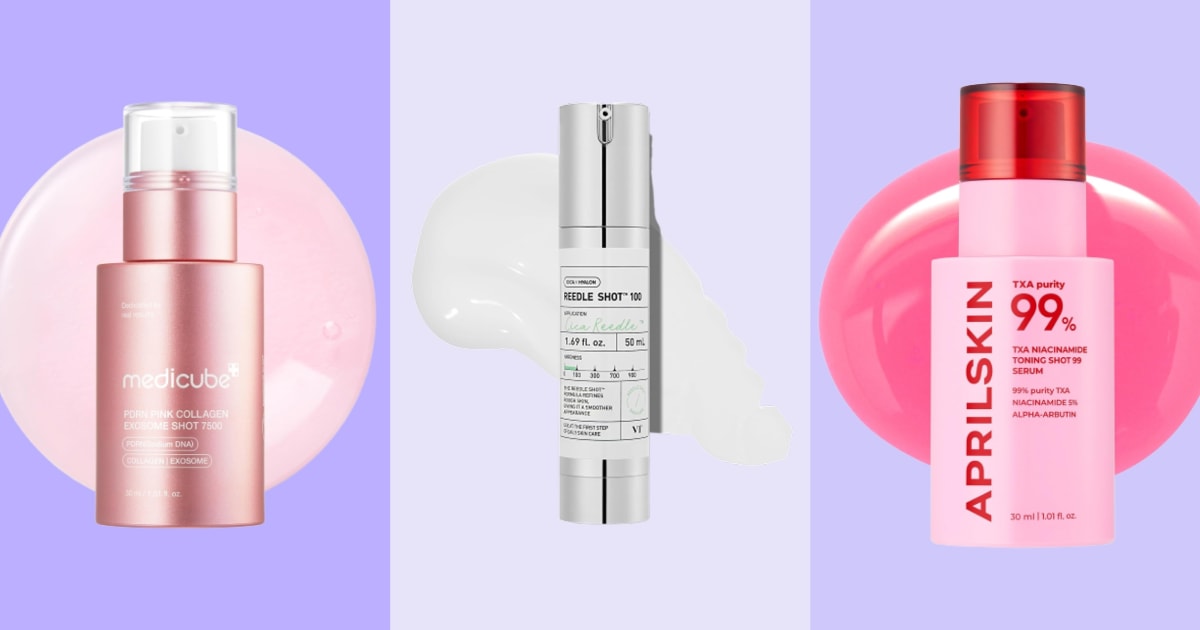
Fedonenko praises the Medicube Exosome Shot for its consistent results in patients. This serum combines spicules with exosomes—tiny vesicles composed of proteins, lipids, growth factors, and microRNA—that help calm inflammation, repair tissue, and boost collagen and elastin production. According to the brand, the spicules facilitate deeper delivery, leading to improved texture and tone.
Jhin recommends the VT Cosmetics Reedle Shot 100, which she says is gentle enough for daily use. It blends spicules with centella asiatica extract and hyaluronic acid, both known for their soothing properties. The brand claims regular application gently exfoliates, treating blemishes and enhancing skin texture without overwhelming irritation.
Kopelman likes Mediheal’s spicule products for their efficacy and effectiveness. This serum set comes with a solution that tightens pores that is intended to be applied first. Then, you apply a gel mask that contains spicules to help the first product absorb. Also helpful, the gel mask goes from white to clear when all the active ingredients have been absorbed, according to the brand.
Another option is the APRILSKIN TXA Niacinamide Toning Shot 99 Spicule Facial Serum, which aids in penetrating niacinamide and tranexamic acid to even out skin tone and brighten the complexion. For best results, apply it first on clean skin, allowing subsequent products to absorb more fully, as per the brand's guidance.
The Biodance Bio Collagen Real Deep Spicule 2-in-1 Mask offers a two-step approach: a spicule serum with collagen for plumping, followed by an overnight gel mask enriched with hyaluronic acid and niacinamide. The brand promises plump, glowy skin upon removal, making it ideal for those seeking intensive hydration and nourishment.
While spicules share similarities with microneedling, they differ in precision and depth. Dr. Jane Yoo, a dermatologist and Mohs surgeon in New York, clarifies, "While both microneedling and spicules can help with the absorption of products, in-office microneedling is much more precise." Jhin adds, "Unlike microneedling, the depth that spicules penetrate is not as concise and they tend to remain more superficial so the effects are less predictable."
Safety remains a priority, with experts unanimous that spicules are generally safe for most users when introduced gradually. Jhin advises, "People with very sensitive skin, rosacea, eczema, or an impaired skin barrier may find spicules irritating." Nonetheless, consulting a dermatologist before incorporating them is recommended to tailor to individual needs.
This rise of spicules reflects a broader shift in the beauty industry toward accessible, science-backed at-home innovations. As consumers increasingly turn to social media for skin care tips, products like these bridge the gap between professional care and daily routines. With endorsements from trusted dermatologists, spicules could become a staple, though ongoing research may further refine their application and benefits. For now, they offer a promising, low-commitment path to healthier skin, provided users heed expert warnings and proceed with care.