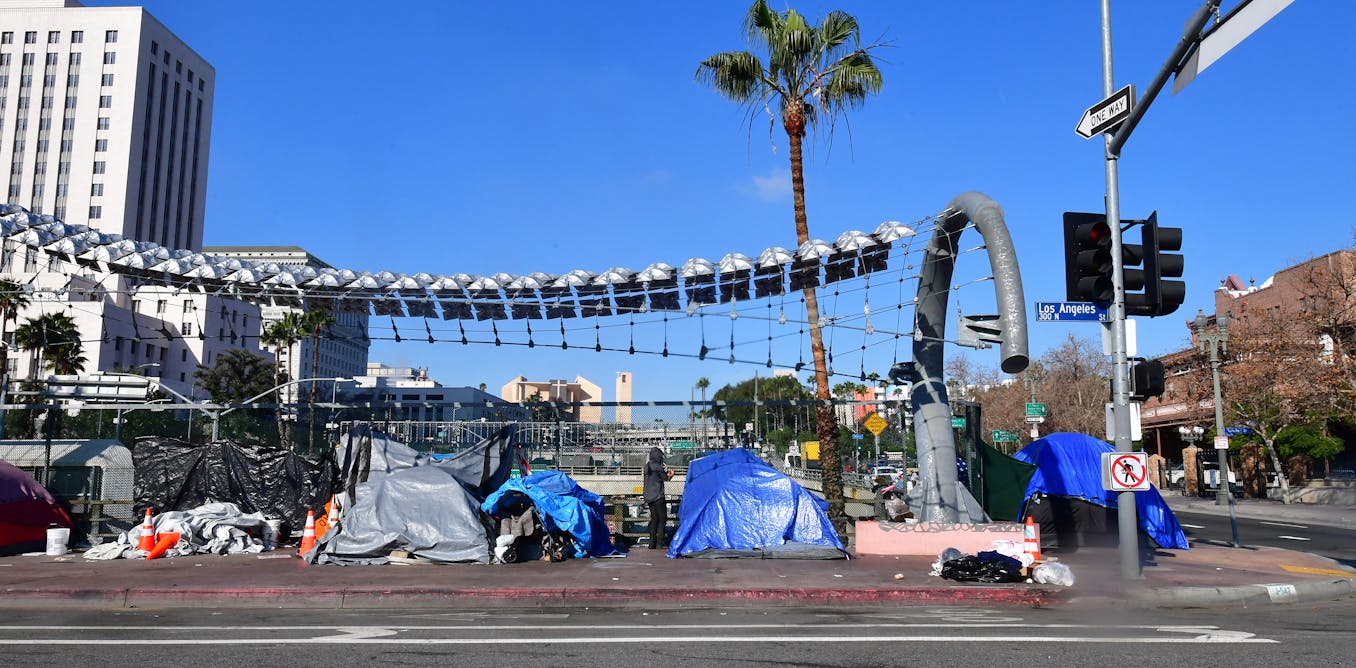
In the wake of President Donald Trump's July 2025 executive order aimed at 'ending crime and disorder on America's streets,' a wave of proposals for involuntary substance use treatment has swept across the United States, drawing both praise as a compassionate solution to homelessness and drug addiction and criticism as a step toward mass incarceration. The order, which highlighted visible homelessness and public drug use as national crises, has prompted states and cities to explore mandatory interventions for adults struggling with substance use disorders. Just months later, in September 2025, Utah officials unveiled plans for a sprawling 16-acre facility on the outskirts of Salt Lake City, designed to house up to 1,300 people removed from public spaces. Those entering the facility would face a stark choice: enter an abstinence-based shelter or risk jail time, with 300 to 400 beds set aside specifically for involuntary treatment of adults with psychiatric and substance use issues.
Supporters of the Utah project hail it as a humane alternative to life on the streets, offering structure and care to those in need. Detractors, however, have compared the setup to a prison, arguing it strips individuals of their autonomy under the guise of help. This tension mirrors broader debates unfolding nationwide. Since the executive order, similar expansions of involuntary treatment have emerged in states including New Jersey, Washington, and New York, where lawmakers are pushing to broaden civil commitment laws for substance use disorders.
At the heart of these discussions is a question that has divided policymakers, advocates, and medical professionals: Does forcing adults into substance use treatment save lives, or does it cause more harm? According to a detailed analysis published on The Conversation, decades of research suggest the latter, pointing instead to voluntary and lower-barrier approaches as more effective. The piece, written by a licensed clinical psychologist and substance-use treatment researcher at the University of Washington, draws on three decades of expertise in the field, including studies on treatments for people experiencing homelessness.
The researcher began scrutinizing involuntary treatment in 2018, when Washington's Ricky's Law took effect, allowing for civil commitments in the state. 'What I have learned is that involuntary treatment for adults with substance use disorders is necessary in extreme cases, but it does not outperform voluntary care and raises serious concerns about patient safety,' the expert wrote. Involuntary treatment, often called 'involuntary civil commitment' in the U.S., goes beyond typical pressures like family encouragement or court-mandated programs that still involve some consent. Instead, it involves a court order, usually based on a health professional's assessment, to confine someone to a locked facility against their will, depriving them of liberty for a period determined by law.
Such measures are generally reserved for dire situations, like when a person poses an imminent risk of serious harm to themselves or others—such as suicidal intent with a plan—or suffers from grave disability, rendering them unable to care for basic needs. This high bar stems from a dark history of institutional abuses in the 19th and early 20th centuries, when state psychiatric hospitals confined patients for years, often indefinitely, and stripped them of civil rights. Reforms in the 1960s narrowed the scope of civil commitments and bolstered legal protections, a legacy that has shaped modern standards.
Despite this caution, interest in involuntary treatment for substance use has surged in recent years. As of early 2026, 37 states and the District of Columbia have laws permitting it, with most expanding or adding statutes within the last decade. These laws differ significantly in criteria for commitment, treatment duration, and how often they're used, highlighting a patchwork approach without national consensus on their role.
Yet, the scientific backing for these expansions remains elusive. Three systematic reviews of peer-reviewed literature—in 2005, 2016, and 2023—have examined coercive substance use treatments for adults, finding no clear evidence of benefits when focusing on true involuntary civil commitments. Some studies lumped in mandated but voluntary programs, but those isolating forced treatment show 'no measurable benefit and in some cases clear harm,' according to the University of Washington analysis.
The most documented risks include heightened chances of relapse, rearrest, and death post-release. One international study cited in the review found that the risk of death spikes two- to nearly fourfold in the weeks after discharge, largely from overdoses. In the U.S., consistent evaluation of these programs is lacking, with only Massachusetts and Washington having released outcome data. Massachusetts' figures reveal that adults with a history of involuntary treatment face a 40% higher risk of fatal overdose compared to those without such histories.
Washington's program, operational for eight years under Ricky's Law, has issued just one evaluation. It reported modest short-term gains, such as reduced emergency department visits and homelessness, but also lower rates of follow-up substance use treatment, no drop in arrests, and unchanged employment levels. Critically, it offered no data on long-term substance use or post-release mortality rates. 'More data and more frequent reporting are needed to determine the effectiveness and safety of involuntary treatment for substance use disorder in the U.S.,' the researcher emphasized.
Beyond outcomes, the human element deserves attention. The analysis calls for documenting patients' subjective experiences, similar to practices in psychiatric commitments, to potentially refine delivery even as a last resort. Cost is another sticking point. Voluntary inpatient care already outpaces cheaper, lower-intensity options, but involuntary treatment adds layers of expense through secured facilities, court proceedings, and legal oversight.
In Massachusetts, under Section 35 law, the annual cost per male patient averages $76,819. Washington's shorter stays—averaging 11 days—run about $7,298 each, yet the program's benefit-to-cost ratio is dismal, losing roughly 81 cents per dollar spent in the first year post-treatment. These U.S. evaluations indicate that involuntary treatment fails to cut public service costs enough to justify its price tag.
Contrast this with evidence-backed alternatives that prioritize voluntary engagement. For those with substance use disorders and homelessness, options like abstinence-based recovery housing or Housing First models—pairing low-barrier permanent supportive housing with services—have proven effective. Research shows Housing First boosts housing stability and trims use of public resources. Harm-reduction strategies, including street outreach, syringe services, and naloxone distribution, prevent overdoses, curb blood-borne diseases, and link people to voluntary care.
Medications such as buprenorphine, methadone, naloxone, and naltrexone stand as gold standards for curbing cravings and overdose risks. Justice system diversion programs also show promise, steering low-level drug offenders away from jail toward case management for housing and jobs, which cuts recidivism and eases court burdens. 'The evidence consistently points to lower-barrier and voluntary approaches as more effective, less costly and less risky than involuntary treatment,' the University of Washington expert concluded.
Given the absence of robust support for broader involuntary measures, expanding them beyond acute crises appears unjustified, the analysis argues. Instead, it urges investment in proven voluntary services that save lives, mitigate harm, and support lasting recovery. As states like Utah move forward with facilities amid national pressure, the debate underscores a pivotal choice: coercive intervention or compassionate, evidence-driven care. Policymakers in New Jersey, Washington, and New York, among others, continue to weigh these paths, with outcomes likely to shape responses to America's intertwined challenges of addiction and homelessness for years to come.