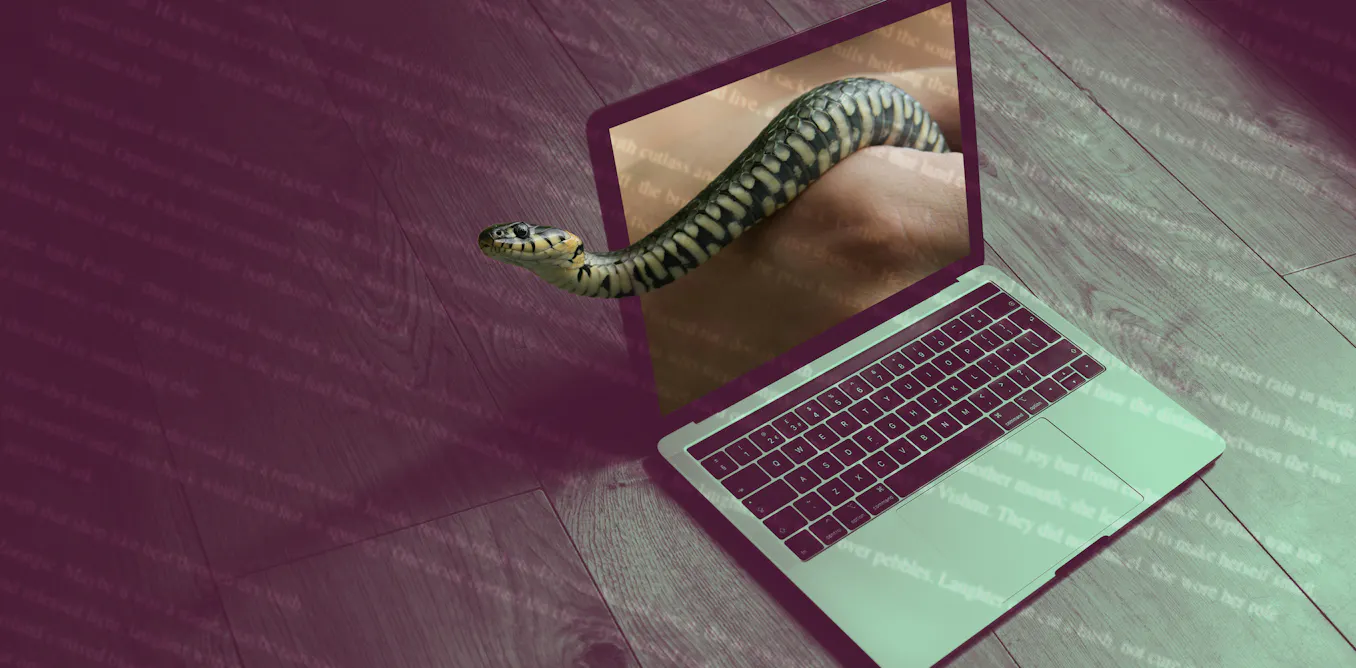
Allegations that an AI-generated entry may have won a regional category in the Commonwealth Short Story Prize have ignited fresh debate over the role of artificial intelligence in literary competitions. Jamir Nazir’s story “The Serpent in the Grove,” which took the Caribbean regional prize, was published in Granta magazine alongside other winners before readers began questioning its origins.
Users on X quickly shared screenshots from the AI detection tool Pangram claiming the text was 100 percent AI-authored. Sigrid Rausing, publisher of Granta, which played no part in the selection, tested the story herself with Claude.ai and received a response that it was “almost certainly not produced unaided by a human.” The New York Times and the Guardian both reached out to Nazir for comment, but he has not responded to those inquiries.
Razmi Farook, director general of the Commonwealth Foundation, defended the prize’s process, noting that running AI checkers on unpublished submissions “would raise significant concerns surrounding consent and artistic ownership.” She emphasized that competitions like the Commonwealth Prize operate on a “principle of trust.”
The 63-year-old Nazir, listed as a resident of Trinidad and Tobago, is described in his bio note as a prolific poet and author, though readers have struggled to locate any prior published works under that name. His LinkedIn profile shows previous writing on AI’s potential to eliminate jobs and the broader AI arms race, details that have fueled speculation about whether the entry was intended as a literary hoax.
“Forget AI for a minute. A story won an International Competition with a line like this: ‘The girl smiled like sunrise over a sink.’”
Booker Prize-winning author Marlon James posted that observation on Facebook after the story’s imagery drew widespread criticism online. Commentators pointed to repeated use of “not x, but y” constructions and unusual word repetitions as hallmarks of AI-generated prose.
The story follows a young, unhappily married couple living in poverty in a rural village alongside an older, gossipy neighbor. A near-accidental brush with death brings the three together and reveals hidden stories shaping their lives. The regional judging panel praised its “vivid, lush imagery” and “quiet authority.”
Granta published the regional winners as it does each year. The overall Commonwealth Short Story Prize typically draws thousands of submissions from adult citizens of Commonwealth member states, with panels deciding regional victors for Africa, Asia, the Caribbean, Europe and Canada, and the Pacific.
Rausing has taken a measured stance, stating that “perhaps we will never know” whether the story was authored with AI assistance. Detection tools remain unreliable and have been known to produce inaccurate results, leaving the question of provenance unresolved.
This case follows other recent incidents involving AI in literary contexts, including significant AI use revealed in a New York Times book review and a debut horror novel. Observers note that AI platforms have repeatedly been benchmarked against the short-story form, from the flood of machine-generated submissions that forced a science-fiction magazine to close its doors temporarily after ChatGPT’s launch to OpenAI chief Sam Altman’s experiment with metafictional prompts.
Regardless of how “The Serpent in the Grove” was created, its style—solid descriptive passages such as “Inside, air clung thick as porridge skin: damp earth, woodsmoke, and the sour tang of fermenting cocoa,” alongside occasional sharp observations and more awkward lines—matches the kind of technically competent but unremarkable work often found in MFA workshop outputs and mid-tier literary magazines.
Some commentators suggest the episode may mark a turning point, with AI now capable of producing the “quotidian, plotless, moment-of-truth revelatory story” that author Michael Chabon has warned dominates many prize lists. Others argue that literary prizes may need to reconsider their reliance on trust alone or begin exploring new structures and concrete narrative approaches to distinguish human-authored work.
Whether the entry proves to be a genuine submission, a deliberate parody, or something else entirely, the episode has prompted renewed discussion about how short-fiction standards might evolve in an era of accessible generative tools.