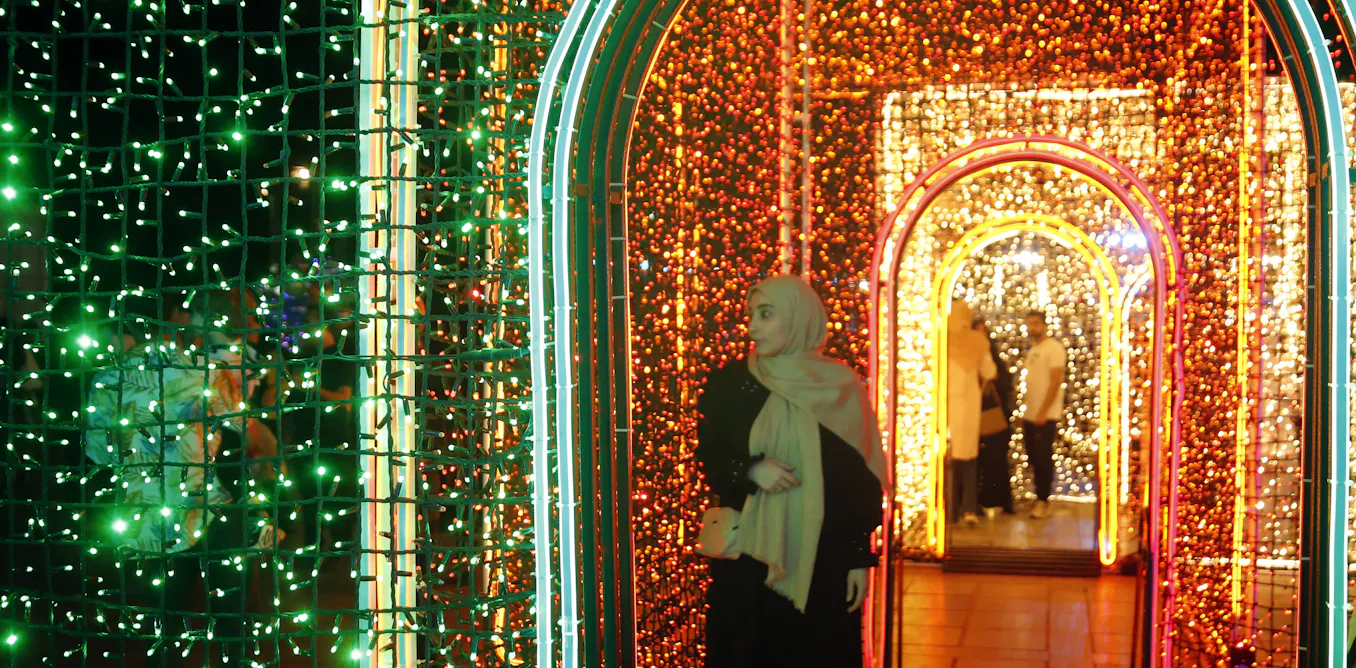
As Iranians prepare to welcome Nowruz, the ancient Persian New Year, the festival takes on profound significance this year amid ongoing conflict. Falling on March 21, 2024, Nowruz marks the spring equinox and the start of the Iranian solar calendar, which dates back to 1079. But with cities across Iran under bombardment from Israel and the United States since February 28, resulting in nearly 1,500 deaths, celebrations this year will serve as a powerful affirmation of cultural identity and resilience, according to experts on Persian traditions.
Nowruz, meaning 'new day' in Persian, is more than a holiday; it's a vibrant festival rooted in the regeneration of spring, observed across a vast region once part of ancient Iranian empires. Countries including Turkey, Iran, Iraq, Afghanistan, India, Pakistan, and the Caucasus nations like Azerbaijan join in the festivities, reflecting the enduring influence of what scholars call Iranzamin, or Greater Iran. The holiday originated during the Sassanian dynasty from 224 to 651 CE, predating Islam, and spread throughout the Persian Empire as a time of renewal.
In Iran, Nowruz spans two weeks, including a four-day national holiday that closes schools and allows families to gather. Public ceremonies and gatherings are common in other celebrating nations, where government and retail sectors often shut down. Recognized by UNESCO as an intangible cultural heritage, the festival draws from Zoroastrianism, one of the world's oldest monotheistic religions founded by the prophet Zoroaster around the 6th century BCE.
Preparations begin well in advance with khaneh tekaani, or 'shaking of the house,' a thorough spring cleaning symbolizing the sweeping away of the old and any negativity. Families buy new clothes and prepare decorative outfits for the occasion. The eve of Nowruz features Chaharshanbeh Soori, or 'Scarlet Wednesday,' on the last Wednesday before the equinox. During this ritual, small fires are lit in public spaces for purification—a nod to fire's sacred role in Zoroastrianism—accompanied by fireworks and street decorations.
Special foods mark the season: rich soups, pastries, and platters of dried nuts and fruits. In some neighborhoods, children bang pots and pans through the streets to ward off the 'unlucky' Wednesday, adding a playful element to the purification rites. At the heart of Nowruz homes is the sofreh, a beautifully arranged tablecloth holding the haft seen, seven symbolic items starting with the Persian letter 'seen': seeb (apple) for beauty, sabzeh (sprouts) for rebirth, serkeh (vinegar) for patience, samanou (wheat pudding) for affluence, senjed (oleaster) for love, sekkeh (coin) for wealth, and seer (garlic) for medicine.
Each item represents aspects of life—birth, growth, health, beauty, and wisdom—creating a tableau of hope and prosperity. Families also place central texts of Irano-Islamic culture on the sofreh, including readings from the Qur'an and the Divan of the 14th-century poet Hafez, whose verses are consulted for omens much like a Persian oracle. On the 13th day of the New Year, the sabzeh grass is taken outdoors and discarded into flowing water, symbolizing the release of negativity.
The first days of Nowruz are dedicated to visiting relatives and friends, exchanging gifts—often cash from elders to the young—and sharing meals. In Central Asian countries like Kyrgyzstan, traditional equestrian games and athletic competitions enliven the period. Public squares in Tajikistan and Uzbekistan host gatherings with festive treats, fostering community bonds across borders.
The festival culminates on Sizdah Bedar, or Nature's Day, 13 days after the equinox, when families picnic in parks or green spaces to invite good fortune for the coming year. This outdoor exodus underscores Nowruz's deep connection to nature and renewal, a theme especially poignant this year as Iranians face destruction from aerial attacks on schools, hospitals, and cultural sites.
Historically, Nowruz has intertwined with politics and power in Iran. Monarchies from the Safavid dynasty (1501–1736), which shaped the modern state, through the Qajar (1789–1925) and Pahlavi (1925–1979) eras used the festival to bolster prestige. The non-Islamic roots of Nowruz allowed rulers to counterbalance the influence of the Shia Muslim clergy, a dynamic that persisted until the 1979 Islamic Revolution.
Post-revolution, some authorities sought to diminish Nowruz due to its pre-Islamic origins, but the tradition proved too ingrained to suppress. Today, it coexists alongside Islamic holidays, embodying Iran's syncretic cultural fabric. In Central Asia, the Soviet Union banned Nowruz outright in nations with the tradition, only seeing its revival after independence in 1991.
Elsewhere, Nowruz has fueled nationalist movements. In Turkey, it was minor during the Ottoman era but revived post-World War I as part of Turkish identity-building. Kurds in Turkey have embraced it more publicly to assert their cultural cause. This year's celebrations in Iran occur against a backdrop of heightened tension, with Israeli Prime Minister Benjamin Netanyahu referencing the holiday in a recent statement.
"Our aircraft are hitting the terror operatives on the grounds, in the crossroads, in the city squares," Netanyahu said this week, according to reports. "This is meant to enable the brave people of Iran to celebrate the Festival of Fire." He concluded with a warning: "We’re watching from above." The remarks came amid strikes on oil depots in Tehran, which released toxic elements into the atmosphere, and damage to dozens of Iran's cultural heritage sites.
U.S. President Donald Trump's administration has escalated rhetoric against Iran, with calls for 'unconditional surrender' souring traditional Nowruz greetings from American leaders. For years, U.S. presidents have issued messages of goodwill, but this year's conflict has rendered such overtures unlikely. Iranian officials have not publicly commented on how the bombardments will affect celebrations, but community leaders emphasize the festival's role in unity.
Experts note that Nowruz's themes of regrowth and regeneration offer a counterpoint to the destruction. As one scholar from The Conversation explained, by observing the holiday, Iranians reaffirm their 'unique identity and deep-rootedness in their homeland.' The phrase 'Nowruz Khosh Amad'—'Welcome Nowruz, Nowruz has come joyously'—will echo through homes and streets, a quiet defiance amid the chaos.
Looking ahead, Nowruz 2024 could signal broader resilience in the region. With the equinox moment precisely at the astronomical vernal point, the festival reminds participants of nature's cycles beyond human strife. As families light fires and set their haft seen, they look toward health, flourishing, and new beginnings, even as the sounds of conflict linger. For the Iranian diaspora worldwide, virtual gatherings may amplify the message of perseverance, bridging distances in a time of trial.