As the 2026 women's NCAA tournament progresses to its regional semifinals on Friday and Saturday, the offseason has already begun for several top-seeded teams eliminated in the Sweet 16. All four No. 1 seeds advanced, and thirteen of the top 16 overall made it to this stage, but losses to powerhouses like UCLA, UConn, and Notre Dame have sent programs such as the Minnesota Golden Gophers, North Carolina Tar Heels, and Vanderbilt Commodores into planning mode for next season. With the transfer portal set to open on April 6, coaches are eyeing recruits, returning players, and potential additions to rebuild their rosters.
The Minnesota Golden Gophers finished the season with a 24-9 record, going 13-5 in the Big Ten, but their run ended with a defeat to UCLA in the Sweet 16. Key departures include guard Amaya Battle, who averaged 11.3 points per game, forward Sophie Hart at 11.1 points, Brylee Glenn with 6.4 points, Finau Tonga at 4.7 points, and Tracey Bershers contributing 2.0 points. Despite the losses, the Gophers have a solid core returning, led by Tori McKinney (12.9 points), Grace Grocholski (12.1 points), and Mara Braun (11.8 points), along with Makena Christian (3.7 points), Niamya Holloway (1.7 points), Kennedy Klick (1.6 points), and Brynn Senden (0.6 points).
Looking ahead, Minnesota's top incoming recruit is Natalie Kussow, ranked No. 40 nationally and voted Ms. Basketball in Wisconsin. Kussow, a shooting guard from Arrowhead High School, averaged 26.6 points, 7.6 rebounds, and 3.1 assists while leading her team to a state championship, including a 34-point performance in the title game. According to ESPN, "Kussow should fit well with Minnesota's style of play," but her integration into the backcourt could be challenging given the experience of Braun, McKinney, and Grocholski, especially as Braun recovers from a second foot injury. The Gophers also added point guard Tori Oehrlein, ranked No. 58, to address needs at that position following Battle's exit.
Portal priorities for coach Dawn Plitzuweit will focus on bolstering the frontcourt, as the team's top scorers are expected to return but interior size is lacking. The recruiting class includes 6-foot-4 forward Adit Kuol, yet ESPN reports that to replicate a top-20 finish, the staff may need to target veteran bigs from the grad transfer pool, similar to Tonga's addition from San Jose State. Hart, a three-year contributor after transferring from NC State, served as the inside anchor, and replacing her Power 4 experience will require a significant portal move. Minnesota could also use another true point guard to deepen the rotation.
Shifting to the Atlantic Coast Conference, the North Carolina Tar Heels posted a strong 28-8 record, 14-4 in league play, before falling to UConn in the Sweet 16. Departing players include Nyla Harris, the team's leading scorer and rebounder at 11.5 points per game, and Indya Nivar with 10.3 points. A deep list of returnees provides optimism, featuring Lanie Grant (11.1 points), Elina Aarnisalo (10.4 points), Ciera Toomey (8.9 points), Nyla Brooks (8.7 points), Reniya Kelly (6.1 points), Laila Hull (4.2 points), Taliyah Henderson (3.8 points), Taissa Queiroz (2.9 points), Jordan Zubich (2.1 points), Liza Astakhova (2.1 points), Blanca Thomas (1.7 points), and Sydney Barker (0.4 points).
UNC's marquee addition is Kate Harpring, the No. 4 recruit nationally and the highest-ranked ever for coach Courtney Banghart. The 5-foot-10 point guard from Marist School in Atlanta scored over 3,000 career points and was a finalist for the Naismith high school player of the year. Harpring, daughter of former Georgia Tech and NBA star Matt Harpring, earned a gold medal at the FIBA U19 World Cup, averaging 8.3 points across seven games, and has been selected for the 2026 Nike Hoop Summit Team. ESPN notes that while four Tar Heels averaged between 10.3 and 11.5 points this season without a clear star emerging, "Harpring could be that player in 2027."
The backcourt depth will grow even stronger with Harpring's arrival, but her impact on rebounding—where UNC ranked only 10th in the ACC despite Harris's contributions from Louisville—remains a question. Harris's one-year stint was geared toward bolstering the glass, and her absence could necessitate an upgrade. According to reports, Banghart's portal strategy will depend on any outgoing transfers; if Grant, Aarnisalo, and Kelly remain, the guards are set, but a veteran power forward who excels on boards without demanding offensive touches could fill a key gap. A spot-up shooter might also find a home if opportunities arise.
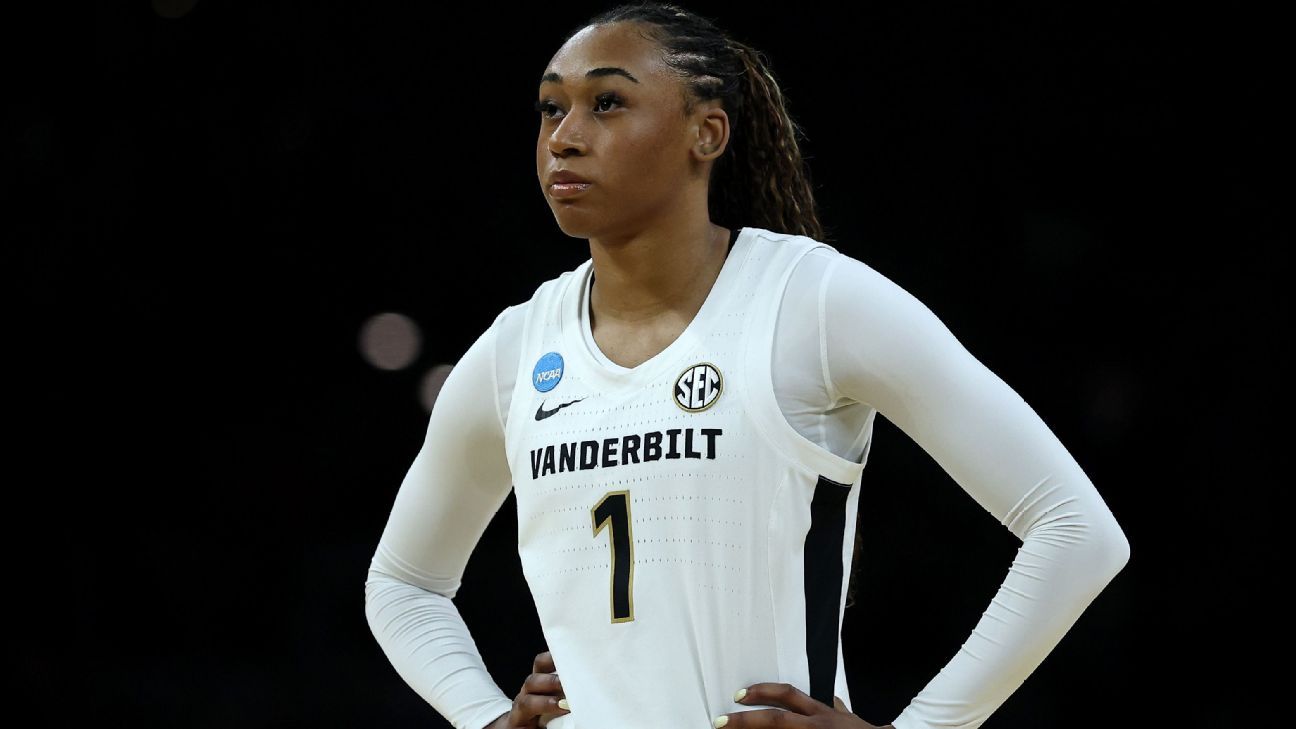
The Vanderbilt Commodores enjoyed an impressive 29-5 campaign, 13-3 in the ACC, but their tournament hopes dashed against Notre Dame in the Sweet 16. Graduates leaving include Justine Pissott (11.4 points), Sacha Washington (10.4 points), Ndjakalenga Mwenentanda (7.0 points), and Jada Brown (3.2 points). Returning talent is headlined by Mikayla Blakes, a scoring machine at 27.0 points per game, alongside Aubrey Galvan (13.2 points), Aiyana Mitchell (5.9 points), Aga Makurat (3.2 points), Ava Black (2.9 points), Trinity Wilson (1.0 points), Monique Williams (0.9 points), and redshirt player Madison Greene.
Vanderbilt's recruiting haul features Olivia Jones, ranked No. 14, a 5-foot-11 driver and shot creator from Long Island Lutheran, where she plays alongside four other top-25 prospects. Jones averaged 8.0 points and 3.8 assists on the gold-medal-winning Team USA U16 at the FIBA AmeriCup last summer. ESPN compares her directly to Blakes, suggesting a seamless fit in coach Shea Ralph's system, which has expanded its national reach. The Commodores also signed 6-foot-4 Jhai Johnson from California, underscoring the program's growing appeal under Ralph.
With Blakes and Galvan as focal points, Vanderbilt's portal needs center on a mobile big to facilitate high pick-and-rolls, much like Washington's role this year. A traditional post player wouldn't suit the offense, which thrives on spacing for one-on-one creators. Reports indicate that adding another shooter to stretch the floor is also essential, and the chance to pair with Blakes's humility and Galvan's passing should attract talent. However, finding the right personality to mesh with the stars will be Ralph's primary challenge in the portal.
These eliminations come amid a broader landscape in women's college basketball, where the transfer portal's opening on April 6 will reshape rosters across the sport. The 2026 tournament showcased the depth of the field, with high seeds dominating early but upsets lurking. For Minnesota, the focus on interior help echoes past Big Ten battles, where size has often decided close games. UNC's quest for a star like Harpring addresses a historical lack of individual dominance under Banghart, who has built contenders through committee scoring.
Vanderbilt's story is one of ascent under Ralph, who took over in 2025 and quickly turned the program into an ACC contender. The Commodores' 29 wins marked their best since joining the league, and retaining Blakes—a humble superstar—positions them for another deep run. Yet, as ESPN highlights, the portal's volatility means no offseason is predictable; teams like these must act swiftly to maintain momentum.
Broader implications extend to recruiting trends, with elite talents like Kussow, Harpring, and Jones committing early to programs rebounding from tournament exits. International experience, from FIBA golds to U19 Worlds, is increasingly a benchmark for top prospects, signaling the globalization of the sport. Conferences like the Big Ten and ACC will feel the ripple effects, as portal moves could shift power dynamics ahead of the 2027 season.
As these teams pivot to the future, the women's game continues to evolve, drawing larger crowds and more investment. Officials from the NCAA have not commented specifically on these rosters, but the emphasis on player development and retention remains paramount. For fans of the Gophers, Tar Heels, and Commodores, the portal's opening promises excitement, with potential additions that could propel any of these programs back to the Sweet 16 and beyond.
In the end, while the 2026 tournament losses sting, the foundations are there for renewed contention. Coaches like Plitzuweit, Banghart, and Ralph have the tools—returning stars, blue-chip recruits, and portal savvy—to craft competitive squads. The offseason's chess game begins now, setting the stage for another thrilling March.