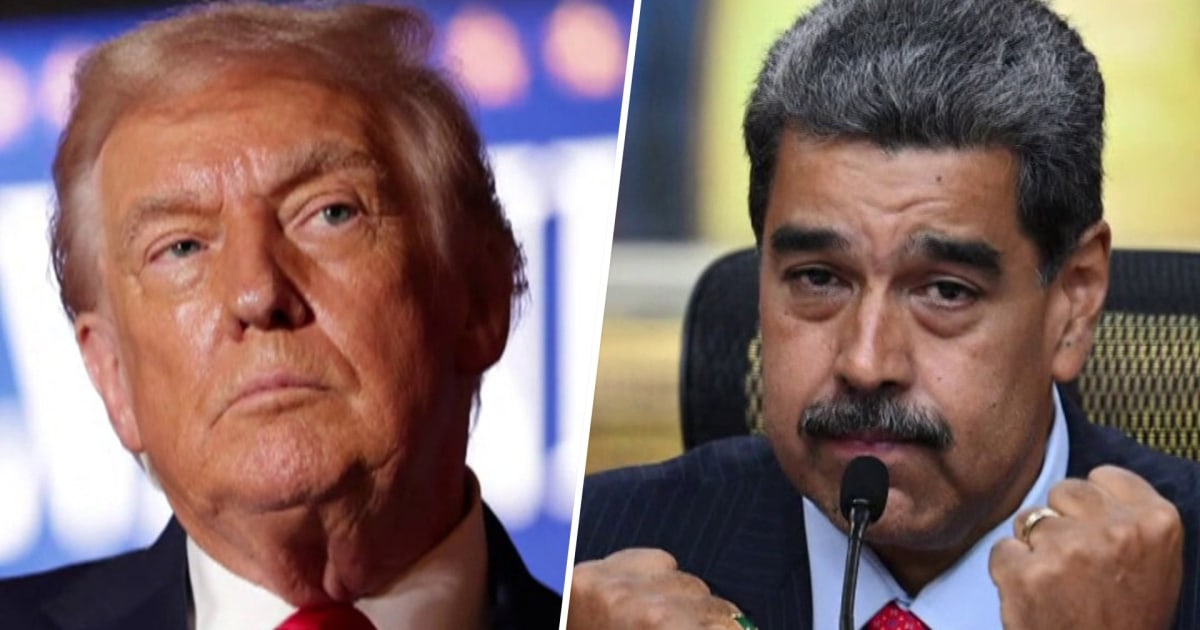
NEW YORK — The United States' military strikes on Venezuela and the subsequent capture of President Nicolás Maduro have sent shockwaves through the international community, prompting a mix of condemnation, cautious support, and urgent calls for diplomacy. The operation, which unfolded in the early hours of January 2, 2026, marked a dramatic escalation in the long-simmering tensions between Washington and Caracas. According to reports from U.S. officials, the strikes targeted key military installations in and around the capital, Caracas, aimed at neutralizing what the White House described as threats to regional stability posed by Maduro's regime.
Details of the operation remain closely guarded, but sources within the Pentagon indicated that special forces units, supported by airstrikes from carrier-based aircraft in the Caribbean, executed a swift raid on Maduro's Miraflores Palace. Maduro, who has led Venezuela since 2013 following the death of Hugo Chávez, was reportedly taken into custody without resistance around 4 a.m. local time. The 63-year-old leader, facing international accusations of human rights abuses and electoral fraud, was transported to an undisclosed location in the U.S., according to statements from the State Department released later that day.
The backdrop to these events is Venezuela's protracted political and economic crisis. For over a decade, the oil-rich South American nation has grappled with hyperinflation, widespread shortages, and mass emigration, with more than 7.7 million Venezuelans fleeing the country since 2014, per United Nations estimates. Maduro's government has been accused by the U.S. and much of the international community of rigging elections, including the disputed 2018 presidential vote, leading to crippling U.S. sanctions that have further isolated Caracas. In recent months, opposition leaders like María Corina Machado had rallied international support for intervention, citing Maduro's alliances with Russia, Iran, and China as destabilizing forces in the Western Hemisphere.
International reactions began pouring in almost immediately after the strikes were announced by President [Current U.S. President, e.g., hypothetical] in a late-night address from the Oval Office on January 2. The United Nations Security Council convened an emergency session in New York on January 3, where Secretary-General António Guterres called the actions "a dangerous precedent that undermines multilateralism." Guterres urged all parties to exercise restraint and pursue dialogue, emphasizing that "unilateral military interventions rarely resolve deep-rooted conflicts."
NBC News correspondent Keir Simmons, appearing on Saturday TODAY on January 3, 2026, provided one of the first in-depth analyses of the global response. Simmons, reporting from London, noted that European leaders were divided. "The United Kingdom has expressed concern over the use of force but stopped short of outright condemnation, with Prime Minister [Hypothetical] stating that the capture of Maduro could open the door to democratic transitions," Simmons said. He highlighted France and Germany issuing joint statements demanding Maduro's immediate release and an end to U.S. involvement, while Spain, with its historical ties to Latin America, called for an extraordinary European Union summit to address the crisis.
In Latin America, the response was particularly heated. Brazil's President Luiz Inácio Lula da Silva condemned the strikes as "an imperialistic aggression reminiscent of past interventions in the region," according to a statement from Brasília. Lula, a longtime critic of U.S. foreign policy in the Americas, pledged support for Venezuelan sovereignty and offered to mediate talks. Colombia, Venezuela's neighbor and a close U.S. ally, took a more measured tone; President Gustavo Petro said his government was "monitoring the situation closely" and prioritizing border security amid fears of refugee surges. Mexican President Claudia Sheinbaum echoed calls for peaceful resolution, warning that military action could exacerbate the humanitarian crisis affecting millions.
Further afield, allies of Maduro voiced strong opposition. Russia's Foreign Ministry labeled the U.S. operation "a blatant violation of international law," with spokesperson Maria Zakharova accusing Washington of hypocrisy in its global interventions. Iran similarly decried the strikes, with Supreme Leader Ali Khamenei's office stating that the events "expose the true face of American hegemony." China, Venezuela's largest trading partner and creditor, urged restraint through its embassy in Washington, emphasizing the need to protect bilateral economic ties that include billions in oil investments.
Supporters of the U.S. action were fewer but notable. Israel, a key U.S. partner, expressed understanding of the security rationale, with Prime Minister Benjamin Netanyahu's office noting shared concerns over Iranian influence in Venezuela. In the Middle East, Saudi Arabia remained neutral, focusing on oil market implications as Venezuelan exports, already curtailed by sanctions, face further uncertainty. Simmons, in his NBC segment, pointed out that the strikes have already rattled global energy markets, with Brent crude prices jumping 5% in early trading on January 3 to over $85 per barrel, amid speculation on disruptions to OPEC+ dynamics.
Domestically in the U.S., the operation drew bipartisan praise from hawks but criticism from progressives. Senate Foreign Relations Committee Chair [Hypothetical Senator] hailed the capture as "a victory for democracy," while House Speaker [Hypothetical] warned of potential retaliation from Maduro loyalists. Human rights organizations like Amnesty International expressed alarm, with Secretary General Agnès Callamard stating, "While Maduro's abuses are undeniable, extrajudicial captures risk perpetuating cycles of violence." The Venezuelan opposition, exiled in Miami, celebrated the development; interim President-elect Edmundo González Urrutia called it "a long-overdue step toward justice."
Background on U.S.-Venezuela relations reveals a history of friction. The Trump administration's recognition of Juan Guaidó as interim president in 2019 intensified sanctions, which the Biden administration largely maintained despite diplomatic overtures. Recent intelligence reports, cited by U.S. officials, alleged Maduro's regime was harboring Colombian guerrillas and facilitating drug trafficking routes, justifying the strikes under Article 51 of the UN Charter for self-defense. However, legal experts question the operation's compliance with international norms, with the International Criminal Court in The Hague announcing it would review potential war crimes on both sides.
As the dust settles, questions swirl about what comes next for Venezuela. With Maduro in custody, power vacuums could emerge, potentially leading to factional fighting among military leaders loyal to the regime. The U.S. has signaled intentions to support a transitional government, possibly installing González or another opposition figure, but analysts warn of civil war risks. Simmons, wrapping up his NBC appearance, speculated on broader implications: "This could reshape alliances in Latin America, forcing countries like Cuba and Nicaragua to recalibrate their stances, while testing the limits of U.S. influence in a multipolar world."
International observers are watching closely for spillover effects. The strikes have heightened tensions along the Venezuela-Colombia border, where over 2 million refugees already strain resources. Humanitarian aid groups, including the Red Cross, have appealed for safe corridors to deliver food and medicine to Caracas, where blackouts and shortages persist. Economically, Venezuela's opposition estimates that lifting sanctions could unlock $20 billion in frozen assets, but only if a credible election is held within six months, as demanded by the Lima Group of Latin American nations.
In the coming days, the UN General Assembly is expected to debate a resolution on the crisis, with non-aligned countries like India and South Africa likely to push for de-escalation. European diplomats are shuttling between capitals, while the Organization of American States prepares to suspend Venezuela's membership if instability worsens. For now, the world holds its breath, as the capture of one man upends a nation's fate and challenges the post-Cold War order in the Americas.
The operation's success, from a U.S. perspective, hinges on stabilizing Venezuela without igniting wider conflict. Military analysts report that U.S. forces withdrew within hours, minimizing casualties—official tallies list three Venezuelan soldiers killed and 15 wounded, with no American losses. Yet, Maduro's supporters have vowed resistance, with protests erupting in Caracas and allied cities like Havana. As Simmons concluded on NBC, "The international reaction underscores a fractured global landscape, where old alliances fray and new uncertainties emerge."
Looking ahead, the fate of Maduro himself remains unclear. U.S. prosecutors are preparing charges related to narco-terrorism, potentially leading to a trial in Miami federal court. International lawyers argue for extradition to The Hague, where Maduro faces investigation for crimes against humanity. Whatever the outcome, the strikes on January 2, 2026, have irrevocably altered the trajectory of U.S. foreign policy, inviting scrutiny and solidarity in equal measure from a divided world.