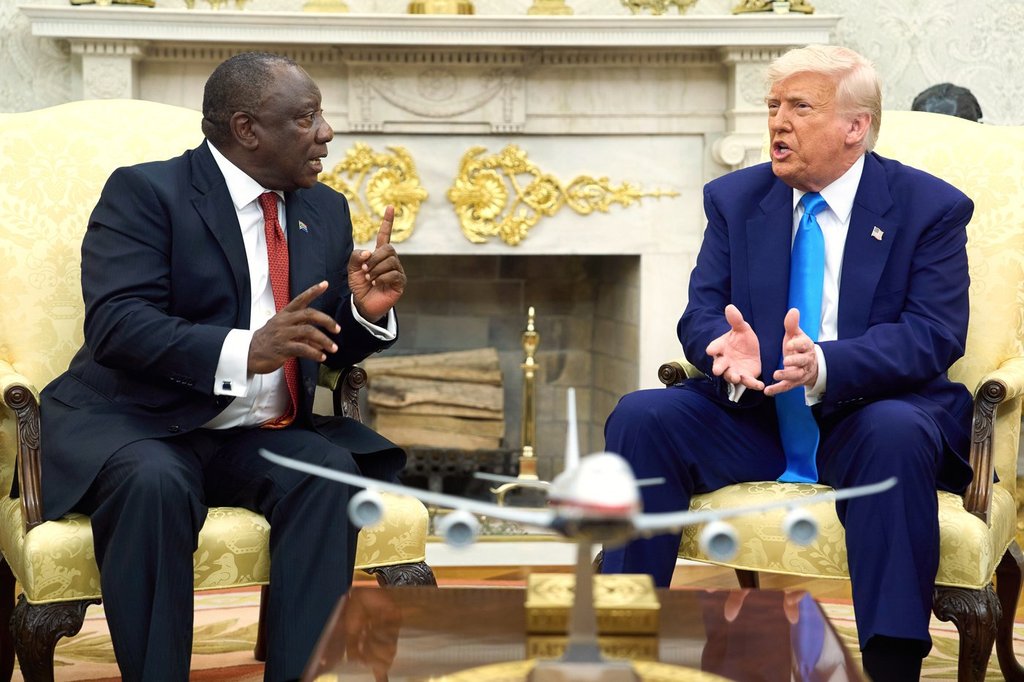
JOHANNESBURG — The Group of 20 summit kicks off this weekend in Johannesburg, South Africa, marking the first time the annual gathering of global leaders is hosted on the African continent. However, the event will proceed without representatives from the United States, after President Donald Trump announced a boycott citing what he described as persecution of the country's white Afrikaner minority — claims that have been widely rejected by the South African government and international observers.
Trump's decision, announced earlier this week, pulls the U.S. out of the two-day talks scheduled for November 22 and 23, 2025, at the Sandton Convention Centre in Johannesburg. The absence of the world's largest economy is expected to cast a shadow over discussions aimed at bridging divides between rich and developing nations on critical issues like climate change and global debt. A White House official confirmed that while no high-level U.S. delegation will attend the summit itself, a representative from the U.S. Embassy in Pretoria will be present for the formal handover of the G20 presidency to the United States at the event's close.
South African President Cyril Ramaphosa, who has prioritized the summit as a platform to amplify African and developing world voices, dismissed the boycott's impact during a press briefing on Thursday. “If you boycott an event or a process, you are the greatest loser because the show will go on,” Ramaphosa said, emphasizing that the meeting would focus on actionable outcomes despite the high-profile absences.
The boycott stems from Trump's longstanding criticisms of South Africa, which intensified since he returned to the White House in January 2025. Trump has repeatedly claimed that white Afrikaner farmers are being systematically killed and their lands seized without compensation, labeling it a “disgrace” and arguing that South Africa should be expelled from the G20. These assertions echo far-right narratives that have circulated online but lack substantiation from mainstream reports. The South African government has categorically denied any racial persecution, with officials pointing to land reform policies aimed at addressing historical inequalities from the apartheid era. Even some Afrikaner community leaders have pushed back, calling Trump's portrayal “misinformation” that distorts the complex realities of rural crime and economic challenges in South Africa.
Adding to the list of notable no-shows is Chinese President Xi Jinping, who is scaling back international travel amid domestic priorities. China will be represented by Premier Li Qiang, heading a government delegation. Similarly, Russian President Vladimir Putin will not attend, citing an International Criminal Court arrest warrant related to Russia's invasion of Ukraine. As a signatory to the Rome Statute, South Africa is legally obligated to detain Putin if he enters the country, so Moscow has opted to send a lower-level team led by Maxim Oreshkin, deputy chief of staff in the Russian presidential administration.
Argentina's President Javier Milei, a vocal ally of Trump, announced he too would skip the summit in a show of solidarity. “We stand with our friends against what we see as unjust hosting,” Milei said in a statement from Buenos Aires, though he did not elaborate further on specific grievances.
Despite these absences, several key leaders are confirmed to attend, including French President Emmanuel Macron, German Chancellor Friedrich Merz, and British Prime Minister Keir Starmer. Leaders from the United Nations, World Bank, and International Monetary Fund will also join as guests, providing continuity to the summit's agenda. The G20, formed in 1999 amid the Asian financial crisis, comprises 19 countries plus the European Union and, since 2023, the African Union — totaling 21 members. Unlike the more exclusive Group of Seven, which focuses on wealthy democracies, the G20 includes major emerging economies like Brazil, India, and Indonesia, offering a venue for developing nations to voice concerns on global economic stability and development.
South Africa, assuming the G20 presidency earlier this year, has set an ambitious agenda centered on the continent's pressing needs. Top priorities include financing the transition to green energy, mitigating the effects of climate disasters such as droughts, floods, and cyclones that disproportionately hit poorer countries, and alleviating spiraling sovereign debt burdens. “Climatic disasters are having a devastating effect on countries that cannot afford to rebuild,” a South African foreign ministry spokesperson said, underscoring calls for increased global support and reformed financial mechanisms.
A centerpiece of the discussions is South Africa's proposal for an independent international panel on global wealth inequality, modeled after the United Nations' Intergovernmental Panel on Climate Change. This initiative follows a summit-commissioned report led by Nobel Prize-winning economist Joseph Stiglitz, which warned of an “inequality emergency” exacerbated by uneven pandemic recovery and rising protectionism. The report, released last month, highlighted how the wealthiest 1% captured nearly two-thirds of all new wealth created since 2020, while billions in the Global South face deepening poverty.
Beyond formal sessions, the summit provides opportunities for bilateral meetings, where leaders are expected to negotiate in the wake of U.S.-imposed tariffs that have rippled through global trade. European officials, for instance, have signaled interest in shoring up alliances with African nations to counterbalance U.S. and Chinese influence. German Chancellor Merz, in a pre-summit interview with Reuters, stressed the need for “concrete commitments on debt relief to prevent a lost decade for Africa.”
The gathering has not been without controversy on the ground. Protests have erupted across Johannesburg, with activists decrying the G20 as a club for elites. A counter-summit organized by civil society groups kicked off earlier this week in the Soweto neighborhood, drawing hundreds who argue the forum perpetuates a “global economic system rigged in favor of billionaires.” Organizers, including representatives from the African Climate Alliance, called for radical reforms, including taxing ultra-wealthy individuals to fund climate adaptation. Police have reported minor clashes but no major incidents as of Friday.
Critics of the G20 point to its structural limitations: without a permanent secretariat or binding authority, outcomes often remain declarative rather than enforceable. Past summits have grappled with divisions among major powers — the U.S., China, Russia, and European nations — leading to watered-down communiqués on issues like trade wars and geopolitical tensions. This year's meeting, hosted amid South Africa's own economic woes including 32% unemployment and energy shortages, amplifies calls for the group to deliver tangible progress.
As the summit unfolds, eyes will be on whether the absences of Trump, Xi, and Putin diminish its clout or, conversely, allow smaller voices to gain traction. South African officials remain optimistic, with Ramaphosa's office stating that the event will “reaffirm Africa's role in shaping a fairer world order.” The U.S. handover at the summit's end sets the stage for Washington's 2026 presidency, where priorities could shift dramatically under Trump's influence.
In the broader context, the boycott highlights deepening fractures in multilateralism. Trump's administration has already strained ties with South Africa over its relations with China, Russia, and Iran, imposing sanctions on select officials earlier this year. Analysts suggest the move could isolate the U.S. from emerging markets, where Africa represents a growing hub for minerals critical to the green transition.
Whatever the outcomes, the Johannesburg summit underscores the G20's evolving role in a multipolar world. With developing nations pushing for equity amid cascading crises, the talks could lay groundwork for future reforms — even if the most powerful players are watching from afar.