LONDON — British Prime Minister Keir Starmer's tenure faces mounting pressure as a scandal intensifies over his decision to appoint Peter Mandelson as ambassador to the United States, despite the veteran Labour politician's documented connections to the late convicted sex offender Jeffrey Epstein. The controversy erupted following the recent release of Epstein-related files, which reportedly reveal new and potentially damaging details about Mandelson's close ties to the financier. According to reports from the Associated Press, the revelations have sparked widespread criticism within the Labour Party and beyond, raising questions about Starmer's judgment and fueling speculation about his potential ouster.
The appointment, announced late last year, was intended to leverage Mandelson's extensive diplomatic experience and influence in transatlantic relations. However, the Epstein files, unsealed in early February 2026, have cast a long shadow over the decision. These documents, which include flight logs, emails, and witness statements from Epstein's inner circle, suggest Mandelson attended multiple social events hosted by Epstein in the early 2000s, including trips to his private island in the U.S. Virgin Islands. While Mandelson has denied any wrongdoing, insisting his interactions were purely professional and related to business networking, the optics have proven toxic for Starmer's government.
Starmer, who assumed office in July 2024 after leading Labour to a landslide victory over the Conservatives, has built his premiership on themes of integrity and renewal following years of Conservative scandals. Yet, this episode echoes past controversies, such as the 2021 report by Lady Hallett into Labour's handling of antisemitism complaints during Jeremy Corbyn's leadership, which Starmer vowed to address. Critics within the party argue that overlooking Mandelson's Epstein links undermines that commitment. "This is a self-inflicted wound at a time when the government needs unity," said one anonymous Labour backbencher, speaking to reporters outside Parliament on February 8, 2026.
The scandal's expansion has led to calls for greater transparency. In a significant act of defiance, former Deputy Prime Minister Angela Rayner spearheaded a revolt among Labour lawmakers last week, compelling the government to relinquish control over the release of additional Epstein-related documents to Parliament's Intelligence and Security Committee. Rayner, addressing the House of Commons on February 7, emphasized the need for accountability: "The public deserves the full picture, not a sanitized version shielded by political expediency." This move, while not directly targeting Starmer, has amplified perceptions of internal discord.
Unlike the Conservative Party, Labour lacks a formal mechanism for a no-confidence vote to remove its leader. To initiate a leadership contest, a challenger must secure nominations from at least 80 members of Parliament — equivalent to one-fifth of the party's 405 seats in the House of Commons following the 2024 election. This threshold, established under Labour's updated rules in 2021, was designed to prevent frivolous challenges but now serves as a high bar amid the current unrest. Party officials have not commented on whether such a threshold has been approached, but whispers in Westminster suggest informal discussions are underway.
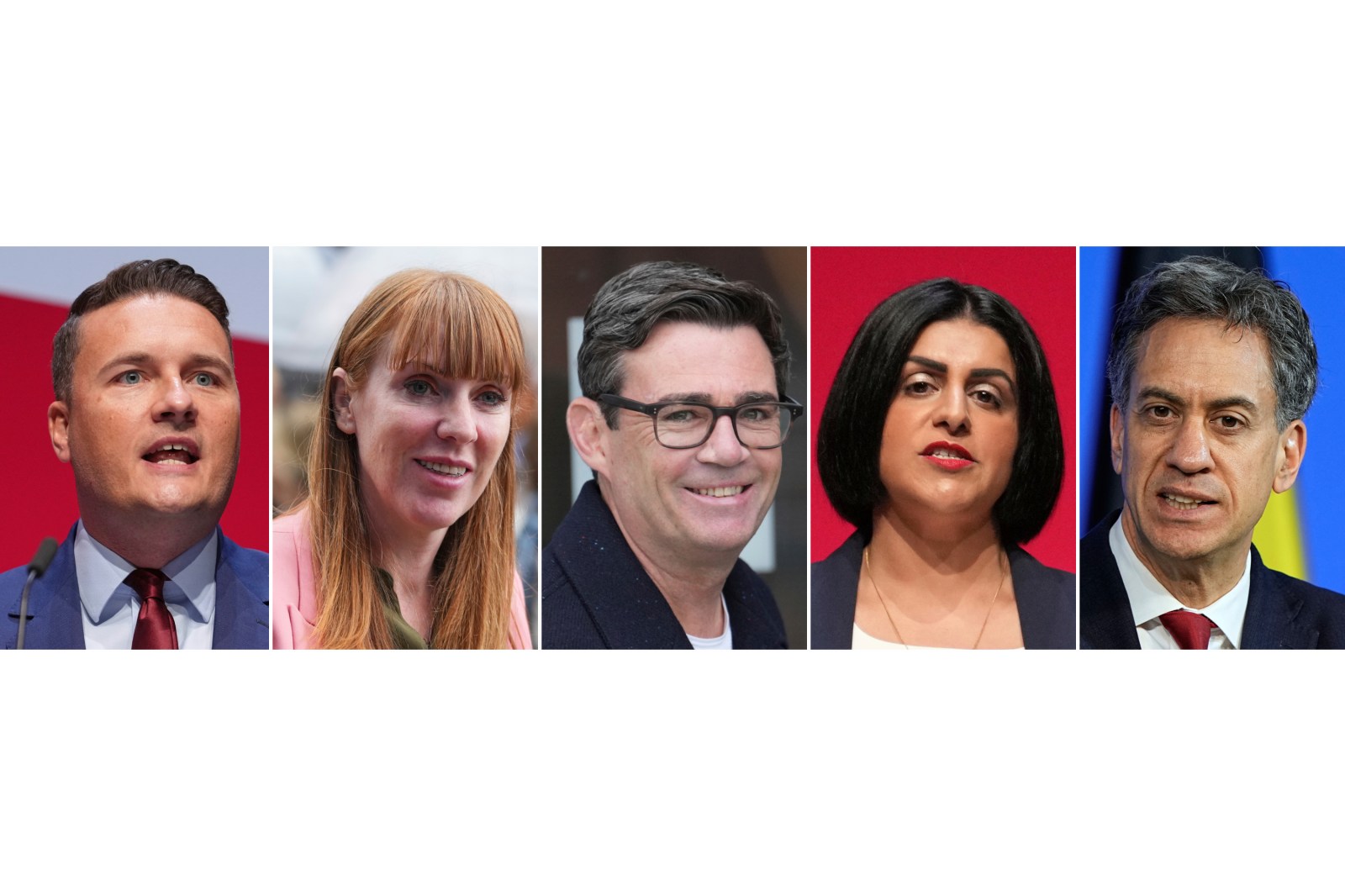
No single figure has emerged as a clear front-runner to replace Starmer, but several prominent Labour members are being touted as potential successors. Among them is Wes Streeting, the Health Secretary, who has gained a reputation as a sharp and articulate communicator. Elected to Parliament in 2015 representing Ilford North, Streeting has been vocal on foreign policy issues, including the ongoing war in Gaza, where he has advocated for a balanced approach emphasizing humanitarian aid alongside Israel's right to self-defense. His leadership ambitions came under scrutiny last year when allies of Starmer reportedly briefed media outlets that the prime minister would vigorously defend his position against any challengers, with speculation centering on Streeting.
Streeting dismissed the rumors outright in a statement to the press on October 15, 2025, calling them “nonsense” and reaffirming his loyalty to Starmer's vision for the party. Despite this, his rising profile — bolstered by successful negotiations on NHS funding increases in the 2025 budget — positions him as a pragmatic choice for those seeking a centrist shift. Supporters highlight his working-class roots in east London and his personal story of overcoming cancer as assets that could resonate with voters disillusioned by elite scandals.
Another contender is Angela Rayner, whose unorthodox path to prominence sets her apart in Labour's hierarchy. Born in Stockport in 1980, Rayner left school at 16, raised a child as a single mother, and grew up in social housing before finding her footing in trade unions. Elected MP for Ashton-under-Lyne in 2015, she ascended rapidly, becoming deputy leader in 2020 and deputy prime minister after Labour's victory. Rayner's appeal lies in her authenticity and strong backing from the party's left wing and union allies.
However, her candidacy is complicated by a lingering tax controversy. In April 2025, Rayner resigned from her government role after admitting she had not paid sufficient capital gains tax on a house she sold in 2010s. An official review into the matter, commissioned by the Cabinet Office, is still pending as of February 2026, with findings expected by late spring. Rayner has maintained that she followed professional advice at the time and described the resignation as a precautionary step to avoid distracting from government priorities.
Andy Burnham, the mayor of Greater Manchester, represents a regional powerhouse with national aspirations. A former MP who served as Culture Secretary and Health Secretary under Gordon Brown, Burnham has cultivated a center-left image focused on devolution and economic fairness. His popularity in the northwest — where he won re-election in 2024 with 64% of the vote — makes him a formidable figure. Yet, his path to the premiership hit a snag in January 2026 when Labour's national executive blocked his candidacy for a parliamentary by-election in Leigh, a safe seat vacated by a retiring MP.
The decision, reportedly influenced by concerns over Burnham's independent streak, underscores a longstanding convention that the prime minister must sit in Parliament. Burnham, speaking at a Manchester town hall event on February 5, 2026, expressed disappointment but vowed to continue advocating for regional voices: "My focus remains on delivering for Greater Manchester, but the party's future needs bold ideas, not barriers." Observers note that without a Commons seat, Burnham's leadership bid would require swift action to secure one, possibly through another vacancy.
On the right flank of Labour, Shabana Mahmood, the Home Secretary, has emerged as a dark horse. Appointed to the role in July 2024, Mahmood oversees critical portfolios including immigration, policing, and national security. Her firm stance on tightening border controls — including the expansion of detention facilities and expedited deportations for unauthorized migrants — has earned praise from the party's more conservative elements. In a speech to the Police Federation conference in Bournemouth on January 20, 2026, she outlined plans to increase funding for law enforcement by £500 million over the next fiscal year, positioning herself as a tough-on-crime leader.
Mahmood, who entered Parliament in 2010 representing Birmingham Ladywood, brings a diverse perspective as a Muslim woman of Pakistani heritage, one of the few in senior Cabinet roles. While she has not publicly signaled leadership ambitions, her handling of post-Brexit migration challenges has bolstered her standing among MPs wary of Labour drifting too far left.
Finally, Ed Miliband, the Energy Secretary, offers a wealth of experience but tempered enthusiasm. Miliband led Labour from 2010 to 2015, guiding the party through opposition but ultimately losing to David Cameron in the general election. Now 56, he has focused on green energy initiatives, including the rollout of offshore wind farms that added 5 gigawatts to the national grid in 2025. In an interview with BBC Radio 4 on February 3, 2026, Miliband downplayed speculation about a return to the top job, stating, "I've been there before; my priority is securing our energy independence for the long term."
Despite his past defeat, Miliband's intellectual heft and policy depth appeal to those seeking stability. His brother, former Foreign Secretary David Miliband, has remained out of frontline politics, leaving Ed as the family's prominent figure. Insiders suggest that while he may not actively pursue the leadership, his endorsement could sway a contest.
As the Epstein scandal continues to unfold, the broader implications for Starmer's government are profound. With Labour's poll lead over the Conservatives shrinking to just 6 points in a YouGov survey released February 9, 2026, internal divisions could erode the mandate won in 2024's 174-seat majority. The Intelligence and Security Committee's review of additional files, expected to conclude by March, may either exonerate Mandelson or deepen the crisis. For now, Starmer's team insists on unity, with a Downing Street spokesperson stating on February 9 that the prime minister "remains fully committed to his agenda of reform and has the party's full support." Yet, in the opaque world of Westminster politics, the coming weeks will test whether that support holds or fractures along the fault lines now visible.
Looking ahead, a leadership challenge could reshape Labour's direction ahead of local elections in May 2026 and the next general election, due by 2029. Potential successors like Streeting or Rayner embody the party's diverse factions, from technocratic centrism to grassroots populism. As one senior Labour figure put it anonymously, "This isn't just about Mandelson; it's a referendum on Starmer's ability to lead through turbulence." The outcome remains uncertain, but the ripples from this scandal are already reshaping the political landscape.