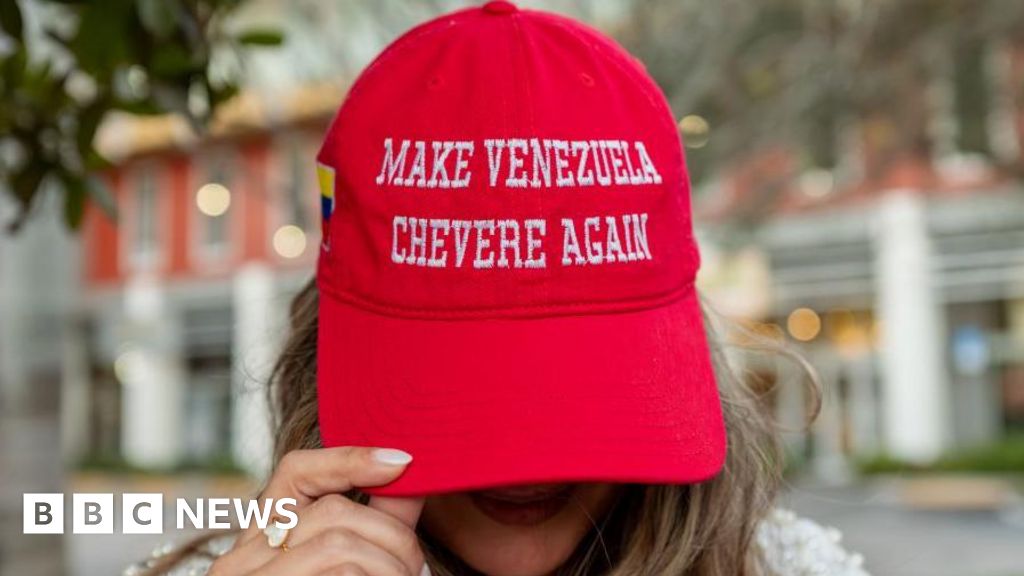
In a bold move that has reverberated through the political landscape, President Donald Trump announced last week that U.S. forces had successfully seized Venezuelan leader Nicolás Maduro during a raid on Caracas, vowing that the United States would "run" the country to stabilize it amid its ongoing crisis. The operation, which resulted in the deaths of 32 Cubans reportedly aiding Maduro's regime, has drawn widespread attention, particularly in Florida, where Venezuelan exiles and Trump supporters have long watched the South American nation's turmoil with keen interest. Speaking from the White House, Trump described the action as a necessary step to counter what he called a "communist threat" in the Western Hemisphere, emphasizing that it differed sharply from past U.S. interventions like the Iraq War.
Florida, home to a large Venezuelan-American community and a stronghold of Trump support, has become a focal point for reactions to the incursion. Dirk Frazier, a longtime Trump backer from St. Augustine who once sold hot dogs to supporters near Mar-a-Lago, expressed a sense of vindication. "I grew up with never-ending wars," Frazier told the BBC, recalling the protracted conflicts in Iraq and Afghanistan that claimed thousands of American lives. But he added, "Venezuela is closer to home," highlighting how the proximity of the crisis sets it apart from distant Middle Eastern engagements.
The raid unfolded in the early hours of December 20, according to U.S. officials, with special forces infiltrating a fortified compound in Caracas where Maduro was holed up. No American casualties were reported, a detail that Frazier and others have praised as a "stark contrast" to the "War on Terror," which saw tens of thousands of U.S. troops wounded over two decades. "It's not prolonged, or protracted," Frazier said. "We are acting like a world superpower again. All bad actors are on notice."
On the streets of Miami, where Cuban and Venezuelan immigrants have shaped the region's politics, Trump supporters voiced optimism about the operation's ripple effects. Vianca Rodriguez, a Florida resident who previously worked for the Republican National Committee and Trump's campaign, likened the strategy to a sophisticated game. "This is chess, not checkers," she told the BBC. Rodriguez suggested that toppling Maduro could weaken leftist allies like Cuba and Nicaragua, potentially cutting off their support networks. She also pointed to immigration benefits, noting, "This is getting them [Venezuelans] thinking they might want to go back home. To help curb immigration, you want people to want to go back. They're here because they had no choice."
Not all Republicans have embraced the move, however. Former Georgia Congresswoman Marjorie Taylor Greene, once a vocal Trump ally but recently critical of him, posted on X that "this is what many in MAGA thought they voted to end." Similarly, Kentucky Representative Thomas Massie, a consistent critic of foreign interventions, stated bluntly, "This is not what we voted for." These voices represent a sliver of dissent within the party, but they underscore tensions in the MAGA base between isolationism and assertive action.
Trump and his administration have pushed back against comparisons to previous wars. In an interview with The Atlantic, Trump distanced his policy from the Bush-era invasion of Iraq, saying, "That was Bush… we should never have gone into Iraq. That started the Middle East disaster." Vice President JD Vance echoed this on X, framing the Venezuela operation as a defensive measure against drug trafficking and asset seizures. "I understand the anxiety over the use of military force, but are we just supposed to allow a communist to steal our stuff in our hemisphere and do nothing?" Vance wrote. "Great powers don't act like that."
Even figures known for their skepticism of overseas entanglements, like former Trump adviser Steve Bannon, have largely endorsed the raid. On his podcast, Bannon called it "bold and brilliant," though he cautioned in a New York Times interview about the risks of occupation. "The lack of framing of the message on a potential occupation has the base bewildered, if not angry," he said, invoking the ghost of Iraq as a warning.
Proximity to the U.S. appears to be a key factor softening isolationist reservations. A former Trump administration official told Politico that "the isolationists and the Reaganites don't agree on much, but one area where they do is the Western Hemisphere. The isolationists are more comfortable being a little more internationalist when it comes to our backyard." Giancarlo Sopo, a conservative strategist and Florida native who advised the 2020 Trump campaign, elaborated on this distinction. He argued that Latin America differs from the Middle East because leaders like Maduro maintain "the appearance of democracy," and there's no sign of a full-scale occupation. "There's also been no indication that we're going to see a sustained military occupation in South America… perhaps a residual stabilization presence to prevent a power vacuum," Sopo said. "That's a far cry from nation-building."
Despite this domestic support, the international community has reacted with alarm. Critics, including former CIA deputy director John McLaughlin, have warned of unintended consequences. Speaking to the BBC, McLaughlin noted, "Generally, as a rule in military and clandestine operations, if you inflict violence you don't really know where it's going after that - even if you have a plan, an analysis, and assumptions." Many view the removal of Maduro as a violation of international law, potentially setting a precedent for interventions by authoritarian regimes elsewhere.
Public opinion polls reflect the divided sentiment. A YouGov survey conducted in late December, before the operation, showed only 22% of Americans supported using U.S. military force to overthrow Maduro, though that figure rose to 44% among Republicans. The lack of U.S. casualties and the focus on regional security may have bolstered approval since then, particularly in Florida.
At a Miami restaurant, Irina Vilariño, a Cuban-born former Republican candidate who has grown critical of Trump, offered a nuanced take. "If she were to take her Latin American hat off," she told the BBC, she could understand why some Americans question U.S. involvement. "I can see why that should not be my problem," Vilariño said. But she added that "we [Americans] are being heavily influenced by bad actors. A lot of Americans just don't get that… they had to do it, to a certain degree." Her comments highlight the personal stakes for Florida's immigrant communities, many of whom fled socialist regimes.
Trump supporters in the state frequently invoke the president's "peace through strength" doctrine to justify the strikes. Rodriguez reiterated this theme, saying, "That's been the theme, consistently, with Trump. It's bringing back the ideals of Ronald Reagan, and no American casualties. They [Venezuela] have been at war with us with drugs. I think it's about time we bring justice." This rhetoric resonates in a state where drug flows from Venezuela have long fueled concerns over border security and public health.
Looking ahead, questions swirl around Venezuela's post-Maduro future. Reports suggest Maduro's trusted lieutenant, possibly his wife Cilia Flores, Venezuela's once-powerful first lady, could play a role in any transitional government, with unconfirmed speculation about her potential alignment with U.S. interests. Visuals from the raid, including maps of the Caracas operation and images of Maduro's capture en route to a New York court, have circulated widely, underscoring the dramatic shift.
The operation's success in avoiding U.S. losses has quelled some fears, but a prolonged instability could erode support. As one analyst put it, the U.S. now faces the challenge of managing a nation fractured by economic collapse, hyperinflation, and political violence. Broader implications extend to global norms, with BBC correspondent Bowen warning that Trump's actions could embolden authoritarian powers worldwide by normalizing regime change through force.
For now, in Florida's vibrant political scene, the raid has reinvigorated Trump's base, blending isolationist instincts with hemispheric vigilance. Whether this marks a new era of U.S. engagement in Latin America or a one-off assertion of power remains to be seen, but it has undeniably placed Venezuela—and America's role there—at the center of national discourse.