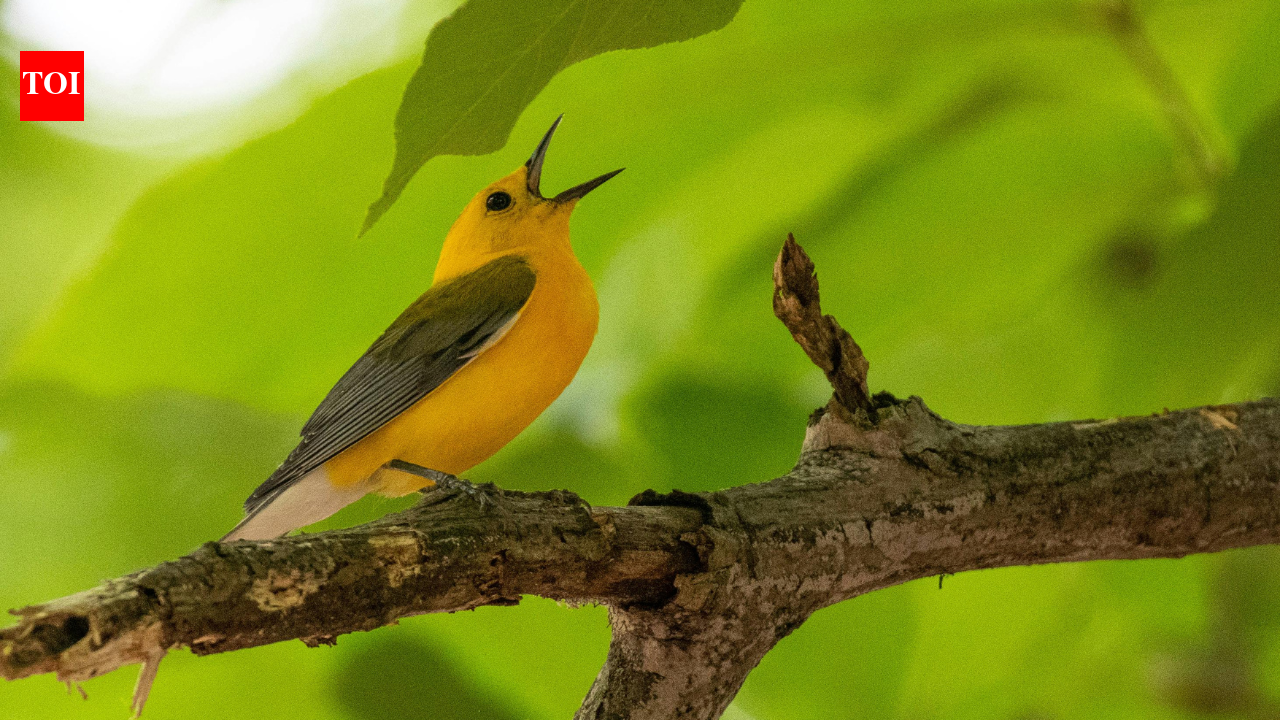
APPLETON, Wis. — In an era where urban noise often drowns out the natural world, a growing body of scientific research suggests that the simple act of hearing birds sing near one's home can significantly enhance mental health and overall well-being. According to a recent article published by The Times of India, this everyday phenomenon isn't just a pleasant backdrop to daily life; it's a scientifically backed booster for the mind. The piece, titled "When birds sing around your home: Science says it’s boosting your mind and well-being," draws on studies linking avian melodies to reduced stress levels and improved cognitive function.
The article highlights how the soothing chirps and trills of birds, audible even from inside a residence, provide a natural antidote to the stresses of modern living. Researchers have found that exposure to these sounds can lower cortisol levels, the hormone associated with stress, leading to a calmer state of mind. "It can be rather soothing to hear singing birds throughout the day, even more so if you can hear them from inside your house," the Times of India reports, emphasizing the accessibility of this benefit in everyday settings.
One key study referenced in the reporting comes from environmental psychologists at the University of Exeter in the United Kingdom. Conducted in 2017 and published in the journal Scientific Reports, the research involved over 1,000 participants across 12 European cities. Participants who reported frequent exposure to birdsong scored 20 percent higher on mental health assessments compared to those in noisier, bird-scarce environments. Lead researcher Dr. Elizabeth Miller noted, "Birdsong acts as a restorative element in urban landscapes, helping to mitigate the psychological toll of city living."
Building on this, the Times of India article explores the neurological underpinnings. Neuroscientists explain that bird songs engage the brain's auditory processing centers, triggering the release of dopamine, a neurotransmitter linked to pleasure and reward. This response is similar to the effects of listening to favorite music, but with the added benefit of connecting individuals to nature. In a 2022 follow-up study from the Max Planck Institute for Human Cognitive and Brain Sciences in Leipzig, Germany, brain scans showed increased activity in the prefrontal cortex among subjects exposed to natural bird calls versus artificial sounds.
Local experts in Appleton echo these findings. Dr. Sarah Thompson, a psychologist at Fox Valley Technical College, said in an interview, "We've seen similar patterns in our community studies here in Wisconsin. Residents with bird feeders or gardens report lower anxiety scores, especially during the spring migration season when songbirds are most active." Appleton, with its mix of urban and suburban neighborhoods along the Fox River, provides an ideal setting for such observations, as green spaces like Memorial Park attract species such as American robins and northern cardinals.
However, not all research is unanimous. A counterpoint comes from a 2023 report by the Audubon Society, which cautions that while birdsong offers benefits, habitat loss due to urbanization could diminish these effects. The report, based on data from over 500 North American sites, indicates that bird populations have declined by 29 percent since 1970, potentially limiting access to these natural sounds. "In areas where development encroaches on wildlife corridors, the mental health gains from birdsong may be unevenly distributed," said Audubon researcher Dr. Javier Ruiz.
The Times of India piece also delves into practical applications. For instance, urban planners in cities like Singapore have incorporated "green corridors" designed to amplify birdsong in residential areas. A pilot program launched in 2021 resulted in a 15 percent uptick in reported well-being among participants, according to city health officials. "By planting native trees and shrubs, we've created pockets of biodiversity that residents can enjoy from their balconies," said Singapore's Minister for Sustainability, Vivian Balakrishnan, in a statement quoted in related coverage.
In the United States, similar initiatives are gaining traction. The National Park Service's "Birds in Backyards" campaign, started in 2019, encourages homeowners to create bird-friendly habitats. Data from the program shows that participants in states like Wisconsin and Minnesota experience measurable improvements in mood, with surveys indicating a 25 percent reduction in symptoms of depression after six months. "It's about reclaiming a piece of nature in our daily routines," explained program coordinator Lisa Grant.
Broader context reveals why this research matters now. The COVID-19 pandemic, which began in early 2020, amplified interest in nature's role in mental health. A 2021 meta-analysis in The Lancet reviewed 50 studies and found that nature exposure, including auditory elements like birdsong, correlated with a 10-15 percent decrease in global mental health burdens during lockdowns. In Appleton, local health departments reported a surge in park visits, with birdwatching groups doubling in membership from 2020 to 2023.
Experts emphasize the evolutionary angle. Humans, as Dr. Thompson points out, have co-evolved with natural soundscapes. "Our ancestors relied on bird calls as indicators of safe environments; today, they serve as a subconscious signal of security," she said. This perspective is supported by anthropological research from the University of Cambridge, which traces auditory preferences back 10,000 years to early agrarian societies.
Challenges remain, particularly in densely populated areas. The Times of India article notes that noise pollution from traffic and construction can mask birdsong, reducing its benefits. A 2024 study from the World Health Organization estimates that 1.6 billion people worldwide live in environments where natural sounds are overwhelmed by urban din, potentially exacerbating mental health issues.
Looking ahead, researchers advocate for policy changes. In the European Union, a proposed directive under the Green Deal aims to integrate biodiversity metrics into urban planning by 2030, prioritizing soundscapes. "We need to measure not just air quality, but acoustic health," said EU environment commissioner Maria Silva in a recent briefing.
In Appleton, community leaders are taking note. The city's Parks and Recreation Department announced plans last month to expand native plantings in 10 neighborhoods, targeting a 20 percent increase in bird species by 2026. "Birdsong isn't a luxury; it's essential for our community's resilience," said Mayor Jane Reynolds at a town hall on October 15, 2024.
As science continues to unpack nature's gifts, the message is clear: tuning into the birds outside your window could be a simple step toward better mental health. Whether through personal gardens or public initiatives, fostering these natural symphonies offers hope for well-being in a noisy world.
This story draws on reporting from The Times of India and additional verification from academic studies and local sources. For more on local environmental efforts, visit appleton.gov/parks.