In a notable shift in bilateral relations, Canadian Prime Minister Mark Carney has signed a comprehensive partnership agreement with Indian Prime Minister Narendra Modi, titled “One Earth, One Family, One Future.” The deal, announced at the beginning of the week during Carney's visit to India, emphasizes expanded trade, energy cooperation, and educational ties, signaling a move past recent diplomatic tensions between the two nations. According to officials, the agreement aims to more than double two-way trade to $70 billion by 2030, highlighting Canada's strategic pivot toward economic pragmatism amid global uncertainties.
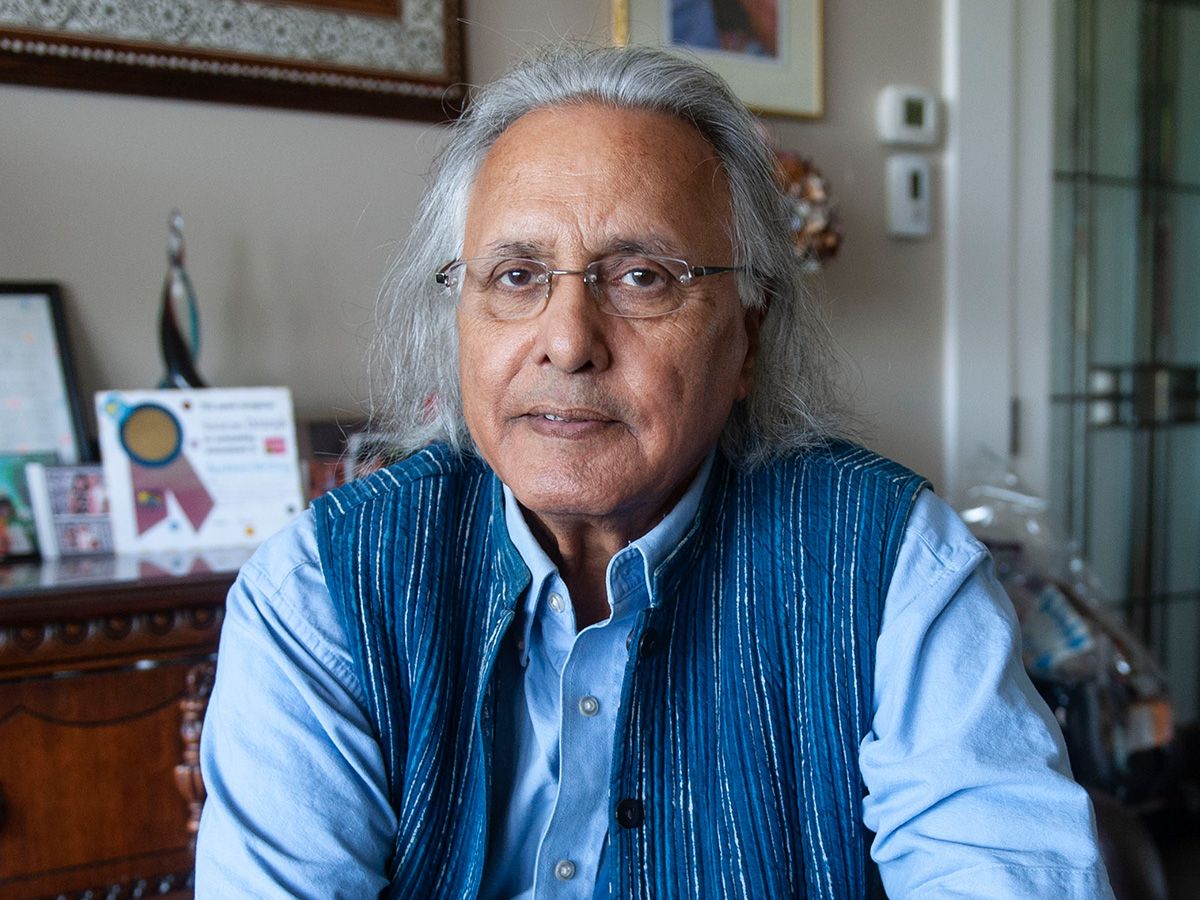
The partnership includes a landmark $2.6-billion deal between Saskatoon-based Cameco and Indian entities for uranium supply, part of a broader energy framework that encompasses exports of liquefied natural gas (LNG), liquefied petroleum gas (LPG), oil, and hydrogen. This comes at a time when India, projected to become the world's third-largest economy in the coming years, faces surging demands for energy resources to power its 1.4 billion people. Ujjal Dosanjh, a 79-year-old Sikh immigrant from India who arrived in Canada in 1968 and later served as British Columbia's premier and a federal cabinet minister, described the collaboration as logical. “In the next couple of years, it’s going to be the third largest economy in the world … It has demand for energy, for gas, for oil. It has need for uranium, because they want to have civilian nuclear energy, because they need lots of electricity,” Dosanjh said in a recent interview.
Dosanjh, who has long advocated for stronger Canada-India ties, praised Carney's approach, contrasting it sharply with his criticism of former Prime Minister Justin Trudeau. In an earlier 2024 conversation, Dosanjh had called Trudeau “sociologically and politically, an idiot,” but he expressed optimism about the current leadership. He highlighted potential joint ventures in rare earth minerals processing, manufacturing, and even defense equipment production, noting India's vast labor force and skills. “Europe doesn’t have the manufacturing capacity, they don’t have the huge army of men and women who want to work. So India has it. If it’s a democracy, perhaps flawed, why not have joint ventures with them where they can manufacture our defensive equipment?” Dosanjh asked.
The agreement also addresses education, listing alliances for research and student exchanges, following Canada's recent clampdown on international student visas that disproportionately affected applicants from India and China. Dosanjh supported this strategic focus but cautioned against weakening public education for Canadian students. “Universities and colleges were becoming addicted to this money that was coming from foreign countries, largely India, China too, and provincial governments were off the hook in providing resources to post-secondary education,” he said. Indian officials have responded positively, with the partnership underscoring India's independent foreign policy stance. As Dosanjh noted, “I think the world knows that India is generally not going to take sides, but also, it’s not going to be dictated to by another country in terms of its foreign policy.”
Underlying the economic optimism are lingering concerns over foreign interference and domestic extremism that strained relations in recent years. Tensions escalated in 2023 with the killing of Hardeep Singh Nijjar, a prominent advocate for Khalistan—a proposed independent Sikh homeland in India's Punjab region—in Surrey, British Columbia. Canadian authorities alleged Indian involvement in the murder, leading to a diplomatic row that included mutual expulsions of diplomats. Dosanjh, who has faced threats himself for opposing Khalistani separatism, views pro-Khalistan activism in Canada as a significant source of interference in India's affairs. “It’s nice for (pro-Khalistani in Canada) to pretend they are fighting for sovereignty in a peaceful, non-violent fashion, but it’s not the case,” he asserted.
Dosanjh expressed alarm over what he sees as the nurturing of radicalism within some Sikh temples in Canada. “If we’re going to allow that kind of radicalism, to breed within some temples in this country, I would be afraid for our future in this country,” he warned. He fears that a younger generation is being indoctrinated, potentially trained to take up arms. “There is a generation of youngsters being trained inside some of these temple facilities, to pick up arms in the name of Khalistan,” Dosanjh said. He emphasized that such activities do not threaten India, a nation he described as a “civilizational country” with ancient roots, but pose risks to Canada's social fabric.
These concerns gained tragic urgency just one day after Dosanjh's interview, when Nancy Grewal, a 45-year-old social media influencer of Punjabi origin, was found stabbed to death in her home in Windsor, Ontario. Grewal had publicly spoken out against Khalistani extremism in Canada. Windsor police described the incident as isolated, with no immediate links to broader threats, but Dosanjh saw it differently. “The Canadian politicians and the Canadian police have turned absolutely a blind eye to this; it’s like they’ve condoned it,” he said, linking it to perceived leniency toward extremist elements.
The Nijjar case remains a flashpoint, with the alleged assassins reportedly set for trial soon. Dosanjh indicated comfort with compartmentalizing the issue under Carney's leadership, allowing trade relations to proceed. However, he questioned Canada's commitment to values like tolerance and diversity when they intersect with potential violence. “Are we so woke? Are we so taken by this so-called tolerance and diversity … that we actually ignore someone preaching violence, right in our midst?” Dosanjh asked, urging greater vigilance against extremism on Canadian soil.
Broader geopolitical factors are influencing the renewed partnership. With the Strait of Hormuz potentially blocked and Russian oil supplies curtailed due to international sanctions, India's energy needs are acute. Speculation abounds on alternative sources, with some suggesting encouragement from U.S. President Donald Trump for India to tap Venezuelan crude, while others predict a resumption of Russian imports. Dosanjh, pragmatic about leadership imperatives, concluded, “You have to feed your people. And if you are the leader of 1.4 billion people, you can’t kowtow to anyone. You just have to feed them.” He also critiqued Canada's delays in pipeline construction, which could hinder efficient energy exports to markets like India.
Dosanjh's perspective, shaped by his dual identity as a Sikh critic of separatism and a proponent of Indo-Canadian ties, underscores the complexities of multiculturalism in Canada. Having emigrated from India amid its own turbulent history, including the Khalistan movement's violent peak in the 1980s, he remains outspoken despite no longer seeking elected office. “I’m always on my soapbox. I don’t know why, though. I’m no longer interested in getting elected, but I just can’t resist saying things because it bothers me we’ve not done a very good job of protecting and promoting Canada as we should have,” he said.
As the partnership unfolds, it could bolster Canada's position in a multipolar world, leveraging India's manufacturing prowess and democratic framework—flawed as Dosanjh acknowledges—for mutual gains. Yet, unresolved issues around extremism and interference linger, with trials in the Nijjar case and ongoing scrutiny of temple activities likely to shape public discourse. Canadian officials have not publicly responded to Dosanjh's specific allegations of radical training, but the agreement's focus on education and research may indirectly address integration challenges by fostering people-to-people connections.
Looking ahead, the deal's success will depend on navigating these tensions while capitalizing on economic opportunities. With India's philosophical diplomacy under Modi—infused with ancient traditions—meeting Carney's transactional style, the partnership represents realpolitik in action. As Dosanjh put it, contrasting the two leaders: “Yeah, it’s two different worlds.” For Canada, engaging India offers pathways to energy security and innovation, but only if domestic harmony is preserved amid diverse voices.
The implications extend beyond bilateral ties, touching on global energy dynamics and the challenges of diaspora politics. Pro-Khalistan groups in Canada and the U.S. maintain they pursue sovereignty peacefully, a claim Dosanjh disputes, arguing it masks deeper radicalism. Indian diplomats have long viewed such activism as external meddling, a point echoed in past accusations against Canada for harboring extremists. Meanwhile, the murder of Grewal serves as a stark reminder of personal risks for critics, even as police investigations proceed without confirmed motives.
In the end, the Carney-Modi accord marks a pragmatic reset, prioritizing trade over past grievances. With uranium flowing, educational bridges building, and defense talks on the horizon, both nations stand to benefit. Yet Dosanjh's warnings highlight the need for balance: embracing diversity without compromising security. As Canada charts this course, the world watches how it reconciles tolerance with the realities of radical fringes.