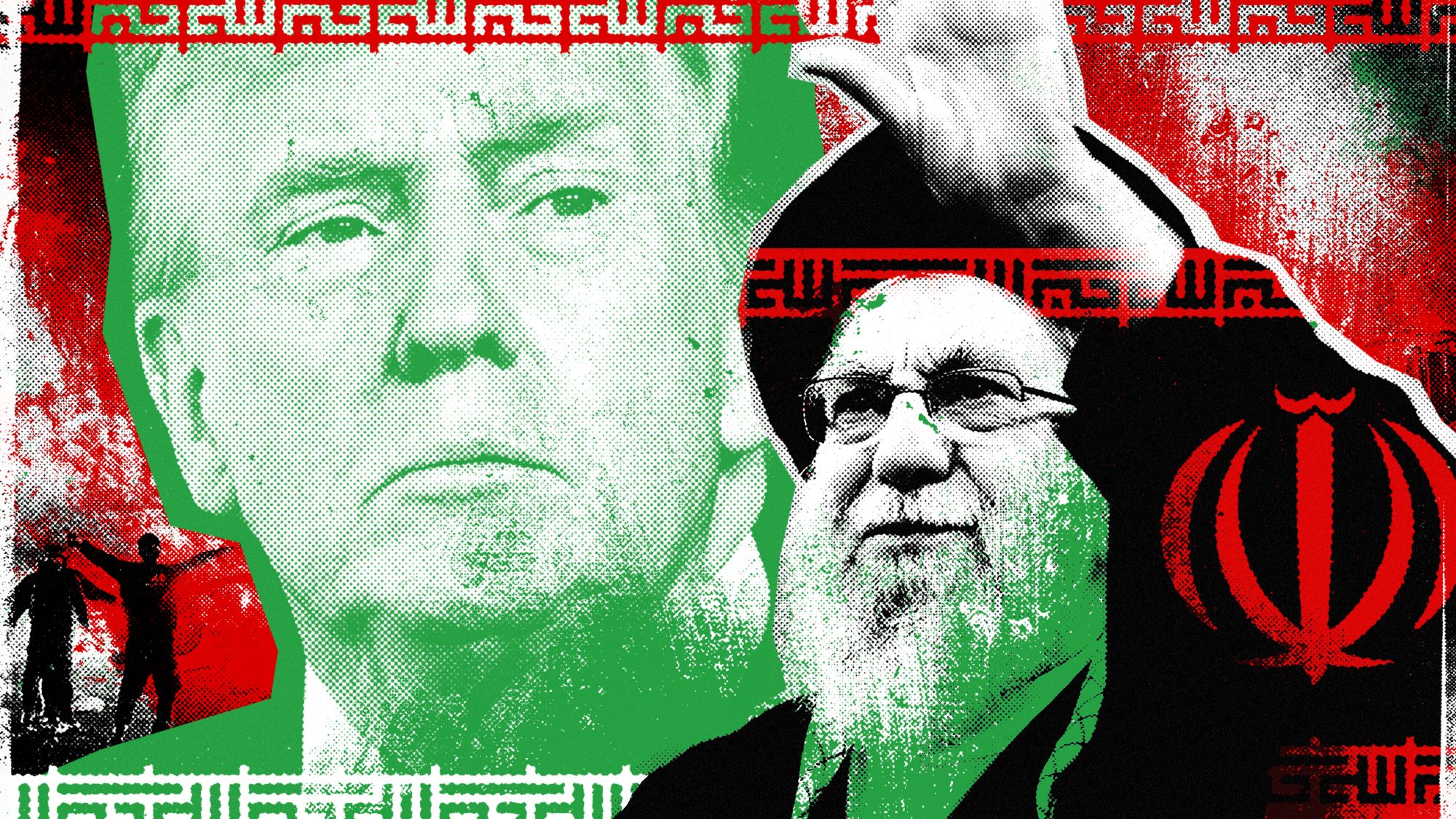
ISTANBUL — As diplomatic tensions simmer in the Middle East, the United States and Iran are poised for high-stakes talks here on Friday, joined by representatives from Turkey, Qatar, and Egypt. The discussions, aimed at reviving a nuclear deal, come amid escalating rhetoric from President Donald Trump and mounting internal unrest in Iran, raising fears of a potential conflict that could ripple across the globe. Sky News international affairs editor Dominic Waghorn described the coming week as "make or break" for avoiding confrontation, warning that "fingers are on the trigger and one misstep could lead to repercussions which will be felt beyond the Middle East."
Trump's administration has deployed what one report called a "massive armada" off the Iranian coast, a show of force that has intensified the pressure on Tehran. This military buildup coincides with widespread protests inside Iran, where economic woes and political discontent have fueled demonstrations since late December, initially sparked as an economic protest. According to reports, the death toll from these unrests has surpassed 500, highlighting the regime's deepening crisis of legitimacy.
Middle Eastern diplomats are engaged in "strenuous efforts" to bridge the divide between Washington and Tehran, as noted by The Washington Post. Previous rounds of negotiations have been characterized as frosty and indirect, but the inclusion of foreign ministers from key regional players in Friday's talks could facilitate more direct engagement between U.S. and Iranian envoys. The presence of Turkey as host underscores its growing role in mediating regional disputes, with Istanbul serving as a neutral ground for these sensitive discussions.
Experts paint a picture of an Iranian regime facing unprecedented vulnerabilities. Sanam Vakil, director of Chatham House’s Middle East and North Africa programme, told The Guardian that Tehran is confronting a "strategic reality it has never faced before." She pointed to a combination of internal challenges — including "economic decline, corruption, currency collapse and mass emigration" — and external pressures, such as the erosion of its regional influence and isolation from ideological allies. "Its revolutionary ideology, once a tool for mobilisation, now leaves it increasingly isolated in a region that has grown tired of ideological conflict," Vakil said.
From the U.S. perspective, Trump's approach appears muddled but aggressive. Commentator Chris Hughes wrote in The Mirror that while the president's intentions toward Iran may be "muddied," the overall momentum seems to be "heading for war." Hughes suggested Trump might opt for limited strikes or even hold back entirely if he can compel Iran to abandon its nuclear ambitions. However, with rhetoric escalating, Trump has "backed himself into having to make a big decision," leaving little room for further pressure tactics without action. For observers, it's a "nail-biting" period, especially given the deployment of military assets worth "hundreds of billions of pounds."
Not everyone sees this as an inevitable path to conflict. Bamo Nouri, writing in The Conversation, urged viewing recent developments as "brinkmanship" rather than outright preparation for war. He argued that a full-scale conflict with Iran "would not be swift, cheap or decisive," and could politically backfire for Trump by contradicting his campaign pledges to reduce U.S. military interventions abroad and end the "forever wars." Nouri emphasized that any major attack might undermine domestic support at a time when Trump is navigating his own political challenges.
The potential fallout from failed talks weighs heavily on analysts. Amin Saikal, also in The Conversation, warned that a breakdown in negotiations would have "terrible ramifications for both countries, the region and the world." He speculated that Trump's ultimate aim might be regime change in Iran, but noted the leadership's resilience: the regime has "always found a way to work through challenges and threats to their existence," bolstered by loyal security forces. Saikal's assessment aligns with Vakil's view that Iran's rulers remain "solidly behind the leadership" despite the pressures.
Looking at possible outcomes, Vakil outlined three scenarios in The Guardian, all of which she described as "dangerous for the Iranian people." First, a "forced compromise" might be seen domestically as a "bargain for the sake of the regime’s survival," eroding public trust further. Second, a "controlled war" could lead to "prolonged instability," exacerbating the humanitarian crisis. Most alarmingly, a total breakdown might trigger an "uncontrolled collapse," transforming Iran into a "long-term source of instability" and potentially ushering in a successor regime "more perilous" than the current one.
These talks occur against a backdrop of broader geopolitical shifts. Iran's regional projection of power has "crumbled," according to Vakil, with allies in Syria and elsewhere weakened by ongoing conflicts. Meanwhile, Trump's deployment echoes past escalations during his first term, when he withdrew from the 2015 nuclear accord, known as the Joint Comprehensive Plan of Action. That decision, coupled with the 2020 assassination of Iranian General Qasem Soleimani, set the stage for today's tensions, though Trump has since claimed a willingness to negotiate if Iran meets certain conditions.
International observers are watching closely, particularly in light of recent events like the seizure of a Russian tanker in the Atlantic, which has spotlighted clandestine shipping networks potentially linked to Iran. Additionally, unrelated but concurrent developments, such as the meeting between the foreign ministers of Greenland and Denmark at the White House, illustrate the multifaceted nature of U.S. foreign policy under Trump. Yet, the Iran talks remain the focal point, with diplomats rushing to meet amid skepticism about underlying motives from all sides.
The Iranian leadership, under President Masoud Pezeshkian, faces a delicate balancing act. Elected in 2024 on promises of moderation, Pezeshkian has sought to ease economic sanctions through diplomacy, but hardliners within the regime resist concessions. If Trump and Pezeshkian fail to find common ground, Vakil cautioned, "there are no real diplomatic brakes left." This sentiment is echoed in reports from The Week, which highlight the crunch point the region is approaching.
Beyond the immediate nuclear issue, the talks touch on Iran's support for proxy groups in Yemen, Lebanon, and Iraq, which have drawn U.S. ire. Trump's administration has accused Tehran of fueling attacks on American interests, while Iran maintains its actions are defensive. The involvement of Qatar and Egypt, both with their own stakes in regional stability, adds layers to the negotiations; Qatar hosts a major U.S. airbase, and Egypt shares concerns over Iranian influence in the Red Sea.
As the Friday deadline looms, the world holds its breath. The deployment of U.S. forces, including aircraft carriers and destroyers, serves as both a deterrent and a potential catalyst. Hughes in The Mirror questioned whether such a massive investment in military hardware could go unused, but Nouri countered that political calculations might prevail. Saikal's point about the regime's adaptability suggests Tehran won't fold easily, potentially prolonging the standoff.
In the end, the path forward remains uncertain. Success in Istanbul could de-escalate tensions and open doors to broader Middle East peace initiatives, but failure risks a spiral into conflict. With protests raging and armadas at the ready, the next seven days will indeed test the resolve of leaders on all sides. For the people of Iran and the wider region, the stakes could not be higher, as the specter of instability looms large.
Will Barker, a staff writer at The Week who covers global news and politics, contributed to the reporting on these developments. His background includes stints at the Financial Times and The Sun, with expertise in world affairs.