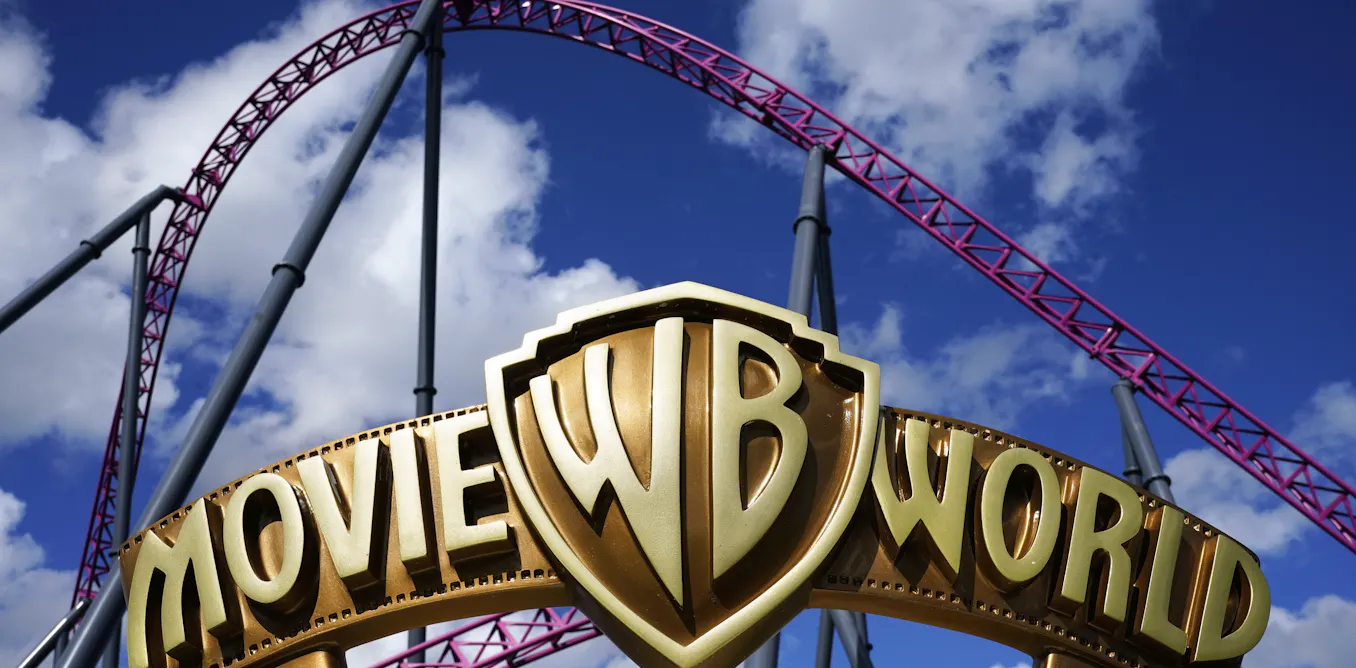
BRISBANE, Australia — Thousands of families flocked to Warner Bros. Movie World on the Gold Coast for school holiday fun on Wednesday when one of the park's marquee attractions, the DC Rivals HyperCoaster, suddenly came to a standstill midway through its climb. A spokesman for Village Roadshow Theme Parks, which operates the facility, confirmed that all riders disembarked safely and were escorted down the incline on foot. The incident, while startling for those aboard, resulted in no injuries, but it reignited discussions about the safety protocols governing Australia's thrill rides.
The stoppage on the DC Rivals HyperCoaster, one of the tallest and fastest roller coasters in the Southern Hemisphere, echoes a similar event in January 2024 at the same park. On that occasion, ride operators halted the coaster as a precaution after a loose scarf became entangled in the wheels. Such interruptions underscore the built-in safety mechanisms designed to prevent accidents, even if they disrupt the excitement of the day.
Theme park safety has been under scrutiny in Australia since the tragic 2016 incident at nearby Dreamworld, where four people — a mother, her son, and two friends — lost their lives on the Thunder River Rapids ride due to mechanical failures and inadequate maintenance. The operator, Ardent Leisure, faced a $3.6 million fine following investigations that exposed lapses in oversight. That disaster prompted widespread calls for enhanced regulations, influencing changes that continue to shape the industry today.
Dr. John Smith, a risk management expert with nearly 29 years of involvement in developing Australia's amusement ride standards, explained the rigorous daily testing that major parks like Movie World must conduct. "Every morning, major theme parks in Australia such as Movie World test their rides before opening," Smith wrote in a recent analysis for The Conversation. "This is mandatory under the national standard for amusement rides."
These pre-opening checks include running the roller coasters both empty and loaded with water-filled dummies to simulate passenger weight. As gravity-powered rides, coasters can behave differently without the added mass, potentially stalling on inclines or curves. Operators also practice evacuation drills and verify that multiple trains on the track maintain safe distances to avoid collisions.
Before each launch, staff perform diagnostic scans on passenger restraint systems and inspect limit switches that prevent trains from crashing into one another. "If there is an alarm for one of these devices, the staff can’t launch the ride," Smith noted. Delays in queues, often frustrating for eager riders, frequently stem from these essential safety verifications or waits for clearing weather conditions.
Beyond daily protocols, theme parks maintain engineering teams for immediate repairs and night shifts focused on preventative maintenance, especially during busy periods like school holidays. Legally, all rides undergo annual inspections mandated by state Work Health and Safety Acts. In Queensland, where the Gold Coast parks are located, Workplace Health and Safety Queensland serves as the primary regulator.
Assessing the overall risk of roller coasters remains challenging due to the decentralized nature of data collection in Australia. National statistics on amusement ride incidents are not compiled, with oversight handled at the state level. When The Conversation reached out to Queensland's regulator for state-specific figures, the data was not available in time for publication.
To gauge safety trends, experts often look to the United States, which hosts more theme parks than any other country. According to the latest safety reports from The International Association of Amusement Parks and Attractions, North American parks recorded 1,495 injuries among approximately 422 million visitors in 2024. Roller coasters were linked to 44% of those injuries — the highest on record — yet the overall rate stood at just 2.86 injuries per million attendees, a decline from 4.78 per million a decade ago.
Putting these numbers in perspective, a 2001 study by Britain's Health and Safety Executive compared fairground rides to other activities using data from the prior decade. It found the risk of death on UK fairground rides to be about 1 in 834 million rides, lower than rock climbing (1 in 320,000), canoeing (1 in 750,000 outings), or air travel (1 in 125 million passenger journeys). While Australian data is sparse, the similarities in standards suggest comparable safety levels.
The Dreamworld tragedy catalyzed significant reforms. A 2020 coroner's inquiry into the four deaths recommended more frequent and thorough ride inspections, along with better operator training. In response, Queensland introduced stricter safety rules in 2019, addressing the specific failures at Dreamworld.
Building on that, in 2024, the state launched Australia's first comprehensive "amusement device safety" code of practice. This detailed guide covers operations from major coasters to smaller attractions like dodgem cars and inflatable jumping castles, aiming to standardize safety across the board.
On a national level, an independent committee under Standards Australia, which includes voluntary experts like Smith representing Engineers Australia, is updating the country's amusement ride standards. The group is incorporating elements from the European standard, considered a global benchmark. "Standards Australia hopes to release a draft for public comment this year," Smith reported, signaling ongoing efforts to align with international best practices.
Despite these advancements, challenges persist. The lack of centralized national data hinders a full picture of risks, and incidents like Wednesday's stoppage serve as reminders that even with precautions, mechanical issues can arise. Park operators emphasize that such halts are intentional safety features, not flaws in the system.
As families continue to visit Gold Coast attractions during the holidays, experts like Smith encourage enjoyment without undue worry. "So there’s still more work to do. But if you’re visiting a theme park these holidays, deciding whether to let your kids try a ride, my recommendation is let them enjoy their childhood," he advised. "It’s probably safer than you think." With evolving regulations and vigilant oversight, Australia's theme parks aim to balance thrill with security for generations of riders.