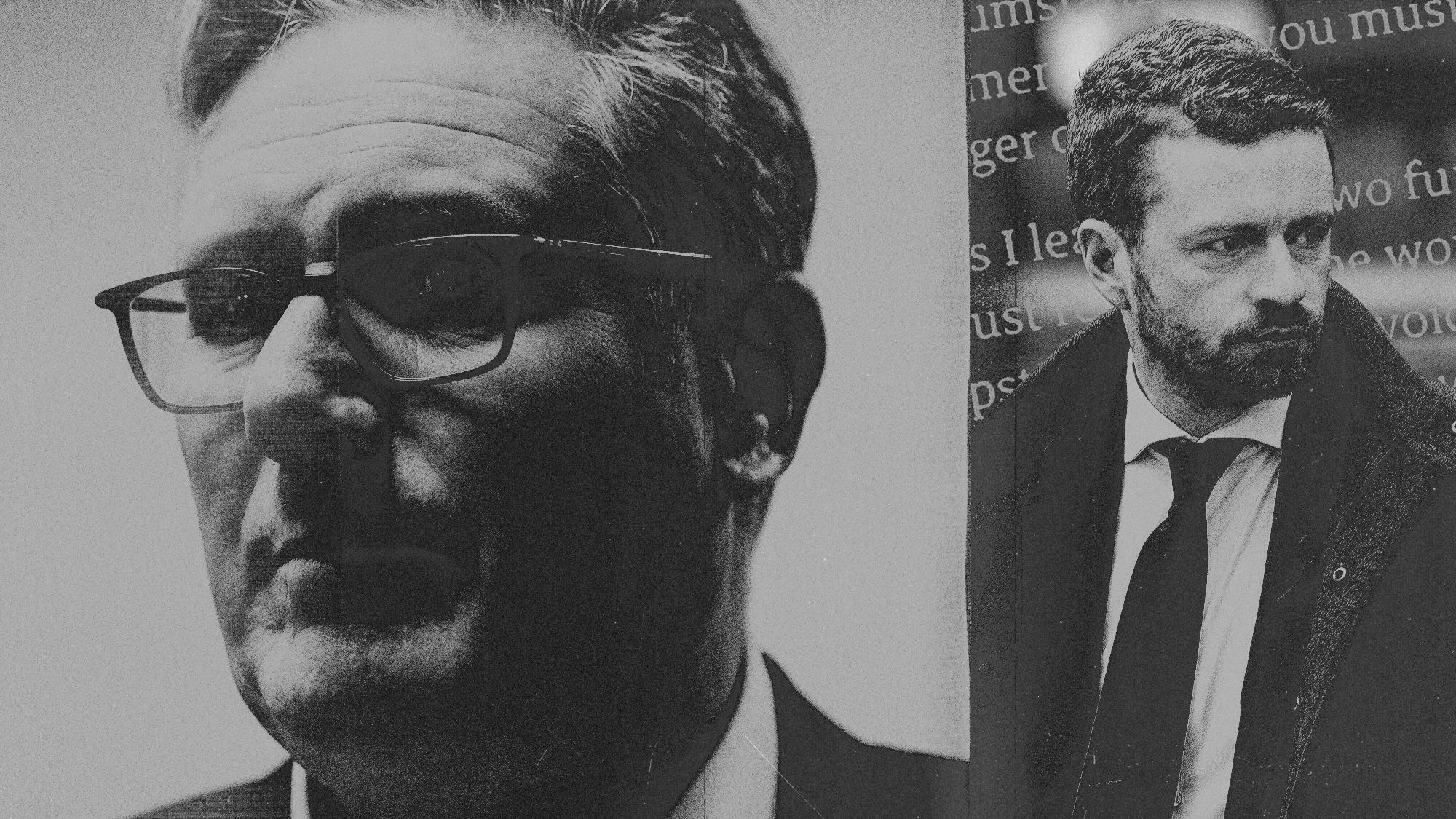
In a dramatic shake-up at the heart of the British government, Prime Minister Keir Starmer's chief of staff, Morgan McSweeney, resigned on Wednesday amid mounting pressure from Labour MPs. The departure of the Irish-born strategist, who played a pivotal role in remaking the Labour Party and guiding Starmer to victory in the 2024 general election, has plunged Downing Street into what observers describe as full-blown survival mode. McSweeney's exit follows a "tsunami of pressure" from outraged party members, triggered in part by the controversial appointment of Peter Mandelson as the UK's ambassador to the United States, despite Mandelson's known associations with the late financier Jeffrey Epstein.
The resignation comes at a precarious time for Starmer's administration, just six weeks after McSweeney himself assured a group of special advisers that the government had "turned a corner." Instead, Labour has faced a series of policy U-turns and internal discord, eroding public support and fueling calls for a leadership reset. According to reports in The i Paper, the MPs' frustration extended beyond the Mandelson nomination to a perceived "autocratic culture" in No. 10, with McSweeney becoming the focal point of their ire as the architect of Starmer's more confrontational approach to politics.
Sky News political editor Beth Rigby described the situation starkly, saying, "In the end, the PM had little option." She noted that Starmer has now "lost the backbone of his operation," with many MPs openly calling for his resignation. On an interim basis, McSweeney has been replaced by his former deputies, Vidhya Alakeson and Jill Cuthbertson, both of whom served under him in senior roles at Downing Street.
The fallout continued into Thursday morning when Downing Street's communications director, Tim Allan, announced his resignation. Allan, who had been in the role since Starmer took office, stated that his departure would allow a "new No. 10 team to be built." This marks the second high-profile exit from Starmer's crisis-hit inner circle in less than 24 hours and the fifth communications chief to leave since the Labour government was formed in July 2024, according to Politico.
Commentators have offered a range of views on what McSweeney's departure means for Starmer's leadership. Patrick Maguire, writing in The Times, argued that the prime minister will be "disorientated" without his key ally, whom he credited with remaking Labour from its "confrontation-shy 'Librarian Labour' stereotype." Maguire suggested that the party now stands for little more than an "unreconstructed, middle-of-the-road progressivism" embodied by Starmer himself, leaving the government "adrift."
Starmer will be “disorientated” after McSweeney’s departure, said Patrick Maguire in The Times. Arguably, the Irishman “remade” the Labour Party, leading the charge against the confrontation-shy “Librarian Labour” stereotype, and his departure has left Starmer “adrift”. It is unclear what a post-McSweeney Labour Party stands for, apart from an “unreconstructed, middle-of-the-road progressivism” embodied by Starmer.
On a more optimistic note, Polly Toynbee in The Guardian viewed the resignation as a potential "new beginning" for the prime minister. She wrote that if Labour hopes to shift public opinion and recover from its recent missteps, Starmer had "better grab it." Toynbee portrayed McSweeney as the "punch bag for everything that has gone wrong" since the election, suggesting that the personnel change could "signal" a moment of "new purpose" for the struggling administration. "One thing is for sure: there are no more excuses," she added.
Not all analyses are so hopeful. Beth Rigby, returning to Sky News commentary, warned that while McSweeney's exit might "go some way to satisfying some of his MPs who were demanding a reset," it could ultimately "only serve to weaken him further now that his key ally and fixer has gone." She described No. 10's operation as in "freefall," drawing parallels to historical precedents where such instability proved nearly impossible to stabilize.
Neal Lawson, in The New Statesman, contended that Labour's crisis "won’t be fixed by a sacrificial resignation." He framed Starmer as the public face of a "deep-rooted and systemic crisis" of identity that has plagued the party for decades, leaving it "brought to its knees" morally, politically, and electorally. For Lawson, true recovery would require a "total reset of the Labour project," far beyond swapping out advisers.
From a more conservative perspective, Isabel Hardman in The Spectator questioned, "What could a Starmer government possibly achieve now?" She likened McSweeney's resignation to a patient bargaining for "expensive life-extending drugs," granting the prime minister a little extra time but not altering the underlying diagnosis: "this is a government that no longer works."
The Mandelson appointment lies at the epicenter of the scandal. Texts and emails related to his nomination as US ambassador have reportedly surfaced, potentially fueling what some call the "biggest political scandal for a generation." Mandelson, a veteran Labour figure and former cabinet minister under Tony Blair, has faced scrutiny over his past ties to Epstein, who died in 2019 while awaiting trial on sex trafficking charges. Labour MPs expressed outrage that Starmer proceeded with the appointment despite these links, with one source in The Independent noting that advisers like McSweeney only recommend, while ministers ultimately decide.
John Rentoul, also in The Independent, posed a pointed question: If it was right for McSweeney to resign for recommending Mandelson, then "why is it not also a resigning matter to act on that advice?" He suggested Starmer is "running out of things to throw overboard to try to keep himself afloat," hinting at more desperate measures ahead, such as emulating Blair's 2006 strategy of announcing a timeline for stepping down to quell internal coups.
Adding to the pressure, an upcoming by-election in Gorton and Denton on February 26 could prove pivotal. Polls suggest Labour risks coming third, behind challengers like Reform UK and the Greens, in a constituency with complex demographics that complicate messaging. A poor showing there, as Patrick Maguire predicted in The Times, might "trigger the final moves," breaching Starmer's "penultimate line of defence" and ushering in the "endgame of Starmer’s premiership."
McSweeney's influence on Labour cannot be overstated. Before joining Starmer's team, he led the party's successful 2024 campaign, transforming it from a divided opposition into a election-winning machine. His tenure at No. 10, however, saw the government grapple with economic challenges, including elevated temperatures impacting the broader economy and international tensions, such as Starmer's condemnation of US tariff threats—though less confrontational than some European allies. Resurfaced social media posts from various figures have also stirred controversy, including those from democracy activists with inflammatory rhetoric.
Looking ahead, Starmer's government faces broader reforms, such as overhauling the House of Lords, which officials regard as "long overdue and essential." Yet, with No. 10 in disarray, questions persist about the pathway to stability. Potential challengers within Labour are reportedly beginning to maneuver, though the route to a leadership coup remains "still unclear." Internationally, Starmer must navigate tricky dynamics, including playing tough with China to secure substantive outcomes while resisting efforts to draw Britain away from US influence.
As the dust settles from these rapid resignations, the prime minister clings to the hope that a refreshed team might restore confidence. But with internal divisions deepening and electoral tests looming, observers across the spectrum agree on one point: time is running short for Keir Starmer to redefine his government's direction.