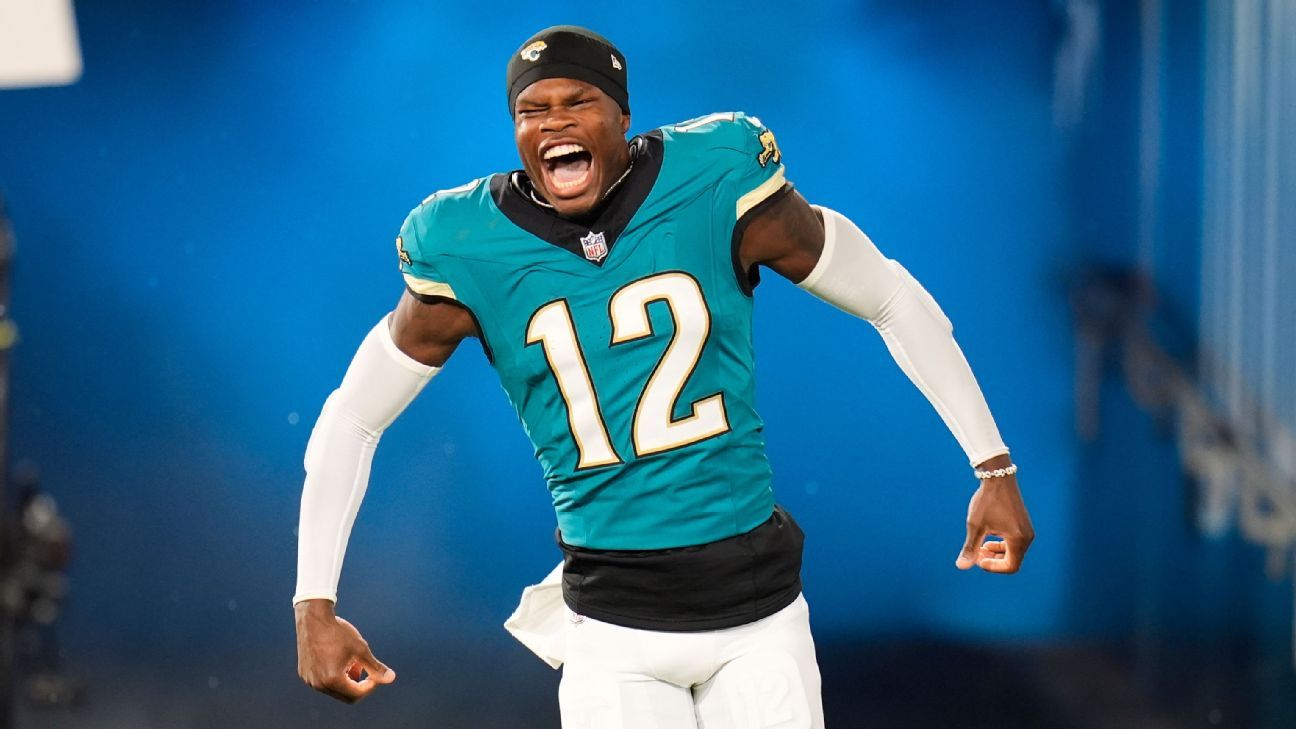
One year after a blockbuster draft-day trade reshaped the futures of the Jacksonville Jaguars and Cleveland Browns, the deal continues to spark debate among NFL insiders. In 2025, the Jaguars moved up to the No. 2 overall pick to select two-way phenom Travis Hunter, while the Browns amassed a haul of picks that has bolstered their rebuilding efforts. The trade, finalized just minutes after the Tennessee Titans took quarterback Cam Ward at No. 1, saw Jacksonville send its No. 5, No. 36, and No. 126 picks, along with a 2026 first-rounder, to Cleveland in exchange for the No. 2 selection and the Browns' No. 104 and No. 200 picks.
The seeds of the deal were planted at the 2025 NFL league meetings in Palm Beach, Florida, where Jaguars general manager James Gladstone approached his Cleveland counterpart, Andrew Berry, to gauge interest in trading the No. 2 pick. Gladstone had his sights set on Hunter, the Heisman Trophy-winning wide receiver and cornerback from Colorado, who aimed to become the first full-time two-way player in the modern NFL era. Berry had publicly signaled openness to deals, and talks intensified after the meetings as the Browns evaluated the draft class and anticipated the Titans' move for Ward.
With Cleveland opting against a quarterback like Shedeur Sanders at No. 2, the trade was announced on Day 1 of the draft in late April 2025. The Jaguars immediately drafted Hunter, viewing him as a game-changer. "It's rare to be able to target and prioritize a player who can alter the trajectory of the sport itself," Gladstone said at the time. "And Travis is somebody that we view has the potential to do that."
For the Browns, the transaction provided an influx of assets to address an aging roster. They used the No. 5 pick on defensive tackle Mason Graham from Michigan, selected running back Quinshon Judkins from Ohio State at No. 36, and later added running back Dylan Sampson with the No. 126 pick. The 2026 first-rounder from Jacksonville, now slotted at No. 24, gives Cleveland another high-value selection in this week's draft, set for April 23-25 and broadcast on ESPN, ABC, and the ESPN App.
Reflecting on the move at the 2026 NFL league meetings last month, Berry emphasized its fit for both teams. "I think it's something that made sense for both organizations at the time," he said. "I think for us, the ability to realistically draft Mason, draft [Judkins], and then obviously be sitting here with pick 24, it made sense for where we are in our team's life cycle. And it's a way ... you're able to manufacture assets or resources without necessarily trading away a veteran player."
Hunter's rookie season with the Jaguars started with sky-high expectations, amplified by the team's commitment to deploying him on both sides of the ball—a rarity not seen regularly since Roy Green in 1981. Preparations began in organized team activities (OTAs), where coaches eased him in offensively before shifting to defense during mandatory minicamp in June. Training camp saw Hunter alternating sides, with special attention during special teams drills to build his skills on the opposite unit.
Teammates marveled at his endurance and focus. "His energy is different," said Jaguars cornerback Jourdan Lewis. "And the way he goes about his business is different. All he wants to do is play football. It takes a special individual mentally to go out there and want to do both things. ... He has it to do it."
In the regular season, Hunter flashed brilliance across seven games before a torn lateral collateral ligament in his right knee sidelined him following an October 30 practice. He participated in 67% of offensive snaps and 36% of defensive ones, hauling in 28 catches for 298 yards and one touchdown. Defensively, he recorded 15 tackles and three pass breakups, including a standout fourth-down stop against the Cincinnati Bengals in Week 2—though a controversial pass interference call negated it. His offensive breakout came in Week 7 against the Los Angeles Rams, where he caught eight passes for 101 yards and a score, but the injury halted his momentum after the bye week.
Looking ahead to 2026, the Jaguars plan to keep Hunter as a two-way contributor, though with a defensive emphasis at cornerback due to roster needs. Several defensive backs are on expiring contracts, while the receiving corps remains deep with returners like Parker Washington, who led the team with 58 catches and 847 yards in 2025, and additions such as Jakobi Meyers, acquired at the trade deadline. "We still expect [Hunter] to play on both sides of the ball," Gladstone said three days after Jacksonville's 27-24 wild-card playoff loss to the Buffalo Bills. "Obviously you can take a peek at expiring contracts on our roster and which side of the ball has more. At this point walking into the offseason, corner is a position that we have a few guys who are on expiring contracts. By default, you can expect there to be a higher emphasis on his placement [on defense]."
Hunter is progressing in knee rehab and will be limited in OTAs and minicamp but fully cleared for training camp. The Jaguars enter this year's draft without a first-rounder but with 11 total selections, including four between picks 56 and 100. Management sees the roster as solid enough for a best-player-available strategy, despite needs at defensive tackle, edge rusher, and linebacker. Long-term, Hunter's role will adapt to team necessities, potentially solidifying as an elite corner with offensive packages if he excels defensively.
ESPN Jaguars reporter Michael DiRocco predicts Hunter's second year will succeed if he makes a significant impact on both sides. Some within the organization already consider him the team's top corner from last season, and contributions like big offensive plays in crucial moments could cement him as a young superstar.
On the Browns' side, the trade haul has yielded immediate dividends. Graham anchored the defensive line from Week 1, starting every game and posting 49 tackles, seven for loss, four quarterback hits, and a half-sack. His 38% run stop win rate topped all rookies and ranked 27th league-wide, while his 8.3% pass rush win rate as an interior lineman led rookies and placed 20th overall. Berry called Graham a "DNA match" for Cleveland's attacking defense.
Judkins emerged as a workhorse back, rushing for 827 yards and seven touchdowns before a season-ending dislocated ankle and fractured fibula in Week 16. He led all rookies in rushing yards prior to the injury. Sampson, the No. 126 pick, flashed dynamic ability as a runner and pass-catcher, setting up a promising tandem with Judkins.
For Graham's sophomore season, success hinges on pass-rushing growth, according to ESPN Browns reporter Daniel Oyefusi. His run defense ensures early-down reliability, but elevating his pressure—especially after veteran Maliek Collins' quad injury in Week 13 affected the unit—will cap his potential as teams scheme against him. Former defensive coordinator Jim Schwartz had pushed for more in that area.
The Browns' No. 24 pick this year, lower than initially hoped, aligns with a weak quarterback class, ruling out a passer. Berry adheres to a best-player-available approach but eyes needs like wide receiver or offensive tackle. Pre-draft visits have included Utah offensive tackle Caleb Lomu, Texas A&M wide receiver KC Concepcion, Indiana wide receiver Omar Cooper Jr., Ohio State wide receiver Carnell Tate, Alabama offensive tackle Kadyn Proctor, and Georgia offensive tackle Monroe Freeling. A defensive selection remains possible.
ESPN analyst Seth Walder assesses the trade's outcome so far, noting the challenge for teams moving up for non-quarterbacks. Hunter retains All-Pro potential at corner but hasn't fully realized the two-for-one value yet, shifting toward defense in 2026. Graham has been solid, Judkins promising, and the extra pick tips the scales. "In order for the Jaguars to come out ahead in the end, Hunter will have to be exceptional, and none of Graham, Judkins or Cleveland's selection at No. 24 can end up being exceptional themselves," Walder wrote. "Otherwise, it's the Browns who will have gotten the better end of the bargain—and that's what looks far more likely right now." As both teams navigate the draft and offseason, the trade's legacy will unfold, with Hunter's versatility and Cleveland's asset accumulation at the forefront.