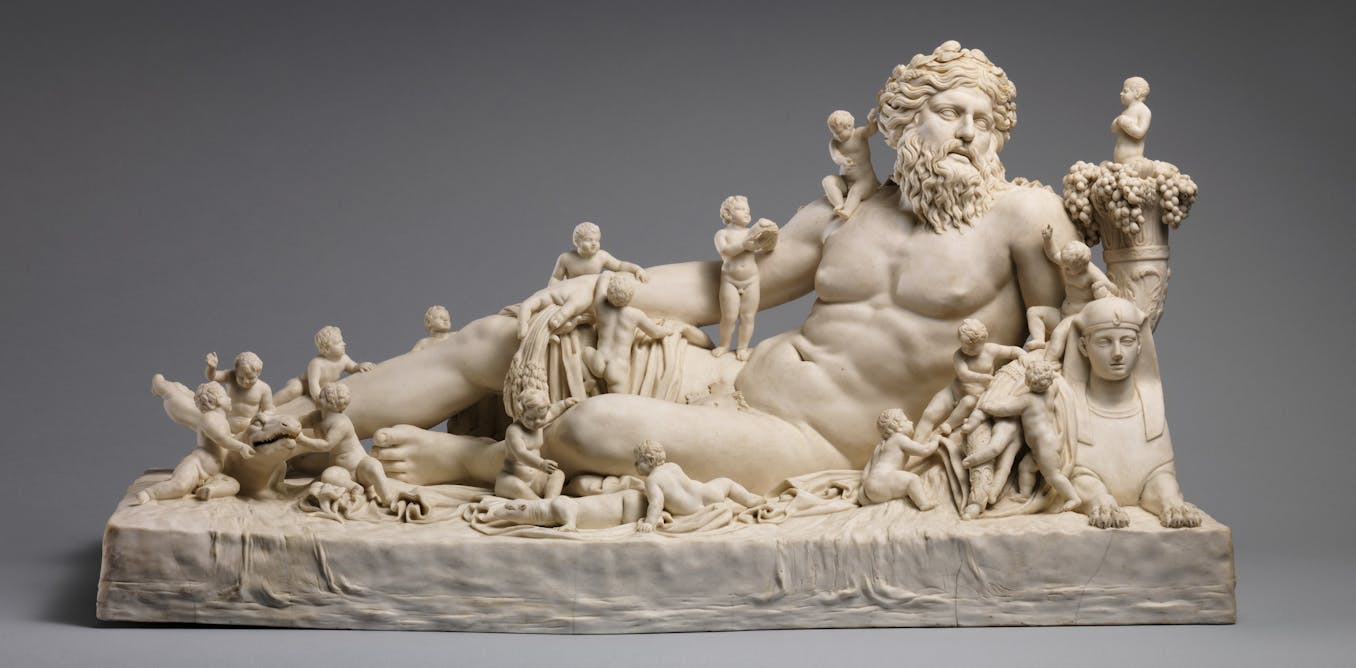
In a world filled with marble and bronze figures stripped bare, a 12-year-old from Astoria, New York, posed a question that's puzzled many: Why are so many statues naked? Artie, the curious kid behind the inquiry, sparked an exploration into one of art history's enduring traditions, as explained by art historian Amy E. Herman in a recent article for The Conversation.
The answer, Herman notes, stretches back to the dawn of human creativity. "We are all born naked, and sculptures of the human body in its natural state are as old as humankind," she writes. This nudity in art isn't monolithic; it carries layers of meaning, from innocence and sexual desire to triumph and defeat. Drawing on the work of 20th-century art historian Kenneth Clark, Herman distinguishes between the 'naked'—unclothed and perhaps ashamed—and the 'nude,' an idealized form of the body. Though modern usage blurs the lines, the concept underscores how ancient artists viewed the bare form as a powerful symbol.
The epicenter of this tradition lies in ancient Greece, beginning around the sixth century B.C.E.. Here, male nudity wasn't mere absence of cloth but a deliberate 'costume,' as described by classics scholar Larissa Bonfante. Greek society celebrated gods, athletes, warriors, and heroes through nude depictions. Athletes trained and competed without garments, while statues of the demigod Herakles, with his muscular frame, guarded temples. Known as kouroi, these striding statues of young men served dual purposes: offerings to deities and markers for graves.
Such portrayals embodied kalos, or beauty, and arete, excellence. A prime example is the 'Spear Bearer' (Doryphoros), crafted by sculptor Polykleitos approximately 2,400 years ago. Polykleitos theorized that true beauty arose from harmonious proportions and symmetry. The statue's counterpoised stance—one leg bearing weight, the other relaxed—exemplified this balance, influencing countless replicas across centuries.
This Greek ideal even shaped Roman portraiture. Five centuries after the original, the statue of Emperor Augustus adopted the Spear Bearer's athletic build and pose but added specifics like a toga and ornate armor to denote his status. "Here, the body of the emperor projects an overall message of confident heroism, while his garments fill in details about his status and achievements," Herman explains. This contrast highlights nudity's timeless quality versus clothing's ties to particular eras or roles.
The flame of classical nudity reignited during the European Renaissance, from roughly 1400 to 1600 C.E., and later in neoclassicism, spanning 1750 to 1900 C.E.. Artists, unearthing long-buried Roman statues from post-Empire rubble, were inspired to copy and adapt them. By the 1500s, art academies emphasized sketching live nude models as essential training, embedding the nude deeper into Western artistic canon.
Yet, the nude evolved with time. Michelangelo's iconic 'David', completed in 1504, reimagines the Biblical hero as a contemplative nude, armed only with a rock and sling for his battle against Goliath. Unlike Polykleitos' balanced proportions, David's narrower hips reflect Michelangelo's unique vision, diverging from ancient ideals while still evoking heroic nudity.
Nudity's link to divinity persisted. In Michelangelo's 'Risen Christ', Jesus stands heroically bare, symbolizing resurrection and godlike power. Emperors rarely posed nude, but Napoleon Bonaparte broke convention in 1802, commissioning a sculpture portraying him as Mars, the Roman war god. This work echoed the Spear Bearer and the 'Apollo Belvedere', forging a visual tie to ancient might.
Female nudity follows a distinct path. Among the earliest sculptures, dating back 30,000 years to the Paleolithic era, is the 'Woman from Willendorf', unearthed in 1908 in Austria. With exaggerated breasts, hips, and pubic area, it was dubbed the 'Venus of Willendorf' after the Roman love goddess, though millennia apart. Scholars debate its intent: erotic, or perhaps practical, illustrating pregnancy's bodily shifts?
In ancient Mesopotamia, some 5,000 years ago, nude figures represented ideal women and goddesses. But in Greece, female nudity lagged, deemed improper until the fourth century B.C.E.. The groundbreaking 'Aphrodite of Knidos' by Praxiteles changed that, her modest hand shielding her genitals inspiring the Venus pudica pose—covering breasts and groin—in Roman copies and beyond.
A compelling case of gendered adaptation appears in ancient Egypt with Pharaoh Hatshepsut, the first female ruler around 1479-1458 B.C.E.. Depicted topless in a kilt and false beard like male pharaohs, her form blurs sexual lines, prioritizing royal authority over femininity.
Contemporary artists both honor and subvert these traditions. While many draw on nudity for timeless themes like perfection, immortality, or divinity, others clothe their figures to challenge norms. British sculptor Thomas J. Price's 'Grounded in the Stars', a 12-foot monument of a woman in a T-shirt, leggings, and sneakers, adopts the heroic counterpoise but grounds it in everyday reality.
Herman's explanation, part of The Conversation's Curious Kids series, invites questions from children and adults alike. "Hello, curious kids! Do you have a question you’d like an expert to answer?" the piece concludes, directing inquiries to CuriousKidsUS@theconversation.com. Artie's query from Astoria underscores how art's mysteries engage young minds, bridging ancient practices with modern curiosity.
This tradition's persistence raises broader questions about cultural values. In public spaces, nude statues often provoke debate—celebrated for their beauty in museums, yet sometimes contested in civic contexts for perceived indecency. Revivals like the Renaissance not only revived forms but influenced global perceptions of the body, from academic training to monumental public art.
Looking ahead, as artists like Price innovate, the nude's role may continue evolving. Whether evoking Greek arete or contemporary identity, these bare figures remind us of humanity's enduring fascination with the unclothed form. For now, Artie's question illuminates a thread woven through millennia, inviting all to ponder the stories etched in stone.