In a dramatic escalation of tensions in the Middle East, the United States and Israel launched coordinated airstrikes against Iran early Saturday morning, targeting key military and leadership sites in the Iranian capital of Tehran and other locations. The operation, dubbed "Epic Fury" by U.S. officials and "Lion's Roar" by the Israelis, resulted in the death of Iran's Supreme Leader Ayatollah Ali Khamenei, according to announcements from both U.S. President Donald Trump and Iranian state television. The strikes came just two days after fruitless negotiations between the U.S. and Iran over Tehran's nuclear program, marking a significant rupture in diplomatic efforts.
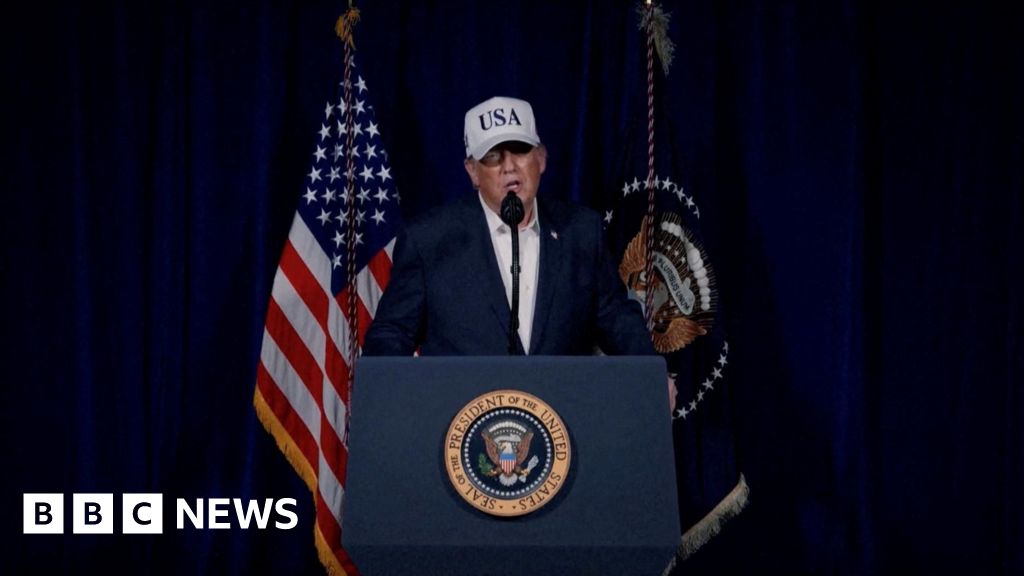
President Trump announced the leader's death on social media, describing Khamenei as "one of the most evil people in History" and framing the attacks as a response to Iran's long-standing threats against the United States. In a video statement, Trump accused Tehran of conducting an "unending campaign of bloodshed and mass murder targeting the United States," pointing to Iran's rejection of opportunities to abandon its nuclear ambitions and its development of long-range missiles capable of reaching Europe, U.S. troops abroad, and potentially the American homeland. He also invoked historical grievances, including the 1979 takeover of the U.S. embassy in Tehran, where dozens of Americans were held hostage for 444 days, and the 1983 bombing of a U.S. Marine barracks in Beirut by Iranian proxies, which killed 241 service members.
The immediate trigger for the strikes appears tied to recent unrest in Iran. Trump had pledged in January to intervene if Iranian security forces suppressed protests amid the country's economic crisis. This operation builds on prior U.S. actions: In June of last year, the U.S. conducted Operation Midnight Hammer, bombing three nuclear facilities in Iran, which Trump claimed had "obliterated" the nation's nuclear program. Those strikes helped broker a ceasefire in a subsequent 12-day conflict between Iran and Israel, during which Israel hit Iranian nuclear, military, and infrastructure targets, and Tehran responded with hundreds of rockets and drones aimed at Israeli cities.
Satellite imagery obtained by BBC Verify revealed significant damage to Khamenei's office compound in Tehran, corroborating reports of the strikes' impact. An intelligence source and a military source speaking to CBS, the BBC's U.S. partner, indicated that around 40 Iranian officials were also killed in the attacks. Iranian state television confirmed Khamenei's death—he was 86 and had ruled since 1989—and declared 40 days of national mourning. Explosions rocked Tehran shortly before Trump's announcement, with the Iranian foreign minister labeling the assault an "unprovoked, illegal" attack.
Iran swiftly retaliated, launching counterattacks across the Middle East. Missiles and drones targeted U.S. allies, including strikes on Bahrain, Kuwait, Qatar, and the United Arab Emirates, all hosting American military presence. In Abu Dhabi, UAE state media reported one person killed in the attacks. Closer to home, an Iranian missile struck several buildings in central Tel Aviv, killing one person and wounding at least 20, according to the Israeli newspaper Haaretz. Iran's Red Crescent reported over 200 people killed and more than 700 injured across 24 of the country's 31 provinces, with a particularly devastating explosion at a school in southern Iran claiming at least 108 lives, per a local prosecutor.
Trump warned that bombing campaigns would continue throughout the week, suggesting the death toll could rise further. So far, the U.S. military has reported no combat casualties among American forces, though Trump acknowledged that "the lives of courageous American heroes may be lost." The U.S. has bolstered its regional presence in recent weeks, deploying two aircraft carriers—the USS Gerald R. Ford and USS Abraham Lincoln—along with 12 ships, F-35 and F-22 fighter jets, refueling tankers, and surveillance aircraft. However, there are no indications of plans for a ground invasion, given the American public's reluctance for such commitments. The U.S. maintains about 13 military bases in the Middle East with 30,000 to 40,000 troops typically stationed there.
Questions about the legal basis for the strikes have ignited fierce debate in Washington. The U.S. Constitution reserves the power to declare war for Congress under Article I, but presidents have historically wielded broad authority for military actions, creating a longstanding gray area. Congress has not formally declared war in this instance. Reactions on Capitol Hill split along partisan lines, with Republicans—who control both chambers—largely supportive. Kentucky Senator Lindsey Graham, a longtime advocate for action against Iran, posted on X: "This operation is necessary and long justified."
House Speaker Mike Johnson, a Republican, said the Trump administration had notified the "Gang of 8"—a bipartisan group of congressional leaders—ahead of the strikes.
Democrats, however, condemned the moves as unauthorized warmongering. Senator Tim Kaine, a Democrat on the Armed Services Committee, called it "Trump's illegal war." The party renewed pushes for a war powers resolution to curb presidential unilateralism, similar to a bill that failed last year due to lack of Republican backing. While such a measure could limit future actions without congressional approval, its passage seems improbable now, with few Republicans like Congressman Thomas Massie and Senator Rand Paul signaling support.
Beyond the political fray, concerns linger about Iran's military capabilities. The regime has consistently denied pursuing nuclear weapons, yet it has enriched uranium to levels unsuitable for civilian power programs, according to BBC international editor Jeremy Bowen. Neither the U.S. nor Israel has publicly released evidence of an imminent bomb-making effort by Tehran. Still, U.S. domestic authorities are on heightened alert. New York City Mayor Zohran Mamdani stated that emergency management officials were taking "proactive steps" in sensitive locations out of caution. On the West Coast, Los Angeles Mayor Karen Bass noted increased police patrols, though "there are no known credible threats at this time."
The strikes have also drawn international attention, with reports of a luxury hotel in Dubai being hit amid Iran's retaliatory barrage. Bowen described the situation as a "dangerous moment," but noted that the U.S. and Israel view it as an opportunity not to be missed to neutralize threats. The operation's success in targeting Khamenei could embolden calls within Iran for overthrowing the clerical rulers, as Trump urged in his statements.
Looking ahead, the path forward remains uncertain. Iran's proxies across the region could intensify attacks, potentially drawing in more nations. The U.S. has emphasized air raids over ground operations, but sustained bombing risks broader escalation. Congressional Democrats' war powers push may gain traction if casualties mount, while Republicans frame the action as defensive necessity. As mourning begins in Iran and alerts persist in the U.S., the world watches a volatile crossroads in Middle East geopolitics, where historical animosities collide with modern missile technology.
The immediate human cost underscores the stakes: families grieving in Tehran, Tel Aviv, and Abu Dhabi, amid a conflict that has already reshaped alliances. With no ceasefire in sight and Trump signaling more strikes, diplomats may scramble for de-escalation channels, though the failed nuclear talks suggest limited goodwill remains. For now, the focus stays on containment, as global leaders weigh responses to what could become a defining flashpoint of the era.