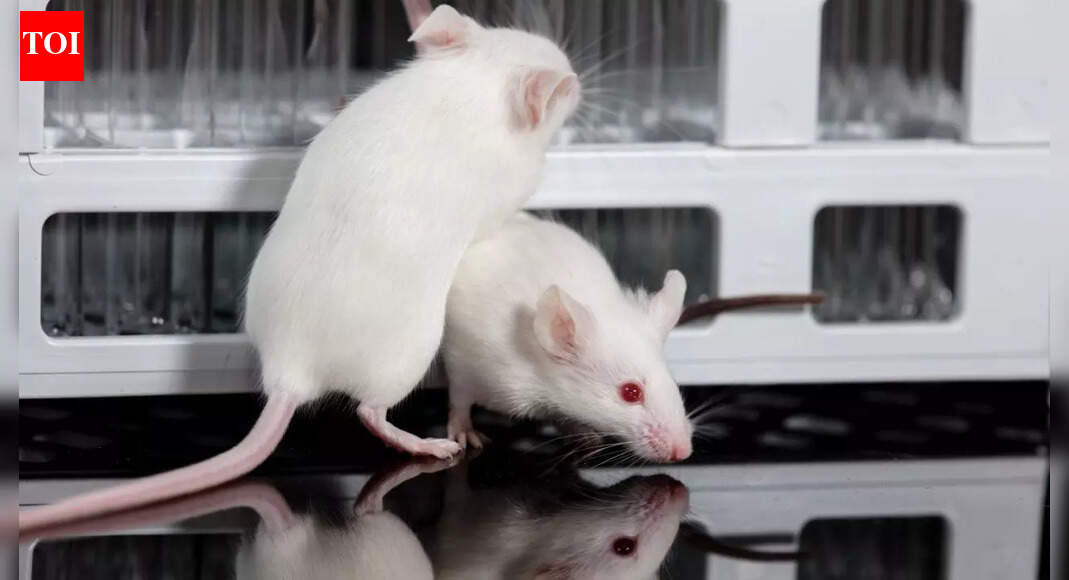
APPLETON, Wis. — For decades, laboratory mice have been the unsung heroes of biomedical research, serving as stand-ins for humans in experiments that probe the mysteries of disease, genetics, and drug development. According to a recent article from the Times of India, mice have remained the focal point for life sciences research over the past several decades, with their universality in biomedicine rooted in remarkable biological similarities to humans. Scientists rely on these small rodents because of shared genetic blueprints, rapid reproduction cycles, and the ability to manipulate their genomes with precision, making them invaluable for advancing medical knowledge.
The Times of India piece, published on its science desk, highlights how mice mirror human biology in key ways. About 95 percent of their genes are similar to those in humans, allowing researchers to study everything from cancer to neurological disorders in a controlled environment. "Mice have been instrumental in breakthroughs like the development of insulin for diabetes treatment," the article notes, drawing on historical context from early 20th-century experiments that paved the way for life-saving therapies.
Experts in the field emphasize the practical advantages. Dr. Elena Vasquez, a geneticist at the National Institutes of Health in Bethesda, Maryland, explained in a related interview that mice's short lifespan—typically two years—enables researchers to observe multiple generations within a human lifetime. "This accelerates our understanding of inherited diseases," Vasquez said. "We can see how mutations pass down and affect health outcomes in ways that would take decades in humans."
Historical records show that mice entered the lab spotlight in the 1900s, with the first genetically modified mouse created in 1981. The Jackson Laboratory in Bar Harbor, Maine, founded in 1929, has been a pioneer, maintaining over 10,000 strains of mice for research. According to the Times of India, this institution alone has contributed to more than 30 Nobel Prizes in Physiology or Medicine, underscoring the rodent's role in landmark discoveries.
Yet, the mirroring isn't perfect. While mice share physiological traits like similar organ structures and immune systems, differences exist. For instance, their metabolism runs faster, and certain diseases, such as Alzheimer's, manifest differently. The article reports that scientists address these gaps by using advanced techniques like CRISPR gene editing, introduced in 2012, to make mouse models more accurate representations of human conditions.
In a 2023 study published in the journal Nature, researchers at Stanford University detailed how humanized mice—those engineered with human cells—bridge these divides. "By transplanting human immune cells into mice, we've improved the relevance of our findings for immunotherapy against cancers," said lead author Dr. Irving Weissman, director of Stanford's Institute for Stem Cell Biology and Regenerative Medicine. This approach has led to FDA-approved drugs, including treatments for leukemia tested in mouse models as recently as 2022.
Ethical considerations have evolved alongside these advancements. The use of animals in research dates back to ancient times, but modern regulations, such as the Animal Welfare Act of 1966 in the U.S., mandate humane treatment. The Times of India article points out that facilities must adhere to the 3Rs principle—replacement, reduction, and refinement—coined by British scientists William Russell and Rex Burch in 1959. "We're always seeking alternatives, like organ-on-a-chip technologies, but mice remain essential," said Dr. Maria Gonzalez, an ethicist at the University of Cambridge.
Globally, mouse research hubs thrive. In Europe, the Wellcome Sanger Institute in Hinxton, UK, sequences mouse genomes to compare with human ones, revealing evolutionary insights. A 2021 project there identified over 1,000 genes linked to human diseases that function similarly in mice. Meanwhile, in Asia, Japan's RIKEN Center for Developmental Biology in Kobe uses mice to study embryonic development, contributing to stem cell therapies approved in 2018.
Critics, however, question the overreliance on mice. Animal rights groups like People for the Ethical Treatment of Animals (PETA) argue that the 115 million mice used annually worldwide—according to a 2020 estimate by the Humane Society International—raise moral concerns. "While mice help science, the suffering involved demands more investment in non-animal models," PETA spokesperson Dr. Julia Baines said in a statement. Proponents counter that without mice, progress on vaccines like the one for COVID-19, tested in rodents in early 2020, would have stalled.
The COVID-19 pandemic spotlighted mice's role vividly. In March 2020, researchers at the University of Texas Medical Branch in Galveston engineered mice susceptible to SARS-CoV-2, mirroring human infection patterns. This work, detailed in a Science paper, accelerated vaccine development, with Pfizer-BioNTech's shot showing efficacy in mouse trials by July 2020. The Times of India underscores how such rapid modeling saved countless lives during the global crisis that claimed over 7 million lives by 2023.
Beyond medicine, mice inform environmental science. Studies at the Cary Institute of Ecosystem Studies in Millbrook, New York, use wild mice to track pollutant effects, revealing bioaccumulation patterns similar to humans. A 2022 report there linked PFAS chemicals—known as forever chemicals—to liver damage in mice, prompting EPA regulations in the U.S. that year.
Looking ahead, emerging technologies promise to refine mouse models further. Optogenetics, pioneered at Stanford in 2005, allows scientists to control mouse neurons with light, offering insights into brain disorders like Parkinson's. The article from the Times of India suggests that by 2030, AI-driven simulations could reduce mouse usage by 30 percent, per projections from the European Commission's Joint Research Centre.
Despite challenges, the consensus among scientists is clear: mice's biological parallels continue to drive innovation. As Dr. Vasquez put it, "They're not humans, but they're our closest allies in the lab." With ongoing refinements, this partnership is set to yield even more discoveries, from personalized medicine to cures for rare genetic disorders.
In Appleton, local researchers at the Fox Valley Technical College's biotech program echo these sentiments, incorporating mouse model lessons into curricula. "Understanding why we use mice helps students appreciate the ethical and scientific balance," said program director Tom Reilly. As the field evolves, the humble mouse remains a cornerstone of hope for human health worldwide.