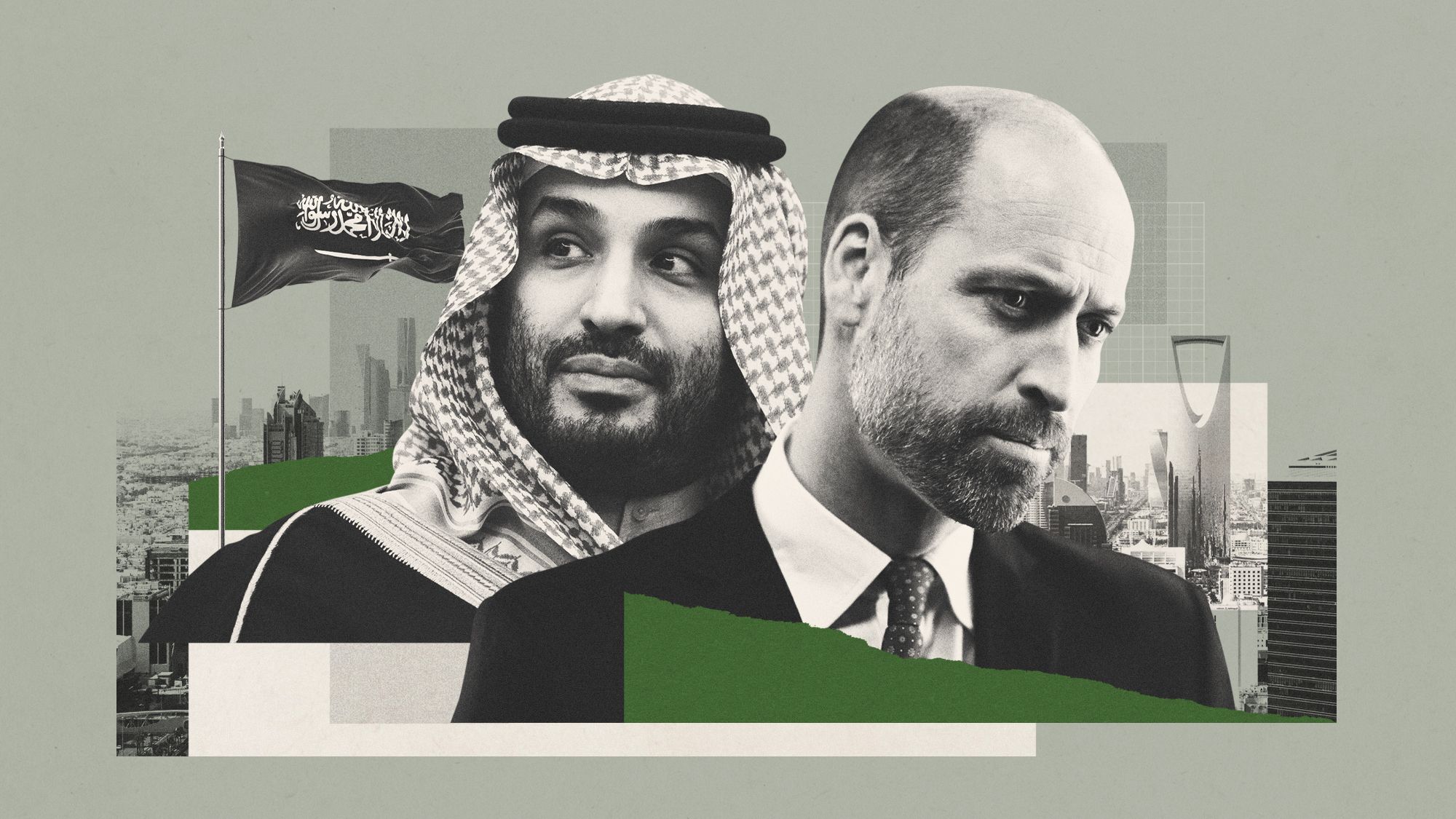
RIYADH, Saudi Arabia — Prince William, the Prince of Wales, arrived in Riyadh on Wednesday for a three-day visit aimed at bolstering diplomatic and economic ties between the United Kingdom and Saudi Arabia, marking the centenary of formal relations between the two nations. The trip, requested by the UK government, comes amid heightened scrutiny of the British royal family due to ongoing revelations in the Jeffrey Epstein files involving King Charles's brother, Prince Andrew. Kensington Palace described the itinerary as an opportunity to "celebrate growing trade, energy and investment ties," but the visit has drawn criticism for its association with Crown Prince Mohammed bin Salman, the de facto ruler of Saudi Arabia, who U.S. intelligence has linked to the 2018 murder of journalist Jamal Khashoggi.
The prince's schedule includes meetings with senior Saudi officials, including an audience with the crown prince, and engagements focused on cultural and economic exchanges. William, 43, first met Mohammed bin Salman during the Saudi leader's visit to Britain in 2018, a encounter that highlighted the evolving geopolitical role of the young crown prince, who is 40. Royal historian Ed Owens told The New York Times that if William and the crown prince can "strike up a positive diplomatic rapport, this could lead to a meaningful future relationship between the countries." The visit underscores the long-term potential of such alliances, with commentators noting that the two millennial leaders are likely to "reign in tandem, on opposite sides of the world, for decades," as The Telegraph's royal editor Hannah Furness observed.
Saudi Arabia has emerged as a significant investor in the UK economy, pouring an estimated £15.3 billion into British projects since 2017. British politicians have actively sought to expand this figure, viewing the Gulf kingdom as a key partner in energy security and trade diversification. Eddie Lister, director of the Saudi British Joint Business Council, emphasized the value of royal involvement, telling Politico that in the Middle East, "relationships are more important in business than anything else." He added that the royals' longevity allows for the formation of "valuable long-term relationships," unlike the transient nature of elected officials.
Robert Hardman, another royal historian, echoed this sentiment in an interview with Politico's Sophie Inge, stating that Saudi Arabia, as a monarchy, is "instinctively more comfortable dealing with fellow royalty rather than elected politicians." He explained that a foreign secretary or ambassador "cannot open the sort of doors and generate the sort of mood music that a senior member of the royal family can." This perspective aligns with the UK government's strategy, as the visit follows Trade Minister Chris Bryant's recent tour of the Gulf states, where he announced that a trade deal with the Gulf Cooperation Council — encompassing Saudi Arabia, Bahrain, Kuwait, Oman, Qatar, and the United Arab Emirates — is "97.5% done."
Politico reported that William may be called upon to "work his royal magic" to finalize the remaining aspects of the agreement, potentially unlocking billions in new economic opportunities for Britain. The timing of the prince's trip, just a week after Bryant's discussions, suggests a coordinated effort to leverage royal diplomacy for commercial gains. Megan Specia, writing in The New York Times, noted that the UK government's request for the visit signals confidence that "a visit from the heir to the throne will help burnish ties" with the Middle Eastern powerhouse.
Yet, the visit has not been without controversy. Critics argue that engaging closely with Mohammed bin Salman undermines William's carefully cultivated image as a progressive and socially conscious figure. Middle East expert Malise Ruthven wrote in UnHerd that realpolitik should not require "the heir to the throne must cosy up to his murderous Saudi counterpart." Ruthven highlighted the crown prince's alleged role in Khashoggi's killing, describing it as part of a broader pattern of "murderous violence, and repression" in the kingdom.
The British embassy in Riyadh has described the human rights situation in Saudi Arabia as "nuanced," pointing to reforms under Mohammed bin Salman's leadership, such as changes to women's rights and cultural openings. BBC royal correspondent Daniela Relph acknowledged this evolution, noting that the Saudi Arabia William is visiting "looks very different to the one his grandmother travelled to." Queen Elizabeth II visited the kingdom in 1979, a trip that helped lay the foundation for modern bilateral relations. However, Relph added that persistent issues, including the criminalization of same-sex relationships, suppression of dissent, and severe restrictions on women's freedoms, make images of William alongside the crown prince "hard to stomach for many."
The shadow of the Khashoggi murder looms large over the visit. The Washington Post columnist was killed in the Saudi consulate in Istanbul in October 2018, an assassination that U.S. intelligence assessed was ordered by Mohammed bin Salman. While Saudi officials have denied the crown prince's direct involvement, the incident has strained relations with Western allies. An anonymous Saudi activist, cited in UnHerd, made the unverified claim that Khashoggi's fingers are kept as a "trophy" on the crown prince's yacht, Serena — a detail Ruthven advised William to steer clear of during his stay.
This trip occurs against a backdrop of turbulence for the British monarchy. Recent court documents from the Epstein case have renewed focus on Prince Andrew's ties to the late financier and his accuser, Virginia Giuffre, prompting calls for stronger action from King Charles. The Week reported that the king faces pressure to address these allegations more decisively, even as William's visit shifts some attention to foreign policy matters. Despite the domestic challenges, the prince's engagement in Saudi Arabia reflects the royal family's traditional role in soft diplomacy, a practice that has sustained UK interests in the region for over a century.
Diplomatic ties between the UK and Saudi Arabia were formally established in 1936, though informal relations date back further. The centenary celebration provides a symbolic framework for William's activities, which may include visits to cultural sites and discussions on sustainability and investment. Saudi Arabia's Vision 2030 initiative, spearheaded by Mohammed bin Salman, aims to diversify the economy beyond oil, aligning with British interests in green energy and technology. Proponents of the visit argue that fostering these ties could yield substantial benefits, including job creation and energy partnerships amid global uncertainties.
Opponents, however, see the engagement as a moral compromise. Human rights organizations, though not directly quoted in recent reports, have long criticized Western leaders for prioritizing economics over ethics in dealings with Riyadh. Ruthven's commentary in UnHerd captures this tension, questioning whether William's persona as a "thoughtful, socially conscious public figure" is compatible with such associations. The prince has championed causes like mental health and environmental conservation, initiatives that contrast sharply with Saudi Arabia's record on free expression and gender equality.
As the visit unfolds, observers will watch for any breakthroughs in the trade negotiations. With the Gulf Cooperation Council deal so close to completion, William's presence could provide the personal touch needed to seal it. Lister of the Joint Business Council suggested that successful royal diplomacy here might have "profound" consequences for the British economy, potentially increasing Saudi investments and opening new markets for UK exports.
Looking ahead, the long-term implications of this rapport could extend beyond immediate trade gains. As Furness noted in The Telegraph, the alignment of two young leaders at the helm of their respective nations positions them to shape international relations for generations. Yet, the visit also tests the boundaries of royal involvement in geopolitics, balancing tradition with modern ethical expectations. William's return to Britain next week will likely bring further analysis of the trip's outcomes, both in terms of strengthened alliances and the ongoing debate over engaging with controversial regimes.
In Riyadh, the prince's engagements continue, a blend of ceremonial pomp and strategic dialogue that encapsulates the enduring role of the monarchy in global affairs. Whether this visit ultimately enhances UK-Saudi relations or invites more criticism remains to be seen, but it undoubtedly places William at the center of one of the most delicate diplomatic dances of his career.