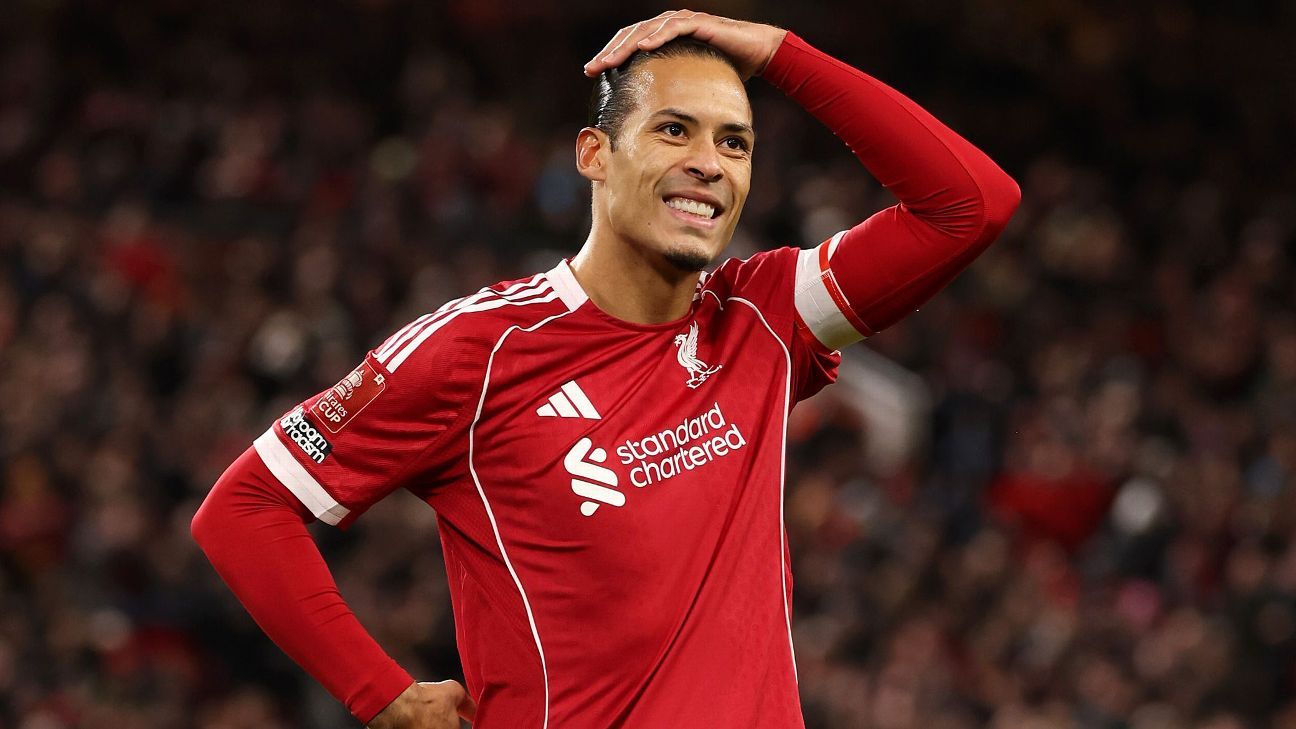
LIVERPOOL, England — As the January transfer window slammed shut on Monday, Liverpool Football Club found itself at the center of scrutiny for its apparent inaction in bolstering a defense plagued by injuries and aging stars. Despite a well-documented need for reinforcements, the club opted not to sign any immediate defensive help, instead securing a deal for 20-year-old center back Jérémy Jacquet from Rennes, who will join the squad only next season. This decision has left fans and analysts questioning the strategy of sporting director Michael Edwards and the ownership group, Fenway Sports Group, amid a season where defensive depth has become critically thin.
The roots of Liverpool's defensive woes trace back to last summer's transfer activity. In August, the club pursued Crystal Palace's Marc Guéhi on Deadline Day, offering around £35 million ($47 million), but the deal collapsed reportedly while Guéhi was undergoing an MRI scan. Less than a month later, Giovanni Leoni, a young central defender signed from Parma earlier in the window, suffered a cruciate ligament injury that sidelined him for the remainder of the season. These setbacks left Liverpool short-handed even before the new year.
The injury crisis deepened dramatically in January. On Jan. 8, 2026, promising right back Conor Bradley's season was cut short by a knee injury, marking the third major defensive absence for the Reds. According to ESPN analyst Gab Marcotti, this sequence of events has exposed a "paper-thin corps of defenders," with the club now relying on a squad that includes 34-year-old Virgil van Dijk, who has started 78 of the team's 80 Champions League and Premier League games over the past 18 months without being substituted.
Van Dijk, who turns 35 in July, remains a cornerstone, but concerns linger about his workload. Other key defenders face uncertain futures: Andy Robertson and Ibrahima Konaté are set to become free agents in June, while Milos Kerkez and Jeremie Frimpong operate more as wingbacks, with Frimpong currently sidelined by his third hamstring injury of the season. Joe Gomez, another versatile option, has missed nearly two months this year due to separate issues with his Achilles, hamstring, and hip.
Liverpool's official squad list includes Rhys Williams and Calvin Ramsay as additional defenders, but their contributions have been minimal. Williams, who played on loan at fourth-tier Morecambe last season, hasn't featured in first-team football for Liverpool in four and a half years. Ramsay, once a highly rated 22-year-old right back, has made just five league starts in the last three and a half years, all during loan spells, hampered by a series of injuries.
When very clever people do things that make no sense to you, logic suggests there are three possible explanations: a.) They're so much smarter than you... b.) They're not actually that smart c.) There's behind-the-scenes stuff that we don't know about.
Marcotti, in his ESPN analysis, posed this rhetorical framework to dissect Liverpool's transfer strategy, expressing hope that undisclosed factors — option c — explain the club's restraint. He noted that while Liverpool signed Jacquet, described as one of the more promising young central defenders available, the player's arrival is delayed until the summer, leaving the current campaign without added insurance.
The financial angle adds another layer of complexity. Fenway Sports Group is known for its prudent spending, having invested heavily last summer. Marcotti argued that skimping on defensive depth now could prove costly, potentially costing the club a Champions League spot next season — currently sixth in the Premier League, Liverpool would miss out on over €80 million in revenue. An early exit from this season's Champions League, such as in the Round of 16 rather than the quarterfinals, could mean another €30 million lost, enough, in Marcotti's estimation, to fund two players like Jacquet.
Defenders don't need to be superstars in January, Marcotti emphasized; a reliable option to "eat up minutes and do the job to a minimum standard" would suffice, perhaps even on loan. He recalled the 2020-21 season, when Liverpool turned to Nat Phillips, a relatively unknown squad player, who became a regular for half the campaign and started both Champions League quarterfinal matches against Real Madrid, helping the team finish third in the league.
With three months from October to December to plan ahead of the window's opening, Liverpool's poor January form — just one win in six league games — has fueled speculation about what might have been. Marcotti questioned whether the club even explored options, given the precarious financial states of many European clubs, which could have made loan deals or veteran releases attractive for both sides.
Statistically, Liverpool's defense holds up, boasting the second-best expected goals conceded (xG) in the Premier League behind Arsenal. This defensive solidity, according to some within the club, may have informed the decision to stand pat. However, Marcotti described this approach as "hugely counterintuitive," defying conventional wisdom that teams need depth to manage injuries and fatigue, especially after 80 high-stakes matches in 18 months.
ESPN's Julien Laurens, discussing the Jacquet signing with Marcotti, highlighted the long-term vision: "Liverpool's decision to secure the defender Jérémy Jacquet ahead of next season" signals confidence in youth development, but it does little to address immediate needs. Laurens noted that while Jacquet brings promising attributes — a scouting report praises his ball-playing ability and aerial prowess — his integration won't impact the title race or European campaign this year.
Broadening the context, Liverpool's transfer philosophy under Edwards has long emphasized data-driven decisions and squad sustainability over panic buys. Yet, with the Premier League's top four spots fiercely contested and Manchester City dominating recent windows as winners, per ESPN's rankings, the Reds' inaction stands out. Desperation moves by other clubs underscore the window's volatility, but Liverpool avoided the fray.
Looking ahead, the summer window looms large. Jacquet's arrival could stabilize the backline long-term, but unresolved contracts for Robertson and Konaté, combined with Van Dijk's impending milestone birthday, demand action. If the current injury toll persists, Liverpool risks not just points but momentum in a season already slipping away from title contention.
For now, the Anfield faithful must "trust the process," as Marcotti wryly put it, hoping that behind-the-scenes maneuvers or sheer squad resilience will pay off. As Liverpool prepares for upcoming fixtures, the debate over January's choices will undoubtedly intensify, with every defensive lapse under the microscope.