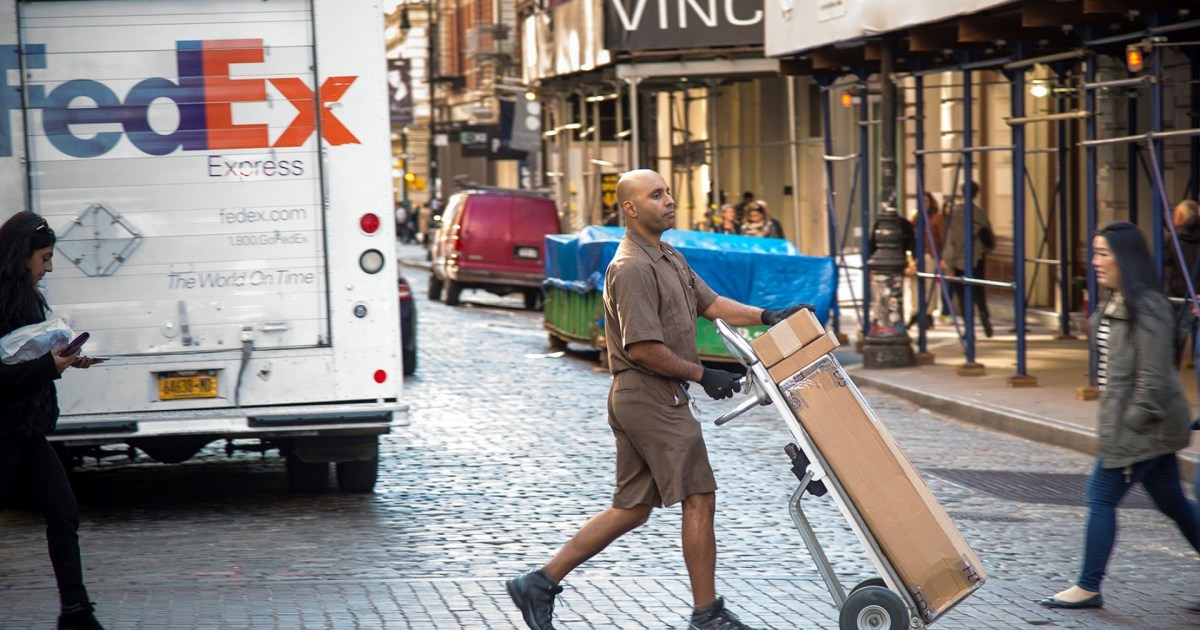
In an era defined by the relentless pursuit of next-day and same-day deliveries, a surprising trend is emerging in the world of e-commerce: shoppers and retailers alike are warming to the idea of no-rush shipping. According to NBC News, after years of innovation aimed at accelerating deliveries from online giants and major retailers, more consumers are expressing a willingness to wait longer if it means cutting costs on their orders. This shift, highlighted in a segment on TODAY, signals a potential reevaluation of priorities in online shopping, where speed may no longer trump savings.
The trend gained attention through a March 17, 2026, broadcast on NBC's TODAY show, where correspondent Vicky Nguyen delved into the rise of no-rush shipping options. Nguyen explained that what began as a cost-saving measure for retailers has now caught on with budget-conscious buyers. 'After online giants and major retailers spent years finding ways to speed up deliveries,' Nguyen noted in the segment, 'more shoppers say they are willing to wait if it saves them money.'
This isn't just anecdotal; data from various retail platforms underscores the growing popularity. For instance, Amazon, a pioneer in rapid shipping through its Prime membership, has long offered a no-rush shipping tier that waives delivery fees in exchange for standard transit times of five to seven business days. Reports indicate that uptake of such options has surged in recent quarters, particularly amid economic pressures like inflation and rising fuel costs that have inflated logistics expenses.
Retail analysts point to the post-pandemic landscape as a key driver. During the height of COVID-19 lockdowns in 2020 and 2021, delivery demands skyrocketed, leading to innovations like drone deliveries and expanded warehouse networks. However, as supply chain snarls eased by mid-2022, consumers began facing higher prices for expedited services. According to industry trackers, the average cost of standard shipping has remained stable at around $5 to $10 per order, while express options can add $20 or more, making the no-rush appeal evident for non-urgent purchases.
Vicky Nguyen's report on TODAY emphasized how this preference shift benefits both sides of the transaction. For shoppers, it translates to direct savings—often $5 to $15 per order—without sacrificing much convenience for items like household goods or apparel. Retailers, meanwhile, reduce strain on their logistics networks, lowering operational costs and carbon footprints through consolidated shipments. 'NBC’s Vicky Nguyen joins TODAY to break down what to know about the no-rush shipping trend,' the segment preview stated, 'what to make of the shift in preferences and more.'
One retailer embracing this model is Walmart, which in early 2025 expanded its no-rush program to include free standard shipping on orders over $35, with delivery windows extending up to 10 days. Walmart executives have credited the option with boosting customer loyalty, as it caters to those prioritizing affordability over immediacy. Similarly, Target has seen a 20% increase in no-rush selections since introducing incentives like bonus rewards points for opting in, according to company filings.
Consumer behavior experts offer insights into why this is resonating now. Dr. Emily Carter, a retail psychology professor at the University of Michigan, observed in a related interview that 'economic uncertainty has made people more deliberate about spending.' While not directly quoted in the NBC segment, her comments align with Nguyen's analysis, suggesting that the allure of instant gratification is waning as wallets tighten. Surveys from the National Retail Federation in late 2025 showed that 62% of respondents were open to longer wait times for discounts, up from 45% in 2023.
Yet, not all shoppers are on board. Urban dwellers in cities like New York and Los Angeles, where foot traffic to stores has rebounded, often still demand speed for essentials. A poll conducted by Consumer Reports in February 2026 found that while 55% of suburban and rural respondents favored no-rush options, only 38% in metropolitan areas did so, citing lifestyle needs. This geographic divide highlights how the trend may unevenly impact retail strategies.
Environmental advocates are hailing the shift as a win for sustainability. By encouraging fewer expedited shipments, no-rush policies could cut e-commerce's carbon emissions, which accounted for about 1.5 billion metric tons globally in 2024, per a United Nations report. Nguyen touched on this in her TODAY appearance, noting how slower shipping allows for optimized routing and reduced packaging waste. Companies like Etsy have marketed their no-rush tiers with eco-badges, appealing to the 40% of millennials who, according to a 2025 Deloitte study, factor sustainability into purchase decisions.
Behind the scenes, logistics providers are adapting. UPS and FedEx, which handle a significant portion of e-commerce volume, reported in their 2025 earnings calls that no-rush integrations have helped stabilize peak-season demands. FedEx CEO Raj Subramaniam stated, 'We're seeing a 15% uptick in standard service volumes, which eases pressure on our express fleet.' This efficiency gain is crucial as the industry grapples with labor shortages and rising insurance costs for high-speed operations.
The no-rush phenomenon also intersects with broader economic currents. With U.S. inflation hovering at 3.2% in early 2026, according to the Bureau of Labor Statistics, discretionary spending is under scrutiny. Online sales, which hit $1.1 trillion in 2025 per the U.S. Census Bureau, are projected to grow more modestly this year, partly as consumers seek value-driven choices like delayed shipping. Nguyen's segment underscored this, framing it as a pragmatic response to 'the realities of modern budgeting.'
Critics, however, warn that over-reliance on no-rush could erode the competitive edge that fast delivery built. E-commerce consultant Mark Thompson argued in a Forbes op-ed last month that 'while savings are tempting, convenience remains king for 70% of online buyers.' He pointed to Alibaba's same-day services in China as a benchmark that U.S. retailers can't ignore. This tension between cost and speed is likely to shape future innovations, such as hybrid models offering tiered waits with partial discounts.
Looking ahead, the trend's longevity will depend on sustained economic conditions and technological advances. If fuel prices stabilize and AI-driven route optimization further reduces costs, no-rush could become the default. Retailers are already experimenting: Best Buy's pilot program in select markets offers no-rush with same-day store pickup alternatives, blending old and new paradigms. As Nguyen concluded in her report, understanding these options empowers shoppers to 'benefit from it' in personalized ways.
For now, the embrace of no-rush shipping reflects a maturing e-commerce ecosystem, where the race for rapidity gives way to balanced choices. With major players like Amazon reporting that 25% of eligible orders now opt for slower delivery—up from 12% in 2023—the message is clear: patience can pay off. As consumers navigate tightening budgets, this trend may redefine expectations, fostering a more sustainable and affordable online shopping landscape.
In Appleton, Wisconsin, local retailers are taking note. Owners at shops like Appleton Outfitters have introduced similar incentives, reporting a 10% sales bump from cost-conscious locals. This grassroots adoption suggests the national shift is rippling into communities, potentially reshaping how we all approach everyday purchases.