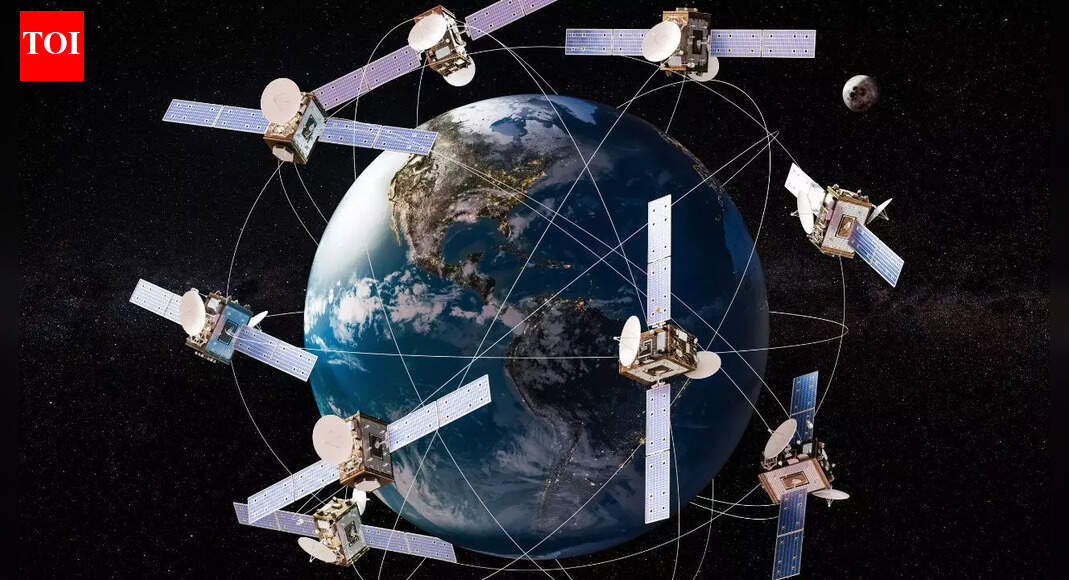
In an era where precision-guided munitions and satellite navigation define the battlefield, the U.S. Department of Defense is quietly reevaluating its reliance on the Global Positioning System, or GPS. According to reports from the Times of India, the Pentagon has grown wary of GPS vulnerabilities exposed in modern conflicts, prompting a shift toward emerging quantum technologies as a potential backup. This development comes amid escalating geopolitical tensions, where adversaries like Russia and China have demonstrated capabilities to jam or spoof GPS signals, rendering them unreliable in high-stakes military operations.
The concerns over GPS trustworthiness stem from recent real-world incidents. During the ongoing conflict in Ukraine, Russian forces have reportedly deployed electronic warfare systems to disrupt GPS-dependent weapons and navigation tools used by Ukrainian and NATO-allied forces. A 2023 report by the U.S. Government Accountability Office highlighted that GPS jamming has become a standard tactic in contested environments, affecting everything from drones to artillery shells. "GPS is no longer a guaranteed asset in warfare," said Michael O'Hanlon, a senior fellow at the Brookings Institution, in an interview with defense analysts. "We've seen it fail spectacularly in exercises and actual combat zones."
At the heart of the Pentagon's pivot is the recognition that traditional inertial navigation systems, which rely on accelerometers and gyroscopes, degrade over time without GPS corrections. In response, the Defense Advanced Research Projects Agency (DARPA) has invested heavily in quantum sensing technologies. These devices, leveraging principles of quantum mechanics, promise unprecedented accuracy in positioning without satellite dependency. According to the Times of India article, quantum sensors such as atomic clocks and magnetometers could provide navigation resilient to jamming, potentially accurate to within centimeters over long distances.
One key initiative is DARPA's Quantum-Assisted Sensing and Readout (QuASAR) program, which has been running since 2010 but gained renewed urgency in the past five years. Officials at the Pentagon's Joint Navigation Warfare Center in San Diego, California, have tested prototype quantum inertial measurement units (IMUs) in simulated jamming environments. "These quantum systems use supercooled atoms to measure motion with exquisite precision," explained Dr. Elizabeth Donley, a physicist at the National Institute of Standards and Technology (NIST), who collaborates with DARPA. "Unlike classical sensors, they don't drift; they maintain accuracy for hours or even days."
The push for quantum backups isn't without challenges. Developing these technologies for rugged military use requires miniaturization and environmental hardening, issues that have delayed deployment. A 2022 congressional hearing revealed that the Pentagon's quantum navigation efforts have cost over $500 million since 2018, with full operational capability still years away. Critics within the defense community argue that the investment diverts funds from immediate countermeasures like anti-jam antennas. "Quantum is the future, but we need reliable GPS enhancements now," said retired Air Force General Mark Welsh, speaking at a Washington, D.C., think tank event last month.
Contextually, the GPS system's origins trace back to the Cold War era, when the U.S. military developed it in the 1970s to counter Soviet threats. Launched fully in 1995, GPS has since become indispensable, guiding not just missiles but civilian applications from ride-sharing apps to farming equipment. However, its military signals are unencrypted in parts, making them susceptible to interference. Reports from the U.S. Space Force indicate that over 20 GPS satellites have been targeted by spoofing attempts in the Indo-Pacific region alone since 2020, attributed to Chinese electronic warfare exercises near Taiwan.
International perspectives add layers to the story. In Europe, NATO allies are mirroring U.S. efforts, with the European Space Agency exploring quantum-enhanced Galileo, the EU's alternative to GPS. "We cannot afford to be caught off-guard," stated NATO Supreme Allied Commander Europe, General Christopher Cavoli, during a Brussels briefing in June 2024. Meanwhile, Russia has touted its own GLONASS system as jam-resistant, though independent assessments by the Royal United Services Institute suggest it faces similar vulnerabilities.
Experts emphasize that the quantum shift represents a broader transformation in military tech. Quantum sensors could extend beyond navigation to detect submarines via gravitational anomalies or enhance reconnaissance drones. The Times of India piece notes that companies like Honeywell and ColdQuanta are partnering with the Pentagon, aiming for field tests by 2026. "This is about staying ahead in an asymmetric warfare landscape," said Honeywell's quantum division head, Robert Lewis, in a recent trade publication. "GPS jamming is just the tip of the iceberg; quantum gives us an edge against next-gen threats."
Yet, not all viewpoints align on the timeline or feasibility. Some analysts, including those from the RAND Corporation, warn that quantum tech's sensitivity to vibrations and temperatures could limit its battlefield utility. A 2024 RAND study projected that widespread adoption might not occur until the 2030s, citing supply chain issues for rare earth materials needed in quantum devices. "It's promising, but overhyped," the study concluded, based on interviews with 50 defense contractors.
Broader implications ripple into global security dynamics. As the U.S. reduces trust in GPS, allies and adversaries alike are racing to develop alternatives, potentially sparking a new arms race in navigation tech. In the South China Sea, where U.S. carrier strike groups rely on GPS for operations, any disruption could escalate tensions. According to Pentagon estimates, a sustained GPS blackout in a conflict zone could cost the U.S. military up to $1 billion per day in operational inefficiencies.
Looking ahead, the Pentagon's fiscal 2025 budget request includes $87 million for quantum navigation R&D, a 20% increase from last year. Officials at the White House Office of Science and Technology Policy have endorsed the effort, viewing it as part of a national quantum initiative launched in 2018. "Investing in quantum is investing in American leadership," said National Security Advisor Jake Sullivan during a speech at the Quantum Economic Development Consortium in Boston last week.
While challenges persist, the momentum behind quantum backups underscores a pivotal moment for defense strategy. As jamming tactics evolve—from portable jammers in Ukraine to sophisticated spoofers in the Middle East—the Pentagon's diversification aims to ensure that no single point of failure can cripple its forces. For now, troops in the field continue to train with hybrid systems, blending GPS with emerging alternatives, in preparation for a future where satellites are just one tool in the arsenal.
In Appleton, Wisconsin, where local defense contractors like Leonardo DRS contribute to navigation tech, the news resonates close to home. Company spokespeople declined to comment on specific Pentagon projects but noted increased demand for resilient systems. As global powers grapple with these vulnerabilities, the race for quantum supremacy could redefine the rules of engagement for decades to come.