By Michael Thompson, The Appleton Times
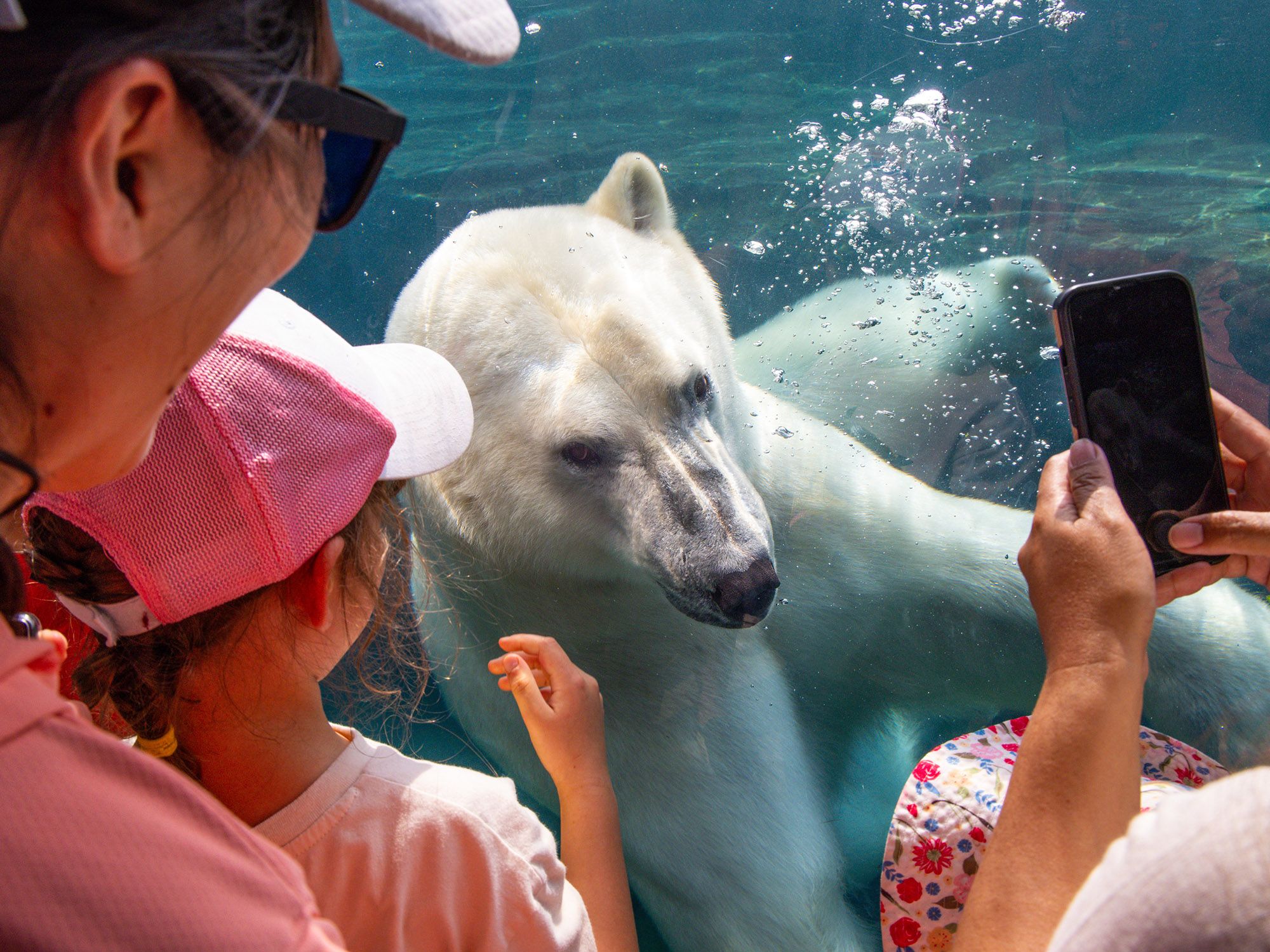
CALGARY, Alberta — The Wilder Institute/Calgary Zoo has welcomed a new resident to its polar bear exhibit, marking a significant step in efforts to provide companionship for its existing bear while advancing conservation awareness. Yellé’, a 20-year-old male polar bear, arrived at the zoo's Wild Canada Zone on Tuesday from Quebec's Zoo Sauvage de Saint-Félicien. The addition comes less than two years after the tragic drowning death of another polar bear in the same enclosure, prompting zoo officials to carefully plan the integration process.
According to zoo staff, Yellé’ is currently undergoing a mandatory quarantine period behind the scenes, allowing veterinarians and animal care experts to monitor his health and acclimation. This period is standard procedure for new arrivals to prevent the spread of any potential illnesses and ensure a smooth transition. Once cleared, Yellé’ will be gradually introduced to Siku, the 10-year-old male polar bear who has been a fixture in the Taylor Family Foundation Polar Bear Sanctuary since his arrival several years ago.
The introduction process, as outlined by the zoo, will be methodical and behavior-driven. It begins with scent exchanges, where the bears will be able to smell each other's presence without direct contact. This will progress to visual interactions through a protective barrier, allowing staff to gauge reactions before permitting shared space in the enclosure. “Every step will be guided by careful observation and our knowledge of polar bear behavior to ensure the safety, comfort and wellbeing of both bears,” said Paul Woerner, the Animal Care Manager for Wild Canada, in a news release provided by the zoo.
Woerner emphasized the excitement surrounding Yellé’s arrival, noting its particular importance for the team. “Welcoming any new arrival is always an exciting time, but Yellé’s arrival is especially meaningful for our team,” he stated. “We’ve been looking for the right companion for Siku, and having Yellé join our zoo family is a moment we’ve all been eagerly anticipating.” This sentiment underscores the zoo's commitment to the social needs of its animals, as polar bears in captivity often thrive with compatible companions to mimic natural social structures observed in the wild.
The timing of Yellé’s arrival is poignant, given the recent history of the polar bear exhibit. In late 2022, a seven-year-old male polar bear named Baffin died from injuries sustained during play with Siku. According to zoo officials at the time, Baffin suffered a severe “crushing” bite injury to his trachea while the two bears were interacting in the enclosure’s pool. The incident, described as rough play typical of young male polar bears, led to Baffin's drowning after he was unable to recover from the trauma. Zoo staff conducted a thorough investigation and made adjustments to the exhibit to enhance safety, though they stressed that such interactions are inherent to the species' behavior.
Following Baffin's death, zoo representatives indicated there was no immediate urgency to introduce a new companion for Siku, but they expressed long-term intentions to expand the exhibit's population. “At the time of Baffin’s death, zoo staff said there was no pressing need for Siku to have a new companion but they were hoping to eventually bring at least one new polar bear into the exhibit,” as reported in contemporary coverage. Yellé’s transfer represents the fulfillment of that goal, selected after careful evaluation of compatibility factors such as age, temperament, and health history.
The Wilder Institute/Calgary Zoo, formerly known simply as the Calgary Zoo, has positioned itself as a leader in polar bear conservation. Since 2023, it has served as an Arctic Ambassador Centre in partnership with Polar Bears International, a nonprofit organization dedicated to the species' preservation. This designation highlights the zoo's role in educating visitors about the threats facing polar bears, including habitat loss due to melting Arctic sea ice, climate change, and human encroachment. Yellé’ and Siku, as ambassadors for their species, will help convey these messages to guests in the Wild Canada Zone, which showcases Canadian wildlife in immersive habitats.
Polar bears, classified as vulnerable by the International Union for Conservation of Nature, number around 26,000 in the wild, with populations declining in some regions due to environmental pressures. The zoo's exhibit not only provides a controlled environment for these animals but also inspires action among visitors. By observing Yellé’ and Siku's interactions, zoo-goers can learn about the importance of protecting polar bear habitats, from the Hudson Bay lowlands to the high Arctic. The Taylor Family Foundation Polar Bear Sanctuary, a key feature of the Wild Canada Zone, was designed with expansive pools, rocky outcrops, and viewing areas to simulate natural conditions as closely as possible.
Details on Yellé’s background reveal a bear well-suited for this role. Born in 2004, he spent his previous years at the Zoo Sauvage de Saint-Félicien, a facility known for its focus on boreal forest and wildlife rehabilitation. The transfer was coordinated between the two institutions, adhering to international standards for animal transport set by organizations like the Association of Zoos and Aquariums. During the journey from Quebec to Calgary — a distance of approximately 2,000 kilometers — Yellé’ was accompanied by specialized handlers to minimize stress, traveling in a climate-controlled crate with familiar scents and sounds.
While Yellé’ settles in, the zoo plans to keep the public informed through its social media channels, sharing updates on his progress and the introduction timeline. He is expected to make his public debut in the polar bear sanctuary in April, weather and health permitting. This delay allows for a full assessment, ensuring that both bears are ready for the spotlight. Visitors to the Wild Canada Zone in the meantime can still observe Siku, who continues to engage with enrichment activities designed to stimulate natural foraging and exploratory behaviors.
The arrival also ties into broader initiatives at the Wilder Institute/Calgary Zoo, which spans 120 acres and houses over 1,000 animals representing 145 species. The Wild Canada Zone, opened in 2015, emphasizes native Canadian fauna, from grizzly bears to beluga whales, fostering a deeper appreciation for the country's biodiversity. By introducing Yellé’, the zoo not only addresses the social dynamics of its polar bear population but also reinforces its educational mission amid growing concerns over Arctic ecosystems.
Conservation experts outside the zoo have welcomed the news, viewing it as a positive development for captive breeding and awareness programs. Polar Bears International, through its Arctic Ambassador program, has praised institutions like the Calgary Zoo for their contributions. “These ambassadors help visitors understand the importance of protecting polar bear habitat and inspire conservation,” the organization stated in materials supporting the initiative. While some animal welfare groups advocate for phasing out polar bears in zoos altogether, citing ethical concerns over captivity, the zoo maintains that accredited facilities play a vital role in species survival strategies.
Looking ahead, the successful integration of Yellé’ and Siku could pave the way for further expansions in the exhibit. Zoo officials have not ruled out additional introductions in the future, depending on breeding recommendations from conservation bodies. For now, the focus remains on the bears' wellbeing, with daily monitoring by a team of veterinarians, keepers, and behaviorists. The enclosure's design, updated post-Baffin's incident, includes deeper safety features around the pool area and enhanced surveillance to prevent accidents during play.
As spring approaches, anticipation builds among Calgary residents and tourists alike for Yellé’s debut. The polar bear exhibit has long been a draw, attracting families eager to see these majestic creatures up close. With climate change accelerating threats to wild polar bears — sea ice extent in the Arctic has declined by about 13 percent per decade since 1979, according to NASA data — such zoo programs become increasingly relevant. They offer a tangible connection to a warming world, reminding visitors of the actions needed to safeguard these icons of the north.
In summary, Yellé’s arrival represents renewal for the Calgary Zoo's polar bear program, blending animal care with conservation education. As the bears' story unfolds, it serves as a compelling narrative of resilience, both in captivity and in the fragile Arctic wilds.