In the ongoing debate over immigration reform, a recent opinion piece in Fox News has spotlighted Rep. María Elvira Salazar's DIGNIDAD Act, using the case of a Maryland man with alleged ties to criminal activity as a cautionary tale. Will Chamberlain, senior counsel for the Article III Project, argues in his column published on FoxNews.com that the bill represents a "backdoor path to citizenship" for millions of undocumented immigrants, including those with serious allegations against them. The piece, titled "WILL CHAMBERLAIN: 'Maryland Dad' is perfect example of why Rep Salazar's amnesty scam must fail," draws on the story of Kilmar Abrego Garcia, an El Salvadoran national who entered the U.S. illegally in 2011 at age 16.
Chamberlain describes Garcia, often referred to as the "Maryland Dad," as emblematic of the potential flaws in Salazar's legislation. According to the opinion, law enforcement has linked Garcia to the MS-13 gang, his wife has accused him of domestic violence, and he was captured on police bodycam footage transporting other undocumented immigrants from Texas to Maryland. Despite these issues, Chamberlain contends that under the DIGNIDAD Act, Garcia would qualify for a pathway to legal status and eventual citizenship. The bill, introduced by the Florida Republican, aims to provide "dignity" to long-term undocumented immigrants who meet certain criteria, including those who arrived as minors more than 15 years ago.
Rep. Salazar has repeatedly emphasized that her DIGNIDAD Act is not an amnesty program. In statements attributed to her in Chamberlain's piece, she insists the legislation "merely grants 'dignity' to long-term illegal immigrants who play by the new rules she wrote." The bill proposes a "Dreamer" track for individuals like Garcia, offering exceptions to requirements such as continuous presence in the U.S., even if they have been removed or left the country temporarily. It would allow eligible participants to enroll in education programs, such as those leading to a GED or technical credentials, and after meeting work or education thresholds for a few years, apply for lawful permanent residence.
Chamberlain highlights specific provisions in the bill that he believes undermine public safety. For instance, while the legislation bars individuals who "voluntarily participated in offenses committed by a criminal street gang," it reportedly prohibits federal authorities from using state or federal gang databases to establish membership. "Not allegations from the FBI’s gang files. Not state gang task force records. Nothing," Chamberlain writes. He argues that this would require a full criminal conviction for gang-related activity, which might already disqualify someone under existing felony laws, effectively creating a loophole for alleged affiliates like Garcia.
On the issue of domestic violence, the opinion piece notes that the bill demands a conviction rather than relying on allegations or police reports. In Garcia's case, no such conviction exists, according to Chamberlain. Furthermore, the man could potentially claim a waiver by arguing he was a victim of domestic violence, sexual assault, or trafficking himself. Regarding human smuggling, which Chamberlain ties to Garcia's alleged activities captured on bodycam in 2025, the bill allows the Secretary of Homeland Security to grant waivers for "humanitarian purposes, family unity, or because the waiver is otherwise in the public interest." Chamberlain calls this "a loophole the size of the van that Abrego Garcia used to traffic migrants."
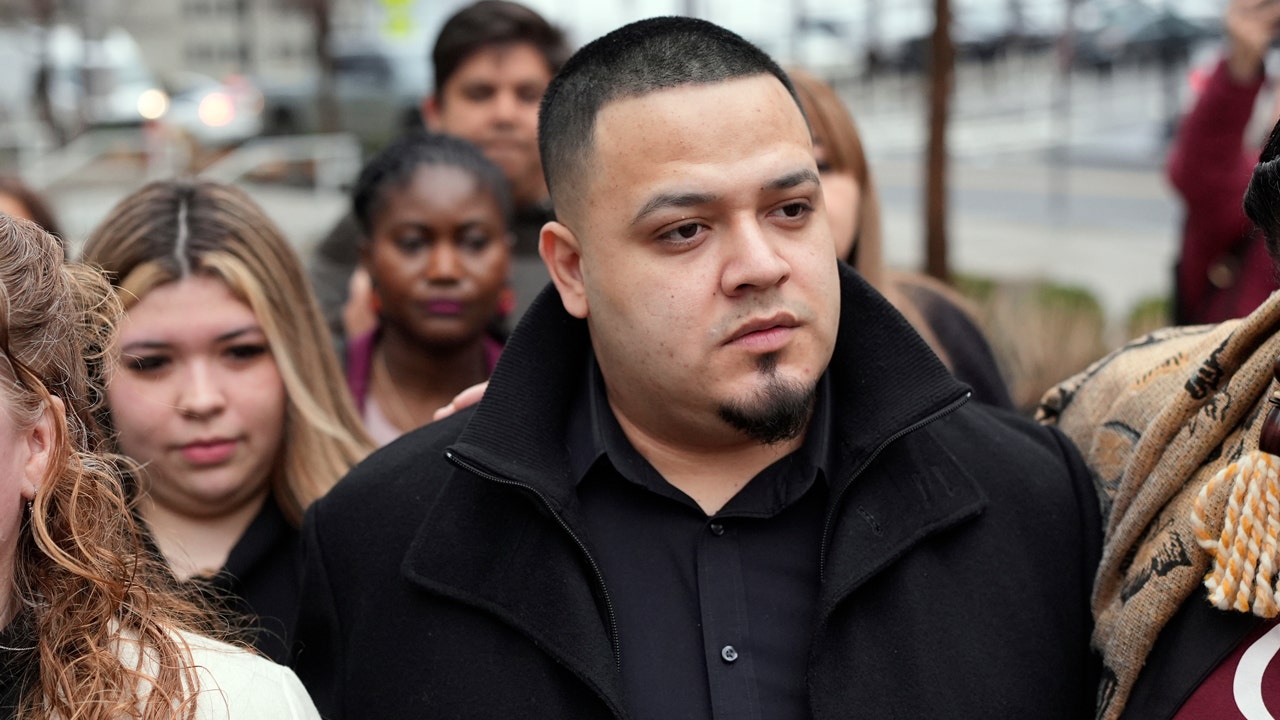
The column references Garcia's court appearance on February 26, 2025, at a federal courthouse, where he faced a hearing on whether charges against him should be dismissed. A photograph from that event, credited to George Walker IV of the Associated Press, shows Garcia arriving for the proceedings. Chamberlain uses this imagery to underscore the stakes, portraying Garcia as someone who could benefit from the DIGNIDAD Act despite his background. The piece also mentions an event marking the relaunch of a family support program for victims of crimes by undocumented immigrants, reported by Fox News congressional correspondent Bill Melugin, where relatives expressed ongoing pain from such incidents.
Beyond Garcia's individual story, Chamberlain warns of the bill's broader scope. The DIGNIDAD Program, as outlined, would extend deferred action and work permits to millions of undocumented immigrants who have been in the U.S. since late 2020, along with a path to renewable "Dignity Status." This, he argues, contradicts the mandate from the 2024 elections, where voters supported a Republican Congress and president promising mass deportations. "Americans elected a Republican Congress and a president who promised mass deportations," Chamberlain states. "Instead, some Republicans are inexplicably lining up behind a Florida congresswoman’s bill that would let wife-beating MS-13 associates stay and eventually vote."
The opinion calls on Republican co-sponsors of the bill to withdraw their support immediately. "The co-sponsors, especially the ones in safe red districts who should know better, need to own this. Withdraw your support. Kill the bill," Chamberlain urges. He emphasizes that the legislation disrespects legal immigrants and Americans who follow the rules, describing it as "a middle finger to every American who obeys the law and every legal immigrant who did it the right way." Chamberlain concludes that there is "no fixing this bill," advocating for primary challenges against supporters in the 2026 elections if they do not act.
Rep. Salazar's office has not immediately responded to requests for comment on Chamberlain's critique, but the congresswoman's prior defenses of the bill frame it as a compassionate measure for contributors to American society. The DIGNIDAD Act builds on existing frameworks like Deferred Action for Childhood Arrivals (DACA), targeting those who have integrated into communities over decades. Introduced amid heightened immigration tensions following the 2024 presidential election, the bill reflects ongoing divisions within the Republican Party on how to address the estimated 11 million undocumented immigrants in the U.S., according to Census data.
Garcia's case itself has drawn attention in Maryland legal circles. He arrived in the U.S. from El Salvador in 2011, fleeing what he has described in court documents as violence in his home country. Local police in Maryland identified him as a person of interest in gang-related investigations, though specifics remain sealed. His arrest in early 2025 for migrant transportation stemmed from a traffic stop where bodycam footage allegedly showed multiple passengers without proper documentation. Family members, including his wife, have provided conflicting accounts in public records, with allegations of abuse surfacing during divorce proceedings but no charges filed.
Immigration experts note that cases like Garcia's highlight the complexities of enforcement under current laws. The MS-13 gang, designated a transnational criminal organization by the U.S. Treasury Department, has been a focus of federal task forces since the 2000s, with operations in states like Maryland and Texas. Chamberlain's piece ties into a larger narrative pushed by conservative outlets, referencing a separate Fox News report on Democratic senators avoiding questions about an undocumented immigrant accused of killing a Chicago college student, though details of that incident were not elaborated.
As the DIGNIDAD Act moves through committee stages in the House, its fate could influence the Republican agenda on border security. With co-sponsors from various districts, including safe conservative areas, the bill has sparked internal party debates. Critics like Chamberlain argue it undermines the rule of law, while proponents see it as a pragmatic step toward resolving long-standing immigration backlogs. The legislation's emphasis on education and work requirements aims to ensure participants contribute economically, potentially adding billions to GDP over time, per estimates from immigration think tanks.
Looking ahead, the bill's progress will likely face scrutiny during the upcoming congressional session starting in January 2026. Advocacy groups on both sides are mobilizing, with conservative organizations like the Article III Project rallying against it and immigrant rights coalitions supporting pathways to status. Garcia's ongoing legal battles, including potential deportation proceedings, may serve as a real-time test case for how such policies would apply. For now, the controversy underscores the polarized nature of immigration reform in Washington.
In a related development, Fox News reported on the relaunch of a support program for families affected by crimes committed by undocumented individuals. At the event, relatives shared stories of loss, with one mother describing the "pain that never goes away" after her daughter's death. Melugin's coverage included graphic footage warnings, emphasizing the human cost of immigration enforcement gaps. This context amplifies Chamberlain's call to prioritize security over what he terms an "amnesty scam."
Ultimately, the DIGNIDAD Act's trajectory will test Republican unity post-2024. With public opinion divided—polls from Pew Research showing 60% support for legal status for long-term undocumented residents but strong opposition to amnesty—the bill could become a flashpoint. As lawmakers weigh its provisions, stories like Kilmar Abrego Garcia's continue to fuel the national conversation on borders, dignity, and justice.