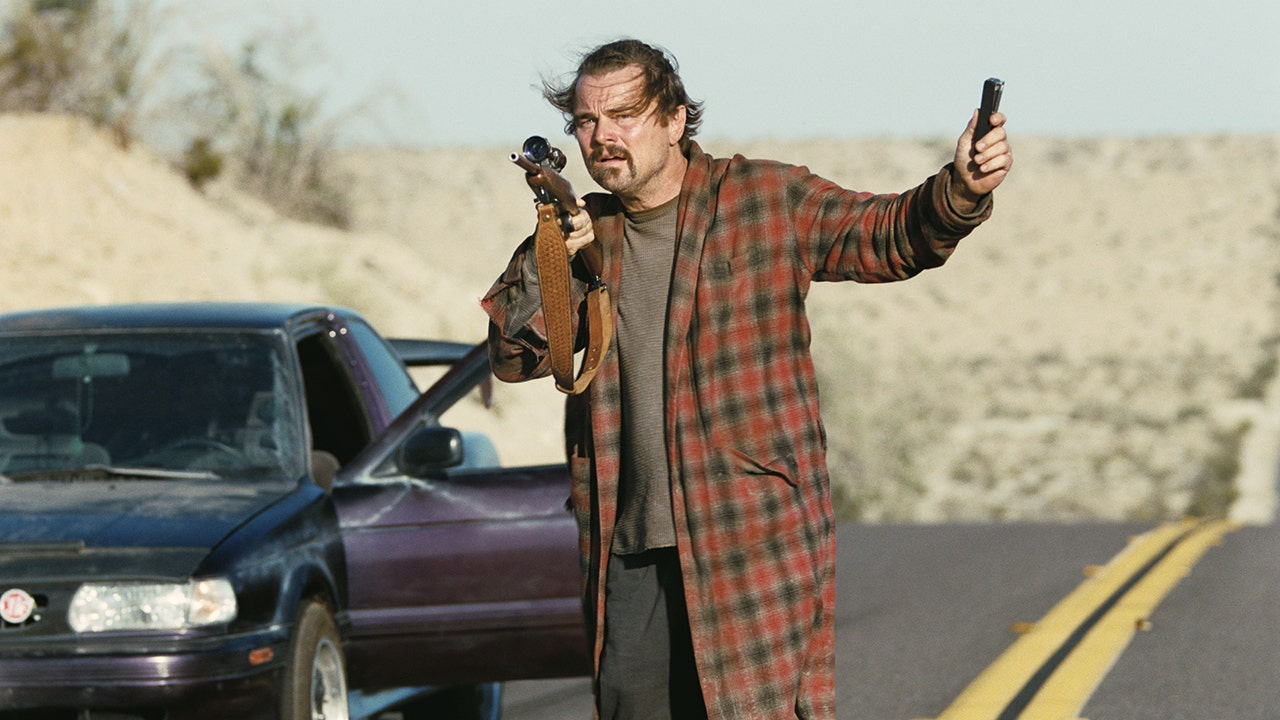
As the 2026 Academy Awards approach amid a backdrop of national unrest, Paul Thomas Anderson's politically charged thriller "One Battle After Another" has solidified its position as a frontrunner for Best Picture. The film, starring Leonardo DiCaprio, Sean Penn, and Teyana Taylor, and released by Warner Bros. Pictures, has garnered 13 Oscar nominations, trailing only Ryan Coogler's vampire thriller "Sinners," which received a record-breaking 16 nods. According to Fox News media reporter Joseph A. Wulfsohn, the movie's timely themes of revolution and resistance against authoritarianism are resonating in Hollywood, particularly in light of recent anti-Immigration and Customs Enforcement (ICE) protests that have dominated headlines.
The story of "One Battle After Another," often abbreviated as OBAA, follows a group of self-described revolutionaries evading a cabal of white nationalist authoritarians. The film's opening scene depicts the protagonists freeing undocumented migrants from a detention center, while later sequences involve bombing courthouses and offices of anti-abortion lawmakers. Wulfsohn described the narrative in his review, noting, "One man's revolutionary is another man's domestic terrorist." Despite its left-leaning politics, he praised the film's craftsmanship, saying it "never lags" despite its nearly three-hour runtime, with top-notch performances from the cast led by DiCaprio as Bob Ferguson, an effective score, and sharp editing.
OBAA's awards momentum began building in the fall of 2025, when it emerged as a frontrunner for Best Picture. It won the Golden Globe for Best Motion Picture – Musical or Comedy on January 11, 2026, at the 83rd Annual Golden Globe Awards held at The Beverly Hilton in Beverly Hills, California. Accepting the award onstage were Benicio del Toro, Teyana Taylor, Sara Murphy, Chase Infiniti, Leonardo DiCaprio, Paul Thomas Anderson, and Sean Penn. Wulfsohn pointed out the unusual categorization, stating, "It's neither a comedy nor a musical. Don't even get me started on how films and TV shows are classified at the Golden Globes."
The film's Oscar nominations, announced earlier this year, marked a significant achievement, surpassing all but "Sinners" in total nods and shattering previous records held by films like "Titanic," "La La Land," and "All About Eve." This success comes during what Wulfsohn described as a "weaker year for films overall" in 2025. He personally favored "Hamnet," a Shakespeare family drama, for Best Picture, but acknowledged that OBAA's win was always feasible given the competition.
Current events appear to be boosting OBAA's prospects. Protests against ICE policies, particularly following turmoil in Minneapolis, have been prominent in the news cycle. Hollywood's response has been visible at major events: attendees at the Golden Globes wore "Be Good" pins honoring Renee Good, and the Grammys last week featured extended criticism of ICE. Wulfsohn suggested that liberal elements in the industry see OBAA as an opportunity to make a statement, calling it a "giant 'F you' to Donald Trump and his administration." He noted the irony, however, that the film would have been released regardless of the 2024 election outcome between Trump and Kamala Harris.
Paul Thomas Anderson's long-overdue recognition may also play a role. At 55 years old, the director is a 14-time Oscar nominee without a win, having been snubbed for acclaimed works like "Boogie Nights," "Magnolia," and "There Will Be Blood." Wulfsohn compared this to Christopher Nolan's 2024 Best Picture win for "Oppenheimer" after decades of nominations, suggesting Academy voters might finally reward Anderson. "Between national politics and Academy politics, the wind is surely hitting the back of OBAA," Wulfsohn wrote.
While OBAA leads the pack, competitors pose potential threats. "Sinners," directed by 39-year-old Ryan Coogler, is widely adored and expected to win in craft categories. Wulfsohn observed that having the most nominations does not guarantee Best Picture, citing last year's upset where "Emilia Pérez" led in nods but did not win. Voters might prioritize Anderson's experience over Coogler's promising future career.
"Hamnet," written and directed by Chloé Zhao, represents a darker horse in the race. The film upset "Sinners" by winning Best Drama at the Golden Globes, though that award draws from a different voter base of mostly foreign press. The Academy has increasingly nominated international films for Best Picture in recent years, which could rally support for the foreign-influenced Shakespeare drama over the more America-centric OBAA and "Sinners." However, Zhao's recent success—winning two Oscars for the 2021 Best Picture winner "Nomadland"—might work against her, as voters may hesitate to award her again so soon.
Broader industry context underscores OBAA's edge. Wulfsohn highlighted other 2025 releases in his analysis, including Rachel McAdams and Dylan O'Brien in the comically violent desert island thriller "'Send Help,'" Chris Pratt in the forgettable cyber thriller "'Mercy,'" where he proves his innocence to an AI judge, and Ralph Fiennes bringing levity to the experimental zombie saga "'28 Years Later: The Bone Temple.'" He also mentioned Paramount's wild horror flick "'Primate,'" about a nightmare pet chimp, signaling a diverse but uneven year for cinema.
The unrest in Minneapolis has kept immigration and protest issues at the forefront of Hollywood discourse. Images from the protests, including those covered by Getty Images, have been top of mind, linking directly to OBAA's plot elements. This alignment, Wulfsohn argued, positions the film to capitalize on the moment, especially as the "firestorm over ICE isn't likely to melt away anytime soon."
Looking ahead, the coming weeks will provide clearer indicators of OBAA's fate. Key guild awards—the Producers Guild Awards, Directors Guild Awards, Writers Guild Awards, and the newly renamed Screen Actors Guild Awards (now called the Actor Awards)—are crucial, as many guild members overlap with Academy voters. A sweep by OBAA in these would make a Best Picture win "incredibly likely," according to Wulfsohn. Conversely, strong showings by "Sinners" or "Hamnet" could invigorate the race.
Regardless of the outcome, OBAA's journey reflects Hollywood's intersection with real-world politics. The film's release and subsequent awards run coincide with a polarized national landscape, where themes of resistance and authority strike a chord. As the Oscars ceremony nears, set for later in 2026, industry watchers will scrutinize how these dynamics influence voters.
Wulfsohn, a media reporter for Fox News Digital, concluded his analysis optimistically for OBAA, stating, "With all of that in mind, OBAA still has the edge. And since the firestorm over ICE isn't likely to melt away anytime soon, OBAA will almost certainly be our next Best Picture winner." His commentary, while opinionated, draws on the film's critical reception and awards trajectory to support this view.
The Academy Awards, often a barometer for cultural sentiments, could thus amplify OBAA's message on migration and activism. Yet, as past races have shown—from "Oppenheimer's" triumph to "Emilia Pérez's" nomination surge—surprises remain possible. For now, the thriller stands poised to ride the wave of current events toward potential glory.