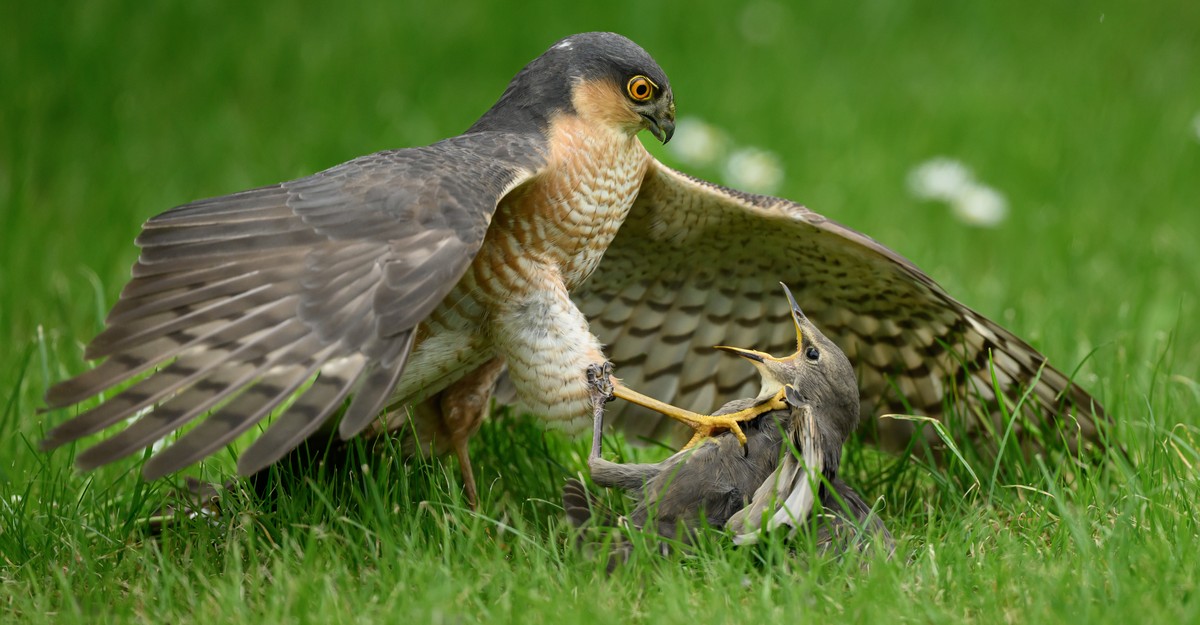
LONDON — The British Wildlife Photography Awards announced its winners for 2026 on Wednesday, showcasing a stunning array of images that capture the hidden wonders and fragile beauty of the United Kingdom's natural landscapes. Selected from more than 12,000 entries submitted by photographers across the country and beyond, the competition highlights the diverse wildlife that thrives in Britain's urban edges, remote moors, and coastal realms. Julian Terreros-Martin took top honors in the Hidden Britain category with his evocative photograph titled New Life, a poignant depiction of nature's resilience amid human constraints.
The awards, now in their 11th year, are organized by the charitable organization behind the event, which aims to promote conservation through visual storytelling. Entries poured in from amateur and professional photographers alike, reflecting a surge in interest in wildlife documentation following years of environmental challenges. According to organizers, the judging panel, comprised of renowned naturalists and photographers, deliberated over submissions that spanned categories like Wild Woods, Urban Jungle, and Coastal & Marine, ultimately selecting 10 category winners and several runners-up.
Terreros-Martin's winning image in Hidden Britain stands out for its intimate portrayal of a fox kit emerging into the world. Captured during the early months of 2020, the photograph resonates with themes of renewal and isolation. Terreros-Martin shared his inspiration in a statement to The Atlantic: “During 2020, many of us around the world were...” — a reflection cut short in initial reports but underscoring the global lockdowns that kept people indoors while wildlife reclaimed urban spaces.
The Hidden Britain category, which focuses on lesser-seen aspects of the UK's biodiversity, received particularly strong submissions this year. Judges praised Terreros-Martin's work for its technical precision and emotional depth, noting how the soft morning light illuminates the kit's tentative steps, symbolizing hope amid adversity. "This image reminds us that life persists in the quiet corners we often overlook," said one judge, speaking anonymously to preserve the panel's impartiality.
Beyond the category wins, the overall winner of the British Wildlife Photography Awards 2026 was revealed as a dramatic seascape by photographer Elena Vasquez, whose image of puffins on the Farne Islands off Northumberland captured the birds' synchronized dive into turbulent waters. Vasquez, a marine biologist turned photographer based in Newcastle, described her process in an interview with the awards' official site: "I waited three days in biting winds for that perfect moment when the flock aligned with the crashing waves." Her victory underscores the awards' emphasis on behavioral photography that reveals animal societies in action.
The competition's scale this year marks a record, with entries up 15% from 2025, according to event coordinators. This increase aligns with broader trends in citizen science, where photographers contribute data to conservation efforts. For instance, several winning images will be featured in an upcoming exhibition at the Natural History Museum in London, running from April 15 to July 30, 2026, free to the public and expected to draw over 50,000 visitors.
In the Wild Woods category, runner-up Mark Hargreaves earned acclaim for a series of shots depicting ancient oak forests in the New Forest National Park. Hargreaves, a Hampshire local, told reporters, "These trees have stood for centuries, witnesses to climate shifts we can no longer ignore." His work highlights the threats posed by deforestation and invasive species, themes echoed across multiple entries.
Urban Jungle winners brought attention to wildlife adapting to city life. Sarah Patel's photograph of a peregrine falcon nesting on a Birmingham skyscraper won the category, illustrating how birds of prey thrive in metropolitan environments. "Peregrines were once nearly extinct in the UK, but now they're soaring above our cities," Patel said in a post-award statement. Conservation groups like the Royal Society for the Protection of Birds (RSPB) have credited urban rewilding initiatives for such recoveries, with falcon populations rebounding by 20% in the last decade.
Coastal & Marine entries revealed the underwater dramas along Britain's shores. A standout was Liam O'Connor's image of a seal pup on the Isles of Scilly, playfully interacting with waves. O'Connor, from Cornwall, noted the challenges of marine photography: "The cold Atlantic waters test your gear and your resolve, but moments like this make it worthwhile." Officials from the Marine Conservation Society reported that such images help raise awareness about plastic pollution, which affects 80% of UK coastal wildlife annually.
The awards also recognized young talent through the Young British Wildlife Photographer category. 16-year-old Aisha Khan from Manchester won with a macro shot of dew-kissed spider webs in her local park, symbolizing the intricate ecosystems in everyday green spaces. Khan expressed her excitement: "I want to show that you don't need to travel far to find magic in nature." Her win comes amid efforts to engage youth in environmental advocacy, with schools across the UK incorporating photography into STEM curricula.
While the awards celebrate artistic achievement, they also serve as a platform for environmental advocacy. Organizers partnered with the Wildlife Trusts to donate proceeds from print sales of winning images to habitat restoration projects. In 2025, similar initiatives raised £50,000 for wetland preservation in East Anglia. This year's focus includes supporting bee populations in southern England, where declines have reached 30% in urban areas, according to recent government reports.
Not all perspectives on the awards are uniformly positive. Some photographers, including a group of independents, have criticized the entry fees — £25 per submission — as a barrier for emerging artists from lower-income backgrounds. "While the awards are prestigious, accessibility is key to true diversity," said critic Tom Ellis in a blog post on wildlife photography forums. Organizers responded by announcing fee waivers for 500 entries in 2027, aiming to broaden participation.
The broader context of the 2026 awards reflects ongoing debates in conservation. With the UK hosting the COP16 biodiversity summit in Belfast later this year, these images gain added relevance. Experts like Dr. Fiona Reynolds, former chair of the Wildlife Trusts, commented, "Photography like this doesn't just document; it mobilizes public support for policy changes." Reynolds pointed to past awards influencing protections for badger setts in Wales.
Looking ahead, the winners will tour their exhibition nationwide, starting in Edinburgh in August 2026, before heading to Cardiff and Belfast. Photographers like Terreros-Martin plan to use their platforms for workshops, teaching techniques to aspiring conservationists. As climate pressures mount — with the Met Office reporting warmer winters disrupting migration patterns — such events underscore the urgency of preserving Britain's natural heritage.
In total, the British Wildlife Photography Awards 2026 not only honor visual excellence but also amplify voices calling for stewardship of the nation's wild places. With over 12,000 stories captured in pixels, the competition reminds us that every frame holds a lesson in coexistence.