The WNBA draft is set to take place on Monday at 7 p.m. ET on ESPN, marking a pivotal moment for the league amid a whirlwind of changes. With the recent approval of a new collective bargaining agreement coming late in the offseason, the draft coincides with a compressed free agency period, adding layers of uncertainty to team-building strategies. The Dallas Wings hold the No. 1 overall pick for the second consecutive year, following their selection of UConn guard Paige Bueckers last season, who went on to win WNBA Rookie of the Year honors. Despite Bueckers' standout performance, the Wings finished tied for last place with the Chicago Sky at 10-34, prompting significant offseason moves including the replacement of coach Chris Koclanes with Jose Fernandez, a longtime coach from South Florida.
This year's draft arrives in the wake of an expansion draft on April 3, which introduced two new franchises and reshaped rosters across the league. Under the new CBA, teams are required to maintain 12-player rosters and can add up to two developmental spots, creating more opportunities for rookies but intensifying competition nonetheless. The draft now features 45 picks, up from previous years, reflecting the league's growth and the influx of talented players eager to secure a spot.
At the forefront of draft discussions is the battle for the top selection, with ESPN's mock drafts this offseason projecting four players as potential No. 1 picks: UCLA center Lauren Betts, Spanish center Awa Fam, UConn guard Azzi Fudd, and TCU guard Olivia Miles. Each brings a unique skill set that could address the Wings' needs, particularly in pairing with Bueckers and complementing veteran guard Arike Ogunbowale, whose future in Dallas remains a point of speculation.
Olivia Miles, a 5-foot-10 senior point guard from TCU, stands out for her ball-dominant style that could mesh effectively with Bueckers' off-ball capabilities. According to ESPN analysts, both players are elite offensive talents, and the Wings could emulate the successful guard trio of Chelsea Gray, Kelsey Plum, and Jackie Young that propelled the Las Vegas Aces to back-to-back WNBA titles in 2022 and 2023. If Ogunbowale re-signs, this backcourt could form a dynamic core for Dallas.
Azzi Fudd, a 5-foot-11 senior shooting guard from UConn, offers sharpshooting prowess that could elevate the Wings' perimeter game. She teamed up with Bueckers to win a national championship in 2025 and boasts impressive shooting stats, including 44.7% from three-point range this season and 42.2% over her college career. Her pure scoring ability makes her a strong candidate to provide instant offense.
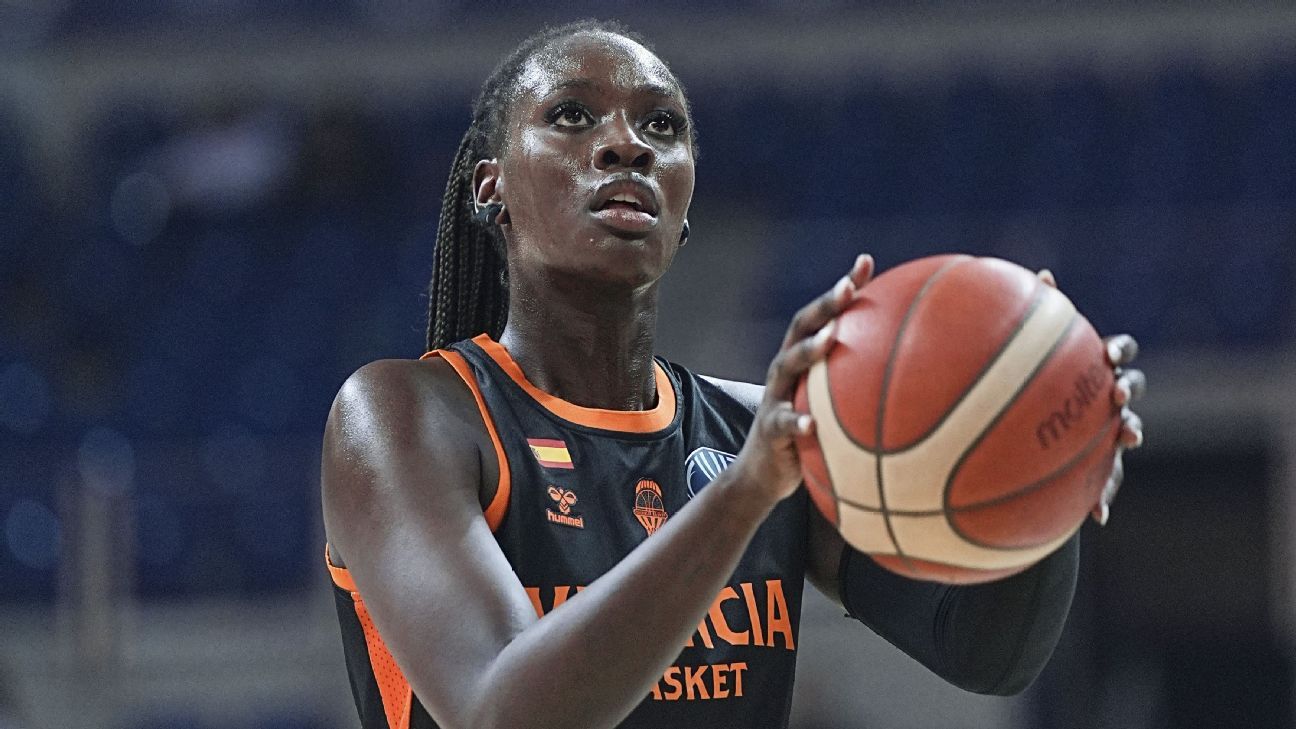
On the international front, 6-foot-4 center Awa Fam from Spain presents an intriguing option. Not yet 20 years old as of June, Fam's raw talent aligns well with Fernandez's background in overseas recruiting during his time at the University of South Florida. Her youth and potential could make her a foundational piece inside for the rebuilding Wings.
Lauren Betts, a 6-foot-7 senior center from UCLA, counters any notions of traditional bigs lacking versatility with her well-rounded game. Named the Most Outstanding Player at the Final Four for the national champion Bruins, Betts averaged 21.0 points, 9.3 rebounds, and 2.8 blocks during the NCAA tournament. A two-time Big Ten Defensive Player of the Year, she could serve as a young anchor in the paint, much like Fam, offering Dallas defensive stability and scoring punch.
Beyond the top pick, a notable trend in this draft class is the number of players who transferred schools in their senior year to boost their professional prospects. ESPN's latest mock draft projects six of the 15 first-round picks as transfers: South Carolina guard Ta'Niya Latson and center Madina Okot, TCU's Miles and forward Marta Suarez, UCLA guard Gianna Kneepkens, and Ole Miss forward Cotie McMahon. This reflects the fluid nature of the current college basketball landscape, where athletes seek programs that best prepare them for the WNBA.
Each transfer had personal motivations, but all aimed to enhance skills transferable to the pros. Latson spent three seasons at Florida State before moving to South Carolina, while Okot, who played two years of college ball in her native Kenya and one at Mississippi State, joined the Gamecocks last season. South Carolina's bid for an extra year of eligibility for Okot was denied by the NCAA, as she had only spent two years in the U.S. system.
Together, Latson and Okot contributed to South Carolina's SEC regular-season title and a run to the NCAA final, where they fell to Kneepkens and UCLA. Latson, who led Division I in scoring as a junior, anticipated a dip in her averages at South Carolina but prioritized overall development. "There were things I was missing, like the defensive presence," Latson told ESPN. "I knew coming to South Carolina, I had to get better at defense. And also finding my spots offensively while playing with other great players. It hasn't always been easy, but I feel like it will pay off going to the next level and make things easier in training camp."
This transfer strategy underscores a broader shift in women's college basketball, where players increasingly view their final year as a launchpad for professional careers. Analysts suggest this pattern will persist, as top programs like South Carolina and UCLA attract talent seeking elite competition and coaching to refine their games.
The expanded roster rules under the new CBA could significantly impact later rounds, potentially allowing more second- and third-round picks to earn meaningful playing time. Previously, teams had flexibility to carry 11 players for salary cap reasons, but now 12 is mandatory, with the added developmental spots providing pathways for young talent. This addresses a longstanding issue in the WNBA: the scarcity of roster spots amid a surge in high-caliber players.
Last season, 15 of the 26 players selected in the second and third rounds appeared in games, though only five logged at least 30 appearances. Even among first-rounders, challenges arose; three skipped or missed the 2025 season entirely. No. 6 pick Georgia Amoore suffered a knee injury in April 2025, while Nos. 5 and 10 selections, Juste Jocyte of Lithuania and Ajsa Sivka of Slovenia, opted out to compete in EuroBasket for their national teams.
As the league navigates these changes, the draft represents not just individual dreams but a collective evolution. With more jobs available, the pressure to perform in training camps will be fierce, but opportunities abound for those who seize them. Wings general manager Curt Miller, now working with Fernandez, faces a crucial decision at No. 1 that could redefine the franchise's trajectory.
Looking ahead, the draft's outcomes will ripple through free agency and the 2026 season, as teams finalize rosters in this unprecedented environment. Players like Miles, Fudd, Fam, and Betts embody the depth and promise of this class, while transfers such as Latson highlight the strategic mindset shaping the next generation of WNBA stars. As Monday's event unfolds, all eyes will be on Dallas and the fresh starts it might herald.