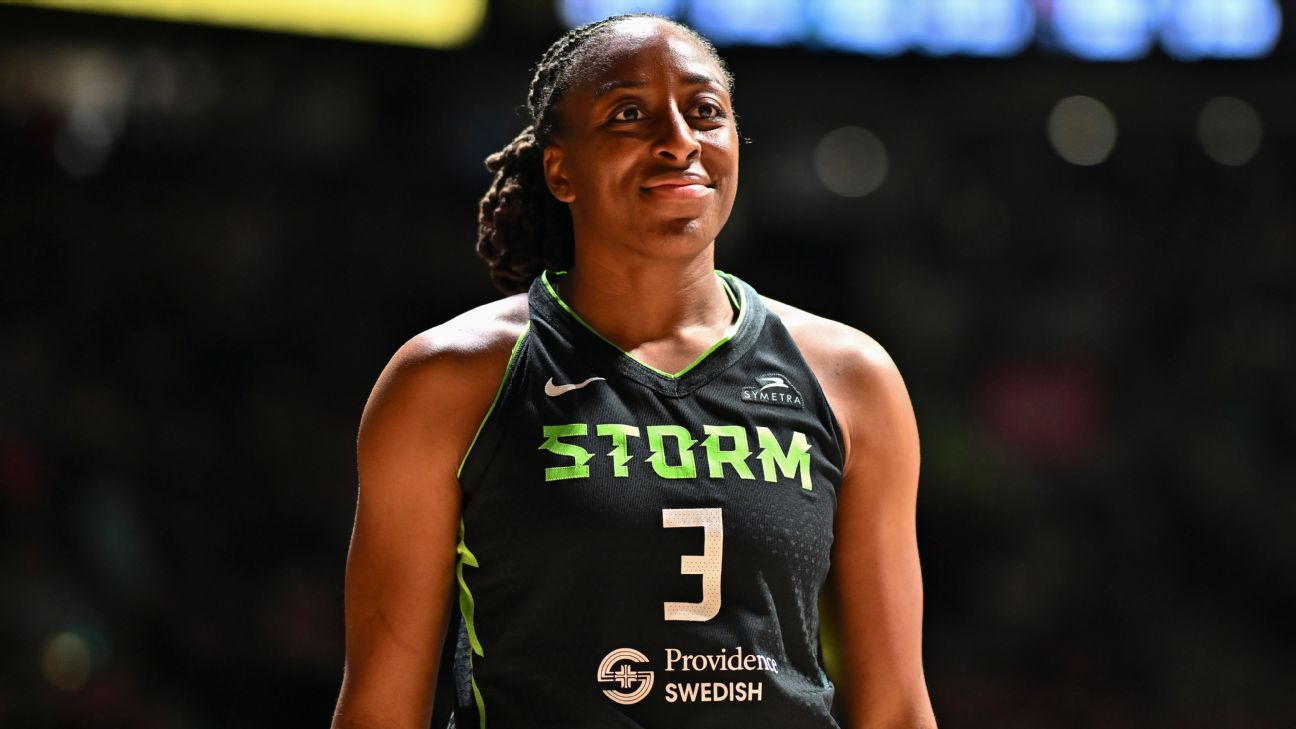
In a landmark agreement that promises to reshape professional women's basketball, the Women's National Basketball Association (WNBA) and its players' union, the WNBPA, have ratified a new collective bargaining agreement (CBA) set to take effect in 2026. After months of intense negotiations culminating in a weeklong marathon session, the deal was approved overwhelmingly by players, marking what both sides describe as a "transformational" pact that benefits current athletes, future stars, and even retired pioneers of the league. The agreement, which spans seven years with an opt-out clause after 2031, addresses long-standing issues around compensation, working conditions, and league growth, ensuring labor peace for at least the next six seasons.
The CBA comes at a pivotal moment for the WNBA, which is entering its 30th season amid surging popularity, driven by stars like Caitlin Clark and Angel Reese, and recent expansions that will see the league grow from 13 to 15 teams this year and up to 18 by 2030. According to a document obtained by ESPN from the union, the deal ties player pay more directly to the league's financial success, a key demand from the players. "This CBA will benefit WNBA players in the present, the future and even from the past," the report states, highlighting provisions for "recognition" payments to retired players with at least five years of service— a nod to those who laid the foundation for the league's endurance.
Central to the agreement is a new revenue-sharing model, which emerged as the most contentious issue during talks. Players will receive 20% of the league's gross revenue, a figure lower than their initial proposal but one that both sides view as sustainable. This metric directly links compensation to overall league performance, fostering a sense of shared investment. As ESPN noted, "It's a measurable metric that allows players to feel fully vested in and rewarded by not just their own individual success but what the league as a whole accomplishes." The owners, meanwhile, sought to ensure franchise financial health, and the compromise strikes a balance that could pave the way for future negotiations.
Salary structures see significant boosts across all experience levels, providing teams with greater flexibility in roster building while elevating the prestige of WNBA careers. Starting in 2026, minimum salaries will rise to $270,000, with maximums reaching $1.4 million and each team's salary cap expanding to $7 million—up from $1.5 million in 2025. These figures, while not matching the sums in major men's leagues like the NBA, represent substantial progress when compared to the WNBA's earlier years. "That's a better measurement of the progress made in this CBA," according to the ESPN analysis, which emphasizes how the new scale creates a more robust "middle class" of players, allowing franchises to tailor their lineups around elite talent.
Travel conditions, a frequent source of frustration, are now formally enshrined in the CBA following the league's voluntary shift to charter flights in 2024. This move, which began mid-season last year, addressed health and recovery concerns that previously led to embarrassing commercial flight mishaps and perceptions of amateurism. WNBPA President Nneka Ogwumike, who appeared on ESPN's "First Take" to discuss the deal, underscored the importance of such improvements for on-court performance. The charters, combined with mandates for enhanced medical staffing—including two athletic trainers, two physicians, a strength coach, physical therapist, massage therapist, and nutritionist—aim to reduce player wear-and-tear and standardize care across all 13 teams.
In cases of injury, players now have the right to seek second opinions at the team's expense, a provision that builds on previous requirements of just one trainer and one physician per squad. Mental health support is another focus, with reimbursements of up to $2,250 per season starting in 2027. By 2028, teams must provide practice facilities meeting minimum standards, including private medical rooms. These enhancements address disparities where some franchises, like the New York Liberty or Las Vegas Aces, had offered superior resources, while others lagged behind.
Family protections represent one of the CBA's most progressive elements, particularly for mothers in the league. Drawing from the 2022 controversy involving Las Vegas Aces forward Dearica Hamby, who alleged she was traded due to her pregnancy, the agreement now requires teams to obtain consent before trading a pregnant player. Hamby filed a lawsuit against the Aces and the WNBA, claiming an inadequate investigation; a federal judge dismissed the case against the league in May 2023, and the suit against the team was settled mutually in December 2023. To prevent similar disputes, the CBA also grants teams cap flexibility to cover full salaries for pregnant players and increases life insurance policies to $700,000 from $100,000.
Additional family-friendly measures include allowing dependent children aged 13 or younger to travel with teams and providing two weeks of paid leave for non-birthing parents. "The union and the WNBA have championed the needs and rights of mothers in the workplace, and this CBA goes further than any previous one," ESPN reported, noting how these changes safeguard players' personal lives without compromising professional opportunities.
Roster management gains aim to foster talent development amid the league's expansion. Teams must now maintain 12-player rosters, up from optional smaller sizes, and can sign up to two developmental players without impacting salary caps or spots. These players receive stipends, benefits, and pro-rated minimum pay for up to 12 activated games per season. This addresses the narrow pathways for young talent, allowing franchises to nurture prospects like those who might otherwise leave for overseas leagues due to limited domestic spots.
Performance incentives are amplified to better reward excellence, with bonuses for achievements like MVP selections, all-WNBA teams, and championships doubling or tripling in value. Rookie contract players can now accelerate to maximum salaries by their fourth season based on honors. These changes counter past criticisms of modest awards, such as small trophies or paltry prizes, enhancing motivation and public perception.
Officiating, a flashpoint last postseason, receives incremental improvements without major overhauls. Following ejections and fines— including Minnesota Lynx coach Cheryl Reeve's $15,000 penalty after Game 3 of the 2024 semifinals against the Phoenix Mercury, and $1,000 fines for Las Vegas Aces coach Becky Hammon and Indiana Fever coach Stephanie White—the CBA grants the union access to officiating videos and mandates three annual meetings to review flagrant and technical fouls. This fosters greater player input, potentially improving transparency and fairness on the court.
Compromises on player designations balance team retention with individual freedom. The "core" designation, akin to a franchise tag, remains but is reformed: starting in 2027, only players with six or fewer years of service can be designated, limited to one or two times total previously. This protects young stars for teams while allowing veterans more mobility.
Scheduling provisions tackle concerns over game cadence, with the regular season potentially expanding to 50 games by 2027 and 52 by 2029, extending play into November. The CBA introduces safeguards against grueling road trips or back-to-back games, even with charters easing travel. Coaches like Reeve have voiced frustrations over such demands, and these rules aim to mitigate fatigue while accommodating growth.
The ratified CBA, though not yet public in full, signals a maturing league ready to capitalize on its momentum. With revenue ties ensuring players share in successes like sold-out arenas and media deals, the agreement positions the WNBA for sustained expansion. As Kendra Andrews discussed on ESPN's "NBA Today," the deal's terms, detailed in a 2:03 segment, reflect a collaborative push toward equity. For fans, this translates to higher-quality play; for owners, a healthier bottom line; and for players, from rookies to retirees, a more secure future.
Looking ahead, the focus shifts to implementation as the 2025 season unfolds under the prior CBA. Expansion drafts for new teams in Toronto and Portland this year will test the league's infrastructure, but the new pact provides a stable framework through at least 2032. Union leaders like Ogwumike emphasize the deal's role in honoring the WNBA's legacy while building its next chapter, ensuring the sport's growth benefits all stakeholders.