As the dust settles on Championship Sunday in women's college basketball, the landscape for the upcoming NCAA tournament has taken sharper form. Duke and UCLA claimed top seeds in their respective conferences, the ACC and Big Ten, while Texas and West Virginia emerged as No. 2 seeds in the SEC and Big 12. These victories in the Power 4 conferences, which together project to send 39 teams to the tournament according to ESPN's latest Bracketology, have largely locked in the résumés of the top contenders. With Selection Sunday set for March 15 at 8 p.m. ET on ESPN, the focus now shifts to the selection committee's deliberations as 23 more automatic bids hang in the balance from smaller conferences.
The ACC tournament wrapped up with Duke holding off Louisville to secure the title, a feat that came on the heels of their regular-season championship. This double crown bolsters Duke's case for the final No. 2 seed line, especially after TCU's loss in the Big 12 final potentially cost the Horned Frogs that spot. "By winning the ACC tournament title after capturing the regular-season crown, the Blue Devils now have a claim to the final slot on the No. 2 line," ESPN reported. In the Big Ten, UCLA delivered a stunning 96-45 rout of No. 9 Iowa in the final, marking back-to-back tournament titles for the Bruins and showcasing their dominance with a 51-point margin.
Texas made the most emphatic statement in the SEC, dismantling South Carolina in the championship game to not only clinch the title but also leapfrog the Gamecocks on the No. 1 seed line. The Longhorns' victory positioned them as the No. 3 overall team in projections, earning them a spot in the Fort Worth regional— just 190 miles from home should they advance to the Sweet 16 and Elite Eight. South Carolina, meanwhile, faces a longer road to the Sacramento regional. Entering the weekend, Texas was the only vulnerable No. 1 seed, with Vanderbilt and LSU still mathematically alive, but the Longhorns "emphatically ended those hopes," according to ESPN analysts.
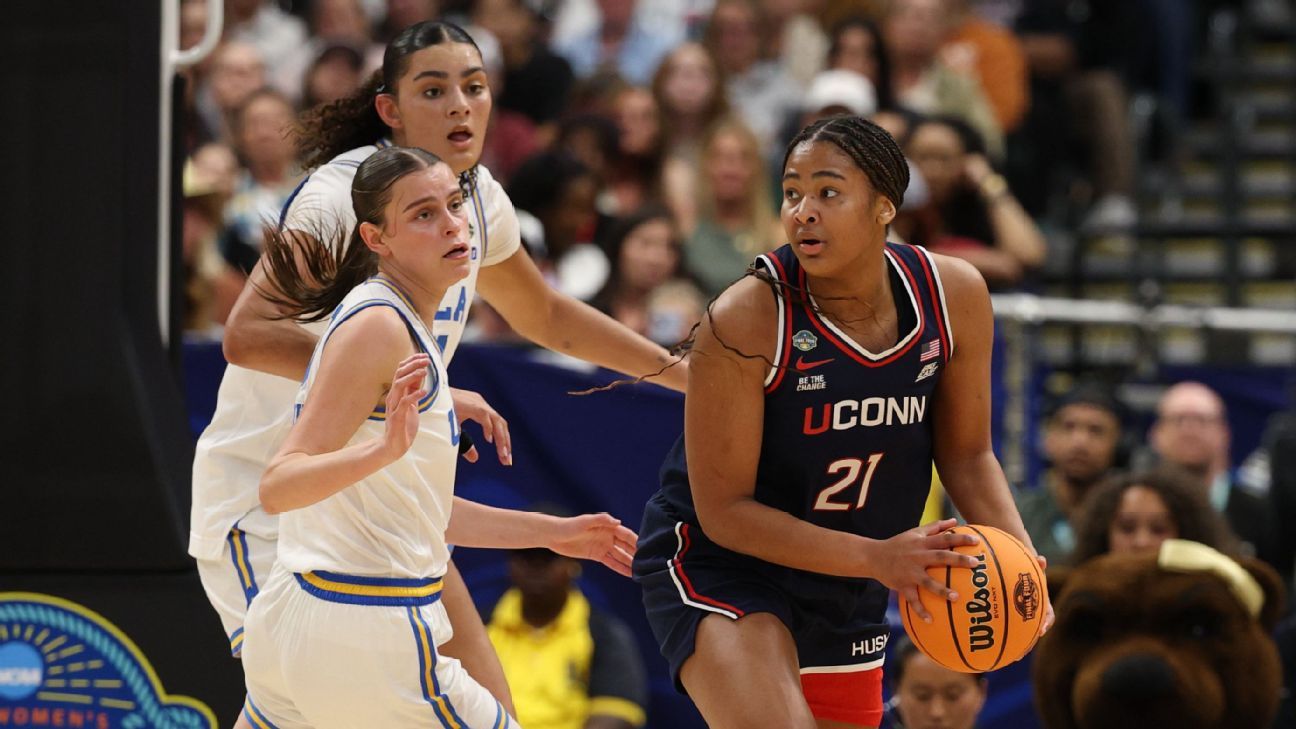
A lingering debate centers on the overall No. 1 seed between UConn and UCLA. The Huskies have held the top spot all season as the nation's only unbeaten team and were the committee's choice for No. 1 in both top-16 reveals on Feb. 14 and March 1. Yet UCLA's metrics paint a compelling picture: 18 Quad 1 wins, the top wins above bubble number, and the best strength of schedule. "The Bruins' metrics suggest they should be first," ESPN noted, but added that the committee has consistently favored UConn despite UCLA's advantages in prior evaluations. The Bruins' near-perfect Big Ten tournament run, including the lopsided final against Iowa, could sway opinions, though ESPN suggests the committee's prior stance makes a flip unlikely without a clear rationale beyond numbers.
The top-16 seeds, which determine NCAA hosts, saw significant movement over the weekend. West Virginia punched its ticket as a potential host for the first time since 1992 by dominating TCU in the Big 12 final, despite the Horned Frogs' regular-season title. This championship edges out competitors like Kentucky, which had been teetering at No. 16 after a quarterfinal loss to South Carolina. Michigan State, North Carolina, and Ole Miss also fell short in their semifinals, failing to mount the breakthroughs needed. "The résumé of the last two teams in the top 16—Maryland and West Virginia—and first few out—Kentucky, North Carolina, Michigan State—show just slight differences, but the Mountaineers are the only one with a championship," ESPN observed.
Beyond the top seeds, the bubble remains one of the most contentious in recent memory, with numerous teams jockeying for at-large bids amid a crowded field of pros and cons. South Dakota State transformed its fortunes by capturing the Summit League automatic bid, moving from the outside looking in to a secure spot. Celebrations in Brookings, South Dakota, will be far less anxious come Selection Sunday. Arizona State also advanced its case with two Big 12 tournament wins, including an upset over Iowa State, and a competitive showing against West Virginia. Despite lacking a Quad 1 victory and sitting at No. 51 in the NET, the Sun Devils' 12-9 record against the top 100 NET teams stands out among bubble dwellers.
Richmond's path has been more volatile. The Spiders appeared doomed after a semifinal loss to George Mason in the Atlantic 10, but Harvard's upset of Columbia later that day disrupted the Ivy League race, sidelining the Lions and preserving Princeton as the conference's lone tournament team. This opened a bid for Richmond, though ESPN cautioned that the Spiders could slip again if Princeton stumbles in Ivy Madness on Thursday and Friday, potentially allowing a second Ivy team back in. Nebraska, meanwhile, clings to hope despite an early Big Ten exit where they blew a 20-point lead to Indiana. With a NET ranking of 28, the Cornhuskers' body of work—despite a 2-6 February—makes exclusion rare, though not impossible, as seen with Oregon in 2023.
Champ Week offered encouragement to some locked-in teams while raising alarms for others. Ohio State solidified its top-16 position with a strong semifinal showing against UCLA, their most competitive game in a month. Standout guard Jaloni Cambridge has emerged as a star capable of carrying the Buckeyes deep into the tournament, ESPN analysts said. Notre Dame, playing its best basketball late in the season, nearly upset Duke in the ACC semifinals after toppling NC State the day prior. Hannah Hidalgo's scoring prowess—over 25 points in six of her last seven games, including 24 in the Duke loss—has proven unstoppable even against familiar ACC foes. "ACC teams play against Hidalgo regularly and still haven't been able to stop her," ESPN reported, noting the Irish now face unfamiliar opponents in March.
On the flip side, Tennessee faces mounting concerns. The Lady Vols, participants in every women's NCAA tournament since 1982, have struggled since February with a 16-13 record and a one-and-done SEC showing against Alabama. While their NET of 23 and five Quad 1 wins likely secure a bid, little suggests a prolonged run. South Carolina, the two-time defending national champions, must grapple with a shocking SEC final defeat. Trailing 14-0 early, outrebounded, and held to a season-low 61 points while allowing 40 in the paint, the Gamecocks' performance prompts questions. "Did Texas expose something in South Carolina or was Sunday's SEC tournament final just a bad day for the Gamecocks?" ESPN pondered. Notably, Texas has twice limited South Carolina to the 60s this season, joining Georgia as the only SEC teams to do so, though a rematch would likely wait until the national championship.
The implications of these outcomes ripple through the bracketology projections. Texas's regional placement advantage could prove pivotal in a tournament format that rewards proximity, while UConn's potential top overall seed maintains their season-long perch. West Virginia's hosting bid revives memories of their 2017 Big 12 title but marks a rare postseason hosting opportunity. For bubble teams like Arizona State and Nebraska, the lack of further games means their fates rest on committee interpretation of metrics versus recent form.
As the full picture assembles with ongoing conference tournaments, the selection committee faces a delicate balance. The Power 4 leagues have set the tone, but automatic qualifiers from the remaining 23 conferences could shuffle the at-large pool further. ESPN's projections highlight a bracket shaped by dominant runs from Duke, UCLA, Texas, and West Virginia, yet the bubble's stickiness ensures drama until the reveal.
Looking ahead, Selection Sunday on March 15 will unveil the 68-team field, with sites like Fort Worth and Sacramento hosting early rounds. Teams like South Dakota State can breathe easier with their bid in hand, while others like Richmond watch Ivy Madness nervously. The committee's decisions on seeds—particularly the UConn-UCLA tussle—will set the stage for what promises to be a fiercely competitive tournament, building on a Champ Week that clarified as much as it complicated the path to the Final Four.