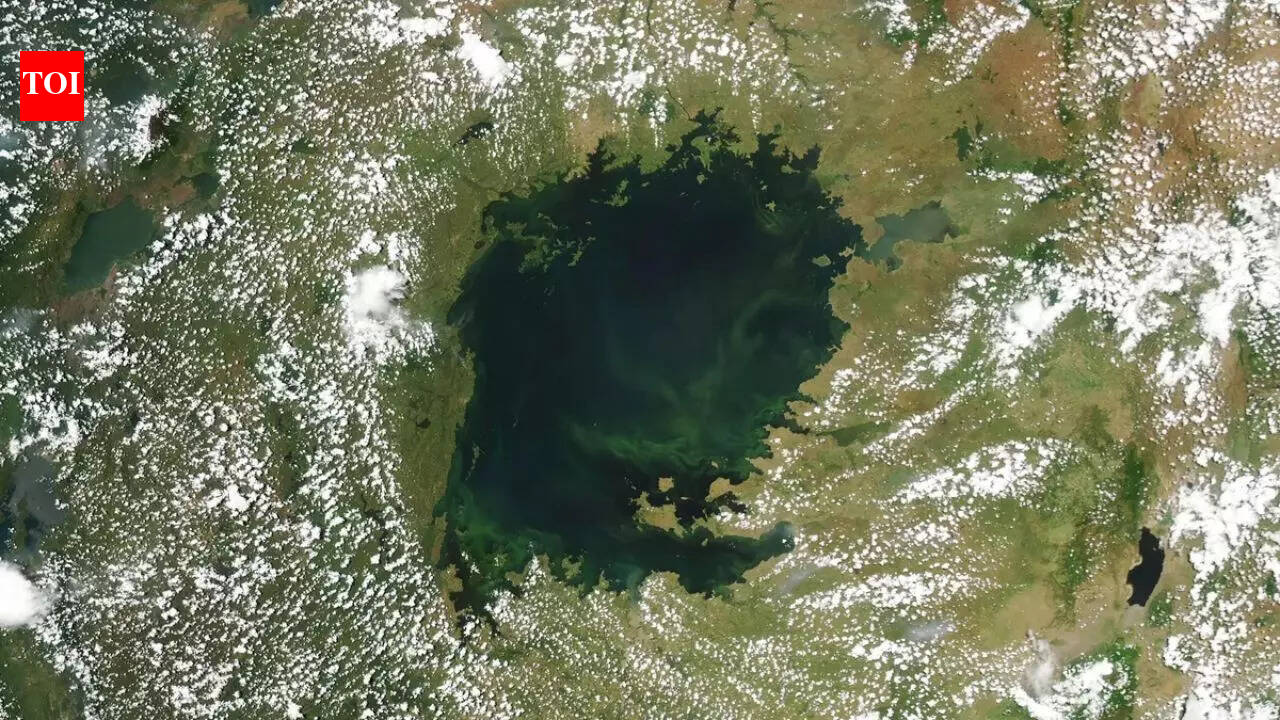
In the heart of East Africa, Lake Victoria, the world's largest tropical lake and a vital lifeline for millions, is undergoing a alarming transformation. According to a recent report from the Times of India, the once-pristine waters have turned an unsettling green, signaling what experts describe as a potentially irreversible environmental crisis. Spanning over 68,800 square kilometers and shared by Tanzania, Uganda, and Kenya, the lake supports more than 30 million people who rely on it for fishing, drinking water, and transportation. But now, rampant algal blooms are turning it into what some are calling a 'deadly zone,' threatening ecosystems and human health alike.
The changes in Lake Victoria have been building for decades, but recent observations paint a dire picture. Local fishermen, who have long navigated these waters, report that the green hue is not a fleeting seasonal event but a persistent and worsening phenomenon. 'The waters of Lake Victoria have turned an unsettling green,' the Times of India article notes, adding that 'it seems, it’s not just a passing bloom this time.' Fishermen in coastal communities around the lake, such as those in Kisumu, Kenya, and Mwanza, Tanzania, say catches have plummeted, with fish populations declining by up to 50 percent in some areas over the past five years, according to regional fisheries data cited in environmental reports.
Environmental scientists attribute the crisis primarily to eutrophication, a process where excessive nutrients like nitrogen and phosphorus fuel explosive growth of algae. These nutrients stem from agricultural runoff, untreated sewage from booming urban centers, and industrial discharges. Lake Victoria's basin is home to over 40 million people, with rapid population growth exacerbating the problem. In Uganda alone, the population around the lake has doubled since 2000, leading to increased farming and urbanization without adequate waste management infrastructure, as reported by the United Nations Environment Programme in a 2022 assessment.
One key factor is the widespread use of fertilizers in the lake's catchment area, which covers about 184,000 square kilometers across three countries. Farmers in Tanzania's Kagera region, for instance, apply thousands of tons of chemical fertilizers annually to boost crop yields for export markets like coffee and bananas. 'Runoff from these farmlands carries nutrients straight into the lake,' said Dr. Elizabeth Okello, a limnologist at Makerere University in Kampala, Uganda, in an interview with regional media last month. When the algae die off, bacteria decompose them, depleting oxygen levels and creating hypoxic 'dead zones' where fish and other aquatic life cannot survive.
The impacts extend beyond fisheries. In 2023, health officials in Kenya reported a spike in waterborne diseases, including cholera outbreaks affecting over 5,000 people in lakeside towns. The green, toxic water is unsafe for drinking, and even boiling does little to remove the cyanotoxins produced by certain algae species, which can cause liver damage and neurological issues. According to the World Health Organization, exposure to these toxins has led to at least 200 documented cases of illness in the region since 2020, though underreporting is likely in rural areas.
Local communities are feeling the squeeze. In the fishing village of Port Bell near Kampala, residents like Maria Nansubuga, a mother of four, described the situation to reporters. 'We used to catch enough tilapia to feed our families and sell the rest, but now the fish are dying, and the water smells foul,' she said. Nansubuga's family income has dropped by 70 percent, forcing many to turn to alternative livelihoods such as charcoal burning, which further strains the environment. Similar stories echo across the lake, where the Nile perch industry—once worth $500 million annually—has seen exports fall by 30 percent in the last decade, per data from the Lake Victoria Fisheries Organization.
Efforts to combat the crisis have been underway, but progress is slow. In 2018, the three riparian countries launched the Lake Victoria Basin Commission initiative, aiming to reduce nutrient pollution through better agricultural practices and wastewater treatment. Kenya has invested $20 million in sewage plants around Kisumu, while Tanzania's government pledged to regulate fertilizer use in 2021. However, enforcement remains challenging. 'We need international support; this is a transboundary issue,' stated Prof. Samuel O. Onyango, director of the commission, during a virtual conference in July 2024. Critics, including environmental NGOs like the WWF, argue that funding is insufficient, with only 40 percent of pledged resources materialized by mid-2024.
Climate change is compounding the problem. Rising temperatures, which have increased by 1.5 degrees Celsius in the region since the 1980s according to the Intergovernmental Panel on Climate Change, promote algal growth and alter rainfall patterns, leading to more frequent floods that wash pollutants into the lake. A study published in the journal Nature in 2023 found that warmer waters reduce oxygen solubility, worsening dead zones. In 2022, a severe drought followed by heavy rains in March 2023 triggered one of the largest blooms on record, visible from space via NASA satellite imagery.
Scientists monitoring the lake through the Global Lake Area monitoring project report that algal coverage has expanded by 25 percent since 2015, with blooms now covering up to 20 percent of the surface area during peak seasons from June to September. Water hyacinth, an invasive plant that thrives in nutrient-rich conditions, has also returned in force, clogging waterways and providing breeding grounds for mosquitoes, contributing to malaria surges. In Uganda, the government spent $10 million on hyacinth removal between 2019 and 2022, but the plant's resurgence highlights the underlying pollution issues.
From an economic standpoint, the stakes are enormous. The lake supports 200,000 direct jobs in fishing and related industries, and its decline could push hundreds of thousands into poverty. The African Development Bank estimates potential annual losses of $300 million if trends continue unchecked. Women, who often process and sell fish, are particularly affected, with studies from the International Food Policy Research Institute showing a 40 percent rise in female-headed households below the poverty line in lakeside areas since 2015.
International attention is growing. In June 2024, the European Union announced a €50 million grant for sustainable fisheries and pollution control in the basin, focusing on community-led monitoring programs. Researchers at the International Center for Tropical Agriculture are piloting biofertilizers in pilot farms to cut chemical runoff by 30 percent. Yet, some experts caution that without stricter regulations on industrial polluters—such as textile factories along the Kenyan shore—these measures may fall short.
Local voices call for urgent action. Fisherman cooperatives in Mwanza have petitioned the Tanzanian government for subsidies on eco-friendly nets and gear, while youth groups in Uganda organize clean-up drives. 'This lake is our heritage; we can't let it die,' said young activist Aisha Mwangi from Nairobi during a protest in May 2024. As the dry season approaches, officials warn of intensified blooms, urging residents to avoid direct contact with the water.
Looking ahead, restoring Lake Victoria will require coordinated efforts across borders, blending science, policy, and community involvement. The Times of India report underscores the global implications, noting that similar crises in lakes like China's Lake Taihu serve as cautionary tales. If addressed now, experts say, the lake could rebound, but delay risks turning a natural wonder into an ecological disaster. Regional leaders are set to meet in Entebbe, Uganda, next month to review progress, with hopes for concrete commitments to safeguard this shared resource for future generations.
The story of Lake Victoria's plight is a stark reminder of how human activity intersects with nature. As the green waters lap against the shores, the urgency for solutions grows, with the fate of millions hanging in the balance.