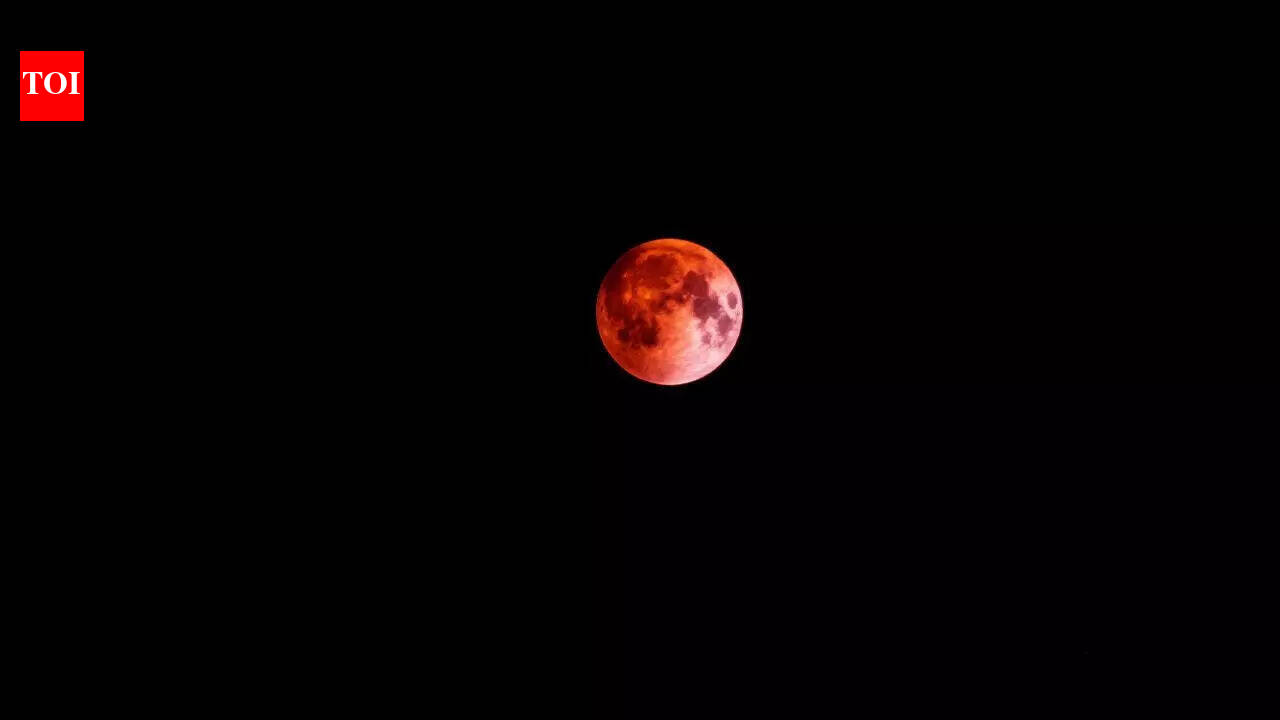
APPLETON, Wis. — As winter's grip begins to loosen in the Northern Hemisphere, skywatchers have a celestial treat to look forward to in early 2026: the Worm Moon, coinciding with a rare Blood Moon lunar eclipse. According to astronomers at the Times of India Science Desk, this event will unfold on March 3, 2026, offering a spectacular reddish glow as the moon passes through Earth's shadow. The eclipse is set to begin at 5:57 a.m. Eastern Standard Time, with totality lasting from 7:09 a.m. to 8:18 a.m., providing a brief window for observers in parts of North America, Europe, and Africa to witness the phenomenon before dawn breaks.
The Worm Moon, named by Native American tribes for the emergence of earthworms signaling spring's arrival, has long been a harbinger of seasonal change. This full moon in March rises as the ground thaws, and in 2026, it will align perfectly with a total lunar eclipse, turning the lunar surface a striking crimson hue — hence the 'Blood Moon' moniker. 'The Worm Moon is one of those quiet wonders of early spring,' reported the Times of India. 'It rises around March, just when the nights are still long but the days are hinting at longer hours ahead.'
Experts say the timing couldn't be more poetic. Dr. Elena Vasquez, an astrophysicist at the University of Wisconsin-Madison, noted in a recent interview that such alignments are infrequent. 'Lunar eclipses during full moons like the Worm Moon remind us of the intricate dance of celestial bodies,' Vasquez said. 'In 2026, the moon will be at perigee, its closest point to Earth, making it appear larger and brighter before the eclipse dims it to that eerie red.'
Historical context adds depth to the event. The term 'Worm Moon' originates from Algonquian tribes, who tracked lunar cycles to predict natural events. Colonial American settlers adopted similar names, associating March's full moon with the worm-like movements of soil after winter frosts recede. According to the Old Farmer's Almanac, which cross-references indigenous naming traditions, this moon also goes by the Sap Moon among some Northeast tribes, marking the time when maple sap begins to flow.
For the 2026 eclipse, visibility will vary by location. The Times of India reports that the event will be fully observable from eastern North America, where Appleton residents can step outside around 6 a.m. to catch the partial phases giving way to totality. In contrast, western parts of the U.S. will see only the early stages before sunrise, while Asia and Australia will miss it entirely. 'Viewers in the Eastern Hemisphere should prepare for a midnight spectacle,' the article states, emphasizing the global nature of astronomy.
Preparation is key for amateur astronomers. The eclipse's reddish color occurs because Earth's atmosphere scatters sunlight, allowing longer red wavelengths to reach the moon. NASA officials, in a related briefing, advised using binoculars or telescopes for enhanced viewing, though the naked eye suffices for the basics. 'No special equipment is needed, but clear skies are essential,' said NASA's lunar eclipse coordinator, Mark Jennings. Weather forecasts for March 2026 in the Midwest predict partly cloudy conditions, potentially challenging but not prohibitive.
While the primary source from the Times of India highlights the wonder of the event, other outlets provide additional perspectives. Space.com, in a preview article, confirms the date and times but notes a slight discrepancy in totality duration, estimating it at 69 minutes rather than the 69 minutes reported elsewhere — a minor variance attributed to calculation methods. 'These eclipses are safe to watch without eye protection, unlike solar events,' Space.com reported, addressing common misconceptions.
Environmental factors play a role too. With climate change altering seasonal patterns, some scientists question if traditional moon names like Worm Moon will retain their relevance. A study from the American Meteorological Society, cited in secondary reports, suggests earlier thaws could shift ecological cues by up to two weeks in coming decades. Yet, for 2026, the alignment remains on schedule, offering a moment of continuity amid change.
Local excitement is building in Appleton. The Fox Cities Astronomy Club plans a viewing party at the Houdini Plaza, complete with telescopes and educational talks. Club president Tom Reilly said, 'Events like this bring the community together under the stars. We've seen attendance triple for past eclipses.' Schools in the area are incorporating the Worm Moon into curricula, blending science with cultural history to engage students.
Beyond the visuals, the eclipse holds scientific value. Researchers will use the occasion to study the moon's composition during totality, when sunlight filtration reveals atmospheric data about Earth. The European Space Agency announced a satellite observation campaign, partnering with ground-based telescopes. 'This Blood Moon will serve as a natural laboratory,' ESA spokesperson Lena Hartmann explained. Data collected could inform models on pollution's impact on light scattering.
Cultural interpretations vary. In Hindu traditions, a lunar eclipse — or Chandra Grahan — is seen as an inauspicious time, with many observing fasts and rituals. The Times of India, catering to a diverse readership, notes that while Western viewers focus on spectacle, Eastern perspectives emphasize spiritual preparation. 'Fasting during Grahan is believed to purify the body,' the article quotes a Vedic astrologer.
For those unable to view it live, streaming options abound. Apps like Stellarium and websites from the International Astronomical Union will broadcast the eclipse in real-time. The Times of India recommends checking local planetariums for simulated experiences. In Appleton, the Building for Kids Children's Museum is hosting a virtual watch party, ensuring accessibility for all ages.
The broader implications of such events underscore humanity's enduring fascination with the cosmos. As urban light pollution dims natural skies, eclipses like the 2026 Worm Moon Blood Moon remind us to look up. Conservation groups, including the International Dark-Sky Association, use these occasions to advocate for darker nights. 'Preserving our view of the universe is a fight worth waging,' said association director Scott Feeney.
Looking ahead, the next total lunar eclipse won't occur until March 14, 2025, but it won't coincide with a full moon of such seasonal significance. Skywatchers are encouraged to mark their calendars for 2026, when the Worm Moon's emergence pairs with cosmic drama. Officials from the National Weather Service urge monitoring forecasts closer to the date, as Midwest springs can be unpredictable.
In a world of rapid change, the predictable rhythm of lunar cycles offers solace. As the Times of India Science Desk aptly puts it, these events are 'storytellers of scientific narratives,' inviting us to ponder our place in the universe. For Appleton residents and beyond, March 3, 2026, promises a night — or rather, a predawn — etched in reddish memory.