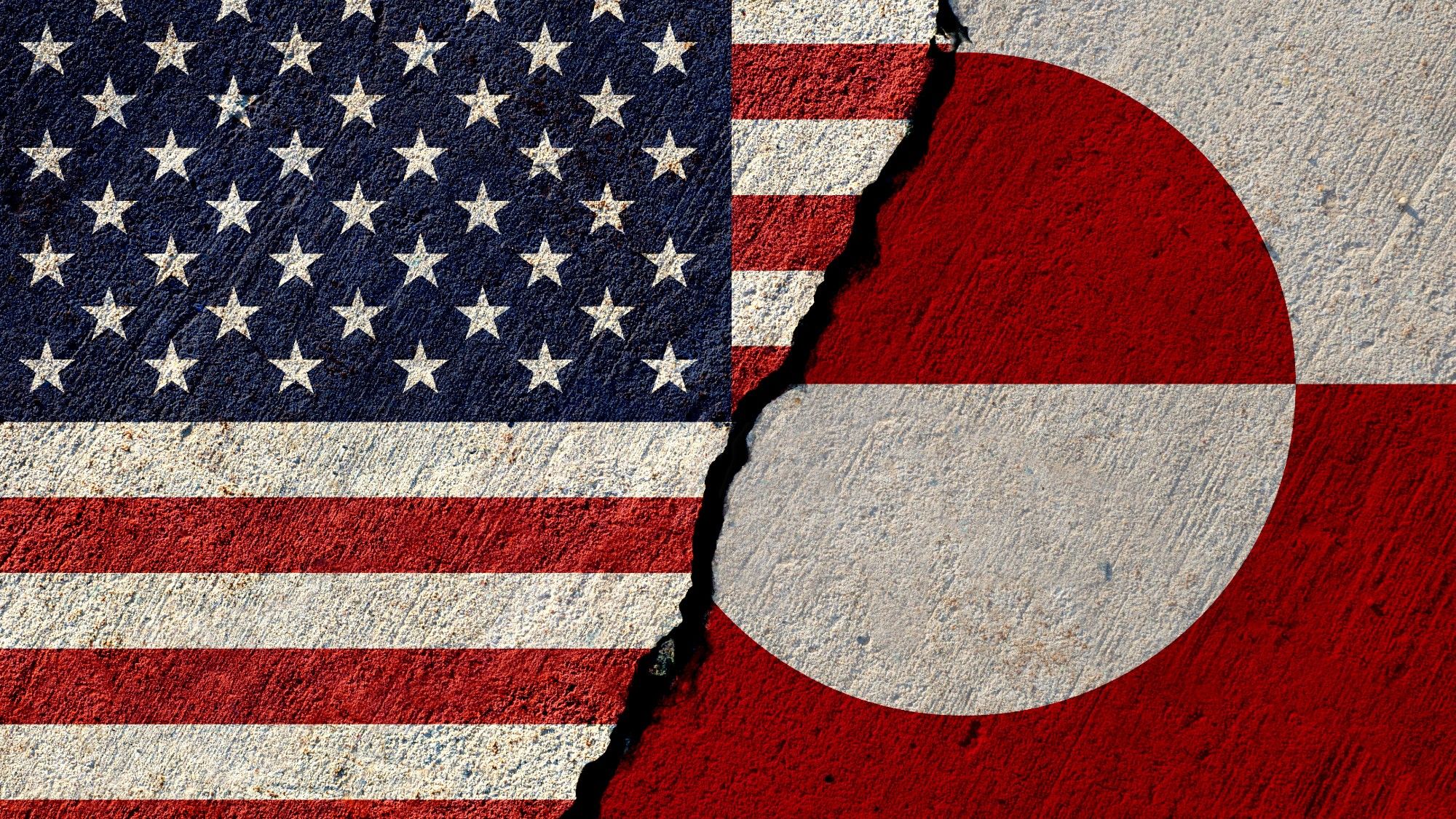
COPENHAGEN — Denmark's Prime Minister Mette Frederiksen issued a stark warning on Thursday, stating that any attempt by the United States to seize control of Greenland by force would spell the end of NATO and the post-Second World War security order. The comments came amid renewed rhetoric from President Donald Trump, who reiterated his interest in acquiring the semi-autonomous Danish territory, emphasizing that "we need Greenland from the standpoint of national security."
Greenland, with its strategic Arctic location and vast mineral resources, has long been a point of geopolitical interest. Home to about 56,000 people, the island operates under Danish sovereignty but enjoys significant autonomy. Trump's expressions of desire for control date back to his first term, but his return to the White House has intensified discussions about potential U.S. actions, ranging from diplomatic pressure to more aggressive measures.
European leaders responded cautiously to Trump's latest statements. In a joint declaration, figures including British Prime Minister Keir Starmer affirmed that "it is for Denmark and Greenland, and them only, to decide on matters concerning Denmark and Greenland." The measured tone of the statement, described by Politico as exhibiting a certain "mildness," highlights the delicate position Europe occupies in confronting U.S. ambitions. Analysts point to fears of retaliation from Trump, potentially in areas like trade policies or support for Ukraine, as reasons for the restrained pushback.
NATO, the transatlantic alliance that has underpinned Western security for decades, finds itself navigating a precarious path. Officials within the organization are treading a "fine line to avoid antagonising the US president," according to reports. While many member states had previously dismissed the notion of a full-scale U.S. incursion into Greenland as far-fetched, Trump's persistent comments are now fostering growing anxiety and a sense of defiance among allies.
Commentators have outlined various scenarios under which the U.S. might pursue its goals without resorting to outright military action. Shane Harris, Isaac Stanley-Becker, and Jonathan Lemire, writing in The Atlantic, suggested that Trump could employ "force, coercion, or an attempt to buy off the local population of about 56,000 people with the promise of cutting them in on future mining deals." They argued that, given the military disparity—neither Denmark nor its European partners possess the capability to repel a U.S. takeover—a simple announcement on Trump's Truth Social platform declaring Greenland an American "protectorate" could effectively paralyze NATO, considering the U.S. role as the alliance's primary military and financial backer.
Because neither Denmark nor its European allies possess the military force to prevent the US from taking the island, all it may take in practice is a Truth Social post announcing that Greenland is now an American "protectorate."
Such a development would not only undermine Denmark's authority but also fracture the trust at the heart of NATO, the writers contended. Few observers anticipate a dramatic raid akin to past U.S. interventions in places like Venezuela, as noted by Sam Ashworth-Hayes in The Telegraph. Instead, he wrote, the U.S. "has no need to" engage in direct combat, positing that if Trump "really wants the territory," he could "apply deeply painful leverage until he gets his way."
Marc Champion, in a Bloomberg analysis, underscored Europe's vulnerability in what he described as a "world of might-makes-right that Trump is ushering in." Denmark and its partners, Champion argued, have structured their "entire economic and security postures" around the rules-based order established by the U.S. after World War II. Now, overly dependent on American arms and support, they face the prospect of watching that order erode, with external actors like Russian President Vladimir Putin potentially benefiting from the discord.
On Friday, Starmer joined fellow European leaders at a "coalition of the willing" summit hosted at France's Elysée Palace in Paris. The gathering focused on securing U.S. security guarantees for Ukraine amid its ongoing conflict with Russia, as reported by George Eaton in The New Statesman. This context, Eaton suggested, provides a crucial insight into Europe's hesitance to sharply criticize Trump's Greenland ambitions: the continent's security needs remain intertwined with American commitments.
Ashworth-Hayes speculated in The Telegraph that Trump might leverage U.S. support for Europe's eastern defenses—particularly against Russian threats—in exchange for expanded American influence in the Arctic region encompassing Greenland. "I would wager that Trump will use his leverage 'to get what he wants in Greenland through some means short of outright annexation,'" he wrote, adding that while diplomatic arrangements could "smooth over" immediate tensions, underlying "fault-lines will still exist."
Across European capitals, there is an emerging recognition of the need to diminish reliance on Washington. Discussions in Brussels and other hubs reflect a mix of urgency and reluctance. A senior EU official, speaking to the Financial Times, captured this sentiment: "We know who our allies no longer are. It’s just we are still hoping we are wrong and the problem will go away." The official added, "We know what needs to be done, we just need to bloody do it."
This shift comes against a backdrop of broader transatlantic strains. Trump's administration has already signaled changes to U.S. national security policy, including a new strategy that some European observers have called a "grenade" dropped on the continent—a wake-up call to bolster independent defenses. Related debates are intensifying over how to increase troop numbers to counter Russian aggression, with "fierce and soul-searching debates" underway in NATO circles.
In Denmark, the implications for Greenlanders are particularly acute. Local leaders have voiced concerns about sovereignty, while mining prospects—rich in rare earth elements vital for technology—add economic layers to the geopolitical puzzle. Reports indicate that U.S. interest is driven not only by security but also by resource access, potentially altering Arctic dynamics where Russia and China are also expanding footholds.
As the situation evolves, NATO's upcoming summits and bilateral talks will likely address these tensions. For now, Frederiksen's warning serves as a reminder of the fragility of alliances forged in a different era. European nations, caught between defiance and dependency, must weigh how far they are willing to push back against a key partner whose leader appears intent on redefining global boundaries.
The unfolding drama over Greenland underscores a pivotal moment for international relations. With Trump's inauguration still fresh and policy implementations pending, the world watches to see if rhetoric translates to action—or if diplomatic maneuvering averts a deeper crisis. Denmark, meanwhile, reaffirms its commitment to protecting its territory, urging allies to uphold the principles that have sustained peace for generations.