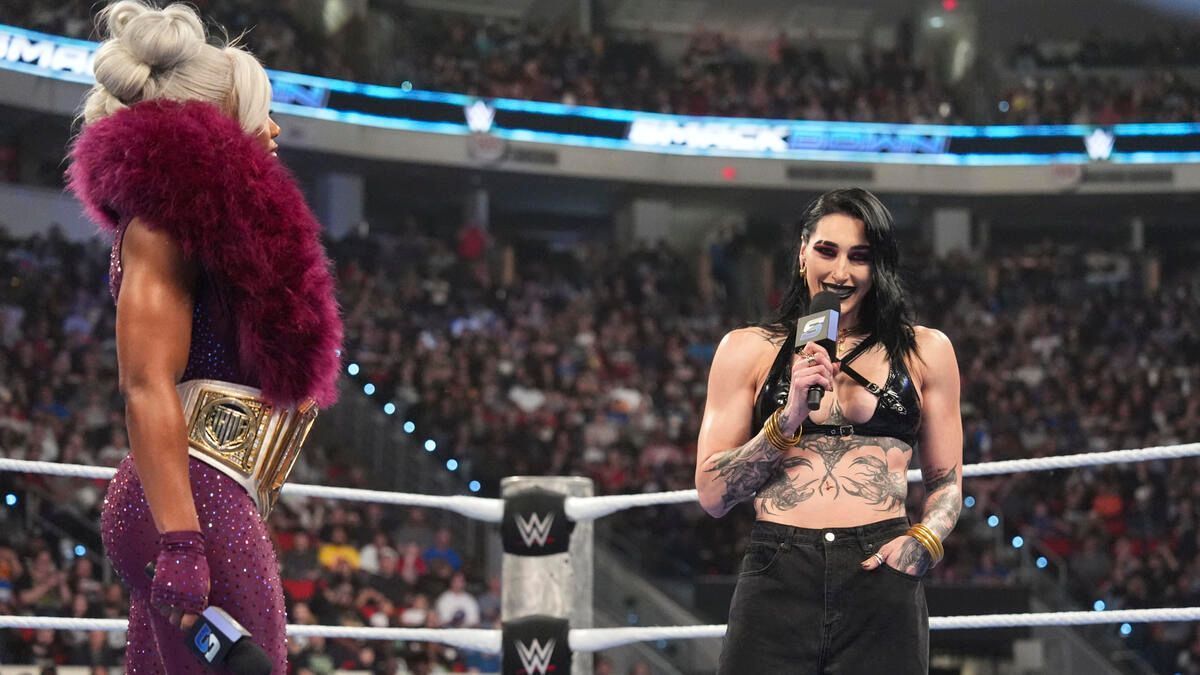
As WrestleMania 42 approaches on April 18 and 19 at Las Vegas' Allegiant Stadium, the event is poised to highlight a remarkable evolution in WWE's women's division. Four women's matches, including two high-stakes championship bouts—Liv Morgan versus Stephanie Vaquer and Rhea Ripley versus Jade Cargill—will take center stage over the two-day spectacle, broadcast on ESPN Unlimited. This lineup underscores decades of progress, transforming women's wrestling from a sideshow to a cornerstone of the industry's biggest stage.
According to an ESPN analysis, the foursome of Morgan, Vaquer, Ripley, and Cargill exemplifies the growth of the division. Additional matches feature AJ Lee against Becky Lynch and a four-way tag team contest for the women's tag team titles. By contrast, the inaugural WrestleMania in 1985 included just one women's bout, with only four more women's matches across the next 12 events combined. This year's emphasis marks a significant milestone in a journey that began modestly and has steadily gained prominence.
The early years of WrestleMania, from 1985 to 1996, saw women's wrestling struggle for relevance. At WrestleMania I, Wendi Richter defeated Leilani Kai to capture the WWE women's championship in a match lasting just over six minutes. The bout, however, drew more attention for pop star Cyndi Lauper's role as Richter's manager than for the in-ring action itself, according to ESPN. Lauper's celebrity involvement helped attract viewers, but the focus remained peripheral.
WrestleMania II in 1986 further diminished the spotlight, as The Fabulous Moolah pinned Velvet McIntyre in under 90 seconds to retain the title. The women's championship then vanished from the card for seven straight years until Alundra Blayze revived it at WrestleMania X in 1994, defeating Kai in a match that clocked in at just over three minutes. That same event also featured Luna Vachon in a mixed tag team match, marking the first WrestleMania with two separate women's appearances.
Entering the Attitude Era from 1997 to 2002, women's roles began to expand, though still limited. Sable emerged as a fan favorite, securing back-to-back WrestleMania spots. At WrestleMania XIV in 1998, she and her husband Marc Mero beat Goldust and Luna Vachon in a mixed tag. The following year, at WrestleMania XV, Sable defended her WWE Women's Championship against Tori, solidifying her status as one of the roster's top draws, ESPN reports.
Chyna stands out as a true pioneer during this period. Breaking barriers, she competed against men and became a two-time Intercontinental champion. Her participation at WrestleMania 2000 made history as the first woman in an all-male match. In 2001, at WrestleMania X-Seven, Chyna defended the women's title against Lita, a performer who, alongside Trish Stratus, propelled the division forward. These moments began redefining possibilities for female wrestlers.
The Advancement Era, spanning 2003 to 2007, built on this momentum with key breakthroughs. In December 2004, Stratus and Lita competed in the first women's singles match to headline an episode of Raw, with Lita winning the WWE Women's Championship for the second time. ESPN describes this as laying groundwork for the division's ascent to WrestleMania's top billing.
Stratus played a pivotal role in nurturing new talent. In late 2005, Mickie James debuted as an obsessive fan of the champion, leading to a championship clash at WrestleMania 22 in 2006. The match's significance extended beyond its quality; it showcased James's character development, eliciting strong fan reactions and adding depth to women's storylines, according to the analysis.
The Divas Era from 2008 to 2014 brought mixed results. WWE introduced the Divas Championship in 2008 as a second title, but it failed to boost engagement as hoped. The belts merged in 2010, and emphasis waned. The first post-introduction women's match at WrestleMania was a Playboy Bunny Lumberjill Match in 2008. At WrestleMania 25 in 2009, the sole women's contest was a Miss WrestleMania Battle Royal, infamously won by Santino Marella in drag as Santina.
The Divas Championship wasn't defended at WrestleMania until 2014, when AJ Lee retained it in the Vickie Guerrero Invitational at WrestleMania XXX. Despite limited big-stage impact, this era launched stars like Lee, Paige, Michelle McCool, Beth Phoenix, and the Bella Twins—Brie and Nikki—who later entered the WWE Hall of Fame. ESPN notes that while WrestleMania opportunities were scarce, these performers built lasting legacies.
The tide turned decisively in 2015 with the Women's Evolution era. Emerging from WWE's NXT developmental system, a new wave of talent redefined the division. Paige, the first NXT women's champion, bridged the gap to the main roster on Raw and SmackDown. In July 2015, Charlotte Flair, Becky Lynch, and Sasha Banks debuted together on the main roster, injecting fresh energy.
WrestleMania 32 in 2016, held in Dallas, proved transformative. The Divas Championship was retired, replaced by the WWE Women's Championship. Flair, Banks, and Lynch competed in a triple-threat match for the new title, which Flair won after more than 16 minutes—the longest women's WrestleMania bout to date, surpassing the prior record by nearly five minutes, per ESPN.
Momentum surged at WrestleMania 33 in 2017, featuring nearly 30 minutes of women's action across three matches. Bayley retained the Raw Women's Championship, while Naomi won the SmackDown title in her hometown of Orlando, Florida. A highlight came in a mixed tag where John Cena and Nikki Bella defeated The Miz and Maryse; afterward, Cena proposed to Bella in the ring, creating an unforgettable moment that amplified the division's visibility.
By WrestleMania 35 in 2019 at MetLife Stadium in East Rutherford, New Jersey, women's wrestling reached new heights. Becky Lynch, then the roster's most popular star across genders, headlined against Charlotte Flair and Ronda Rousey in the first women's main event—over 14 years after Stratus and Lita's Raw headline. This milestone cemented women's place as a programming centerpiece.
Subsequent events reinforced this status. WrestleMania 36 and 37 each included four women's matches on the main card, with Belair versus Banks main-eventing the latter. From WrestleManias 36 through 41, at least three women's bouts appeared on every card, delivering consistent high-quality performances. ESPN highlights how this reliability has elevated the division to elite levels.
Looking ahead, WrestleMania 42 offers another platform for women to shine. With championship defenses and marquee matchups, the event continues the trajectory from brief, novelty appearances to extended, narrative-driven spectacles. As the division's stars like Morgan, Vaquer, Ripley, and Cargill compete, they carry forward the legacy of pioneers from Richter and Chyna to Flair and Lynch, ensuring women's wrestling remains integral to WWE's global appeal.
The evolution reflects broader changes in the industry, where increased opportunities have fostered deeper storytelling and athletic showcases. Fans at Allegiant Stadium and viewers worldwide can expect these matches to not only entertain but also honor the path that brought women's wrestling to this pinnacle.