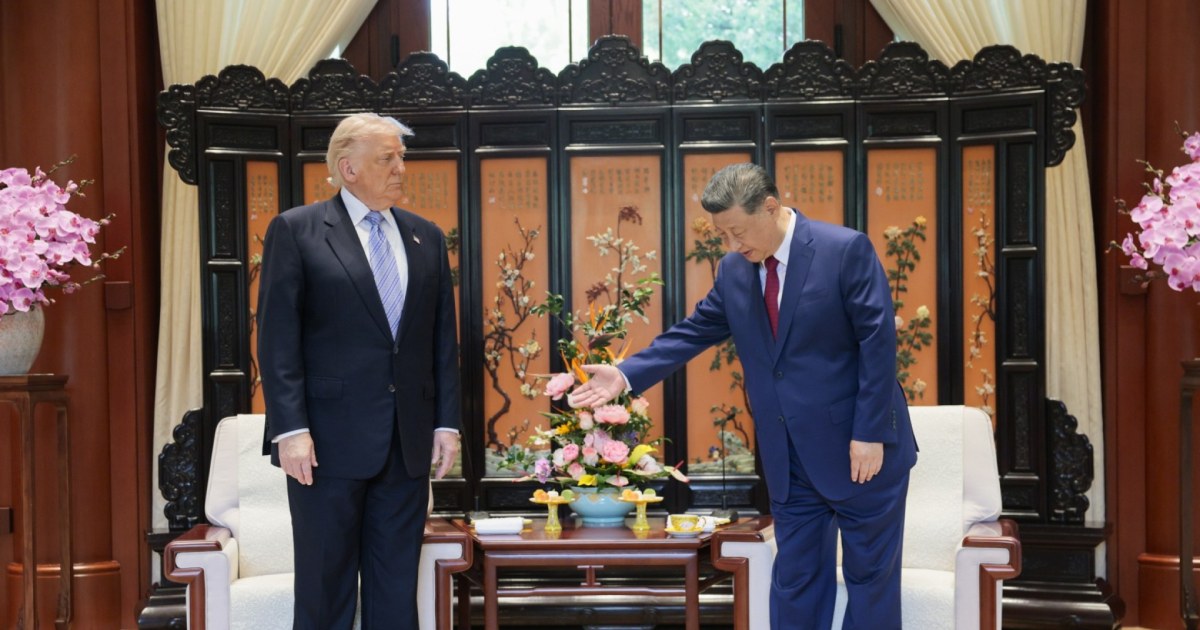
BEIJING — Chinese President Xi Jinping welcomed U.S. President Donald Trump to the historic Zhongnanhai compound on the second day of their bilateral summit, a gesture that underscored the deepening diplomatic ties between the world's two largest economies. The meeting, held in the heart of Beijing's leadership enclave, marked a symbolic reciprocation of the lavish hospitality Trump extended to Xi at his Mar-a-Lago estate in Florida earlier in the year. According to reports from NBC News, Xi personally chose the venue to mirror the warmth of that previous encounter, highlighting the personal rapport between the two leaders amid ongoing trade negotiations.
The summit, which began on Thursday and extended into Friday, November 10, 2017, brought together high-level delegations from both nations to address pressing issues including trade imbalances, intellectual property rights, and regional security concerns. Zhongnanhai, a sprawling complex of traditional pavilions and modern buildings that serves as the headquarters for China's Communist Party, has rarely hosted foreign leaders in such an intimate setting, adding layers of significance to the event. Trump arrived at the compound around 10 a.m. local time, greeted by an honor guard and a red carpet procession, as per eyewitness accounts from the U.S. delegation.
"I chose this venue to reciprocate the hospitality you showed me at Mar-a-Lago," Xi told Trump during their opening remarks, according to a transcript released by Chinese state media. The comment evoked memories of the April 2017 summit in Florida, where the two presidents dined under palm trees and discussed North Korea's nuclear ambitions over chocolate cake. That meeting set a tone of cautious optimism, and Friday's session appeared to build on it, with both sides expressing commitment to a "win-win" partnership.
U.S. officials described the atmosphere as constructive, though details of the closed-door discussions remained closely guarded. White House press secretary Sarah Sanders told reporters outside the compound that progress was made on several fronts, including commitments from China to increase purchases of American agricultural products. "The president is pleased with the direction of talks," Sanders said, emphasizing Trump's deal-making approach to resolving the U.S.'s $375 billion annual trade deficit with China.
From the Chinese perspective, the summit was framed as a milestone in the "new type of great power relations" that Xi has championed since taking office in 2013. State broadcaster CCTV aired footage of the leaders strolling through Zhongnanhai's manicured gardens, a visual nod to the blend of tradition and modernity in China's global outreach. Foreign Ministry spokesperson Lu Kang noted that the venue selection was deliberate, symbolizing trust and equality between the two nations.
Background to the summit traces back to Trump's campaign promises to confront China's economic practices, which he labeled as unfair. Upon entering office in January 2017, Trump quickly pivoted to engagement, speaking with Xi by phone in April and hosting him at Mar-a-Lago shortly thereafter. That Florida meeting yielded agreements on North Korea sanctions and established working groups on trade, but tensions persisted over issues like steel tariffs and technology transfers.
Leading up to the Beijing visit, Trump toured Asia for 12 days, stopping in Japan, South Korea, Vietnam, and the Philippines, where he touted a $250 billion economic deal package. The China leg, however, was the centerpiece, with expectations high for breakthroughs on market access for U.S. firms. Analysts pointed to the summit's timing, just weeks before the 19th National Congress of the Communist Party, where Xi consolidated his power, as a factor in the warm reception.
Inside Zhongnanhai, the agenda reportedly included sessions on cybersecurity, with U.S. concerns over alleged hacking of American companies at the forefront. Trump raised the issue directly, according to sources close to the talks, prompting Xi to reaffirm China's stance against cyber theft while calling for mutual respect in digital spaces. No immediate resolutions were announced, but both leaders agreed to expedite ongoing dialogues through the Comprehensive Economic Dialogue framework established earlier that year.
Trade dominated much of the conversation, with U.S. Treasury Secretary Steven Mnuchin and Commerce Secretary Wilbur Ross leading the economic track. They pressed for reductions in non-tariff barriers that hinder American exports, such as restrictions on beef and liquefied natural gas. Chinese Vice Premier Wang Yang responded by outlining plans to liberalize sectors like finance and automotive, though specifics were vague. "We seek balanced trade that benefits both peoples," Wang said in a briefing to journalists.
Security matters, particularly the Korean Peninsula, loomed large. Trump thanked Xi for his role in UN sanctions against Pyongyang, following North Korea's November 29 missile test that flew over Japan. Xi, in turn, urged restraint and dialogue, warning against escalation. The leaders issued a joint statement committing to denuclearization efforts, though experts noted the familiar diplomatic language masked deep divisions on enforcement.
Multiple viewpoints emerged from the international community. Japanese Prime Minister Shinzo Abe, speaking from Tokyo, welcomed the U.S.-China engagement but stressed the need for trilateral coordination on North Korea. European Union trade commissioner Cecilia Malmstrom expressed hope that any U.S.-China deals would not undermine global rules, amid fears of bilateral carve-outs. Domestically in the U.S., critics like Senate Minority Leader Chuck Schumer cautioned against over-optimism, saying, "Deals are only as good as their implementation."
The summit's closing remarks at Zhongnanhai wrapped up around 3 p.m., with Trump and Xi posing for photos amid autumn foliage. Trump later tweeted from Air Force One, en route to his next stop in Manila, "Great progress with China - looking forward to more!" The post garnered millions of views, reflecting the high stakes of the relationship.
Beyond immediate outcomes, the summit signaled a potential thaw in U.S.-China rivalry, at a time when global supply chains intertwined the two economies more than ever. With annual bilateral trade exceeding $600 billion, disruptions could ripple worldwide. Economists at the Peterson Institute for International Economics projected that successful negotiations could add 0.5% to U.S. GDP growth over the next two years, though risks of protectionism remained.
Looking ahead, follow-up mechanisms were established, including a December meeting of the economic working group in Washington. Trump announced plans for Xi to visit the U.S. in 2018, possibly for the Winter Olympics or a state visit. As the leaders parted, the image of their handshake at Zhongnanhai encapsulated a moment of strategic alignment, even as underlying frictions persisted.
In the broader context of Trump's Asia pivot, the Beijing summit contrasted with his more confrontational rhetoric on the campaign trail. It highlighted the complexities of superpower diplomacy, where personal chemistry could influence policy as much as institutional interests. For now, the reciprocated hospitality at Zhongnanhai offered a foundation for future talks, though the road to resolution on trade and security challenges stretches long.